Oviedo officers rescue injured anhinga tangled in fishing line
Oviedo officers freed an injured anhinga named Guy from fishing line near a pond, a rescue that spotlighted wildlife harm from discarded tackle.
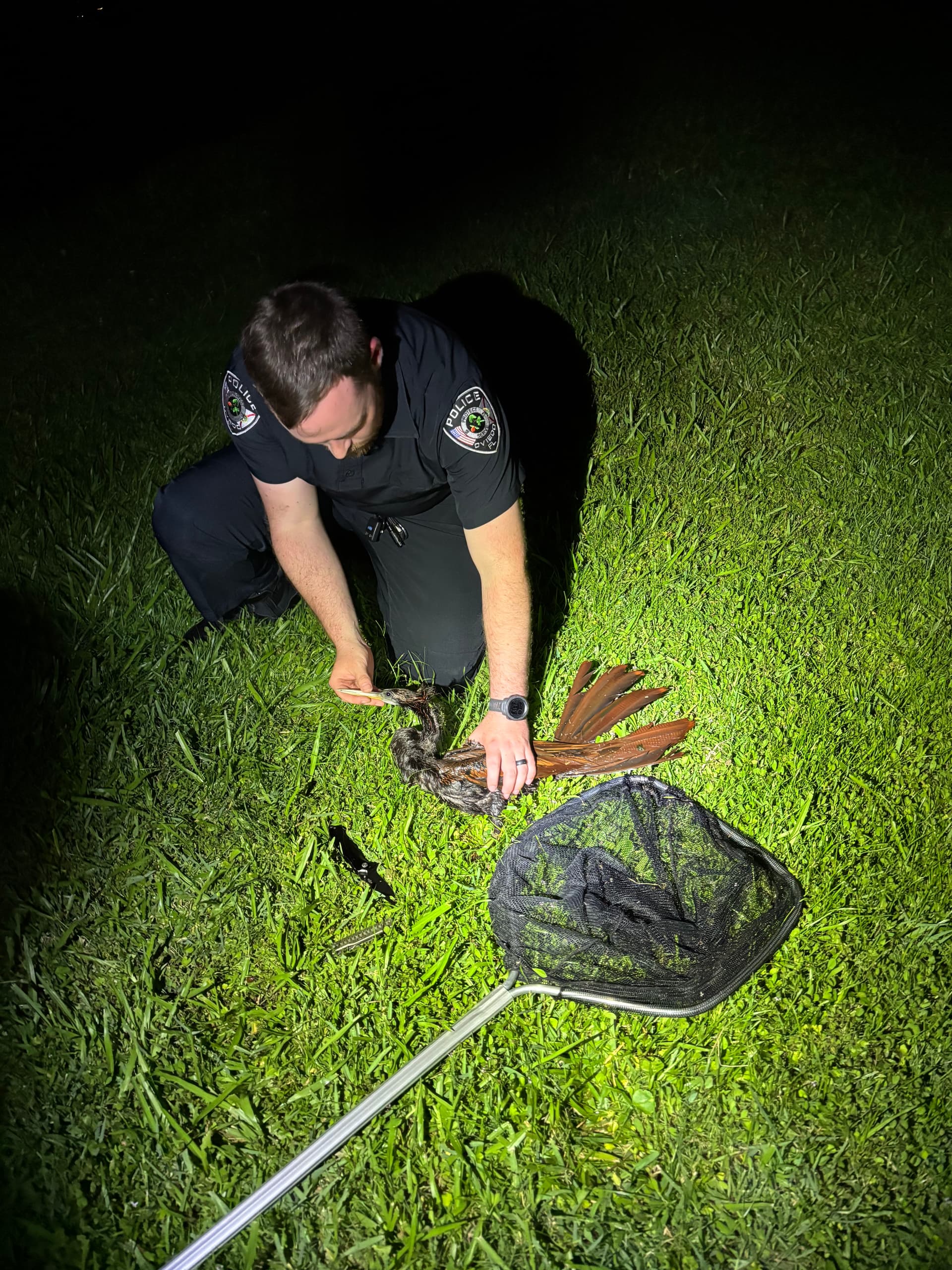
A routine Oviedo patrol turned into an animal rescue when officers Logan Smith and Luke Nakamura found an injured anhinga tangled in fishing line near a pond.
The City of Oviedo later released body-camera video of the rescue, showing the officers working carefully to free the bird without causing further harm. Officials said the anhinga was named Guy and called the encounter another example of officers helping both people and animals in the community.

The feel-good moment also points to a quieter problem around Seminole County ponds and parks: discarded fishing line can trap wildlife long after an angler leaves. The University of Florida IFAS Extension says just one carelessly tossed line can entangle a bird or other animal, and even a hook left snagged on a small tree limb or bush can injure wildlife. The Florida Fish and Wildlife Conservation Commission says marine and coastal wildlife can become entangled or trapped in fishing line and other debris, leading to further harm.
That risk matters in places like Oviedo, where birds feed and nest around water. Monofilament line is especially dangerous because it is hard to see, easy to leave behind, and slow to disappear. Tampa Bay Watch says monofilament can take more than 600 years to break down, giving a single strand decades upon decades to snag a leg, wing or beak.
The rescue also offered a public look at the way the Oviedo Police Department presents itself in the community. Its mission statement says it aims to enhance quality of life in Oviedo through commitment, professionalism and partnership with the community, and the released video fit that message closely. Instead of an arrest or emergency call, the clip showed officers responding to a wildlife hazard that could have ended badly.
For residents walking ponds, fishing from neighborhood banks or spending time in city parks, the takeaway is immediate: pick up every piece of line, hook and lure, and do not leave tackle where birds or other animals can find it. In a county filled with lakes, retention ponds and park water, one discarded strand can become a rescue call.
This article was produced by Prism’s automated news system from verified source data, official records, and press releases, then run through automated quality and moderation checks before publishing. The system is built and supervised by the people who set the standards it runs under. Read our full AI policy.
Did this article answer your question?