Oviedo students explore city history through Mission Oviedo scavenger hunt
Partin Elementary fourth graders turned Oviedo into a classroom, tracing the city’s roots from Lake Jessup to downtown chickens.
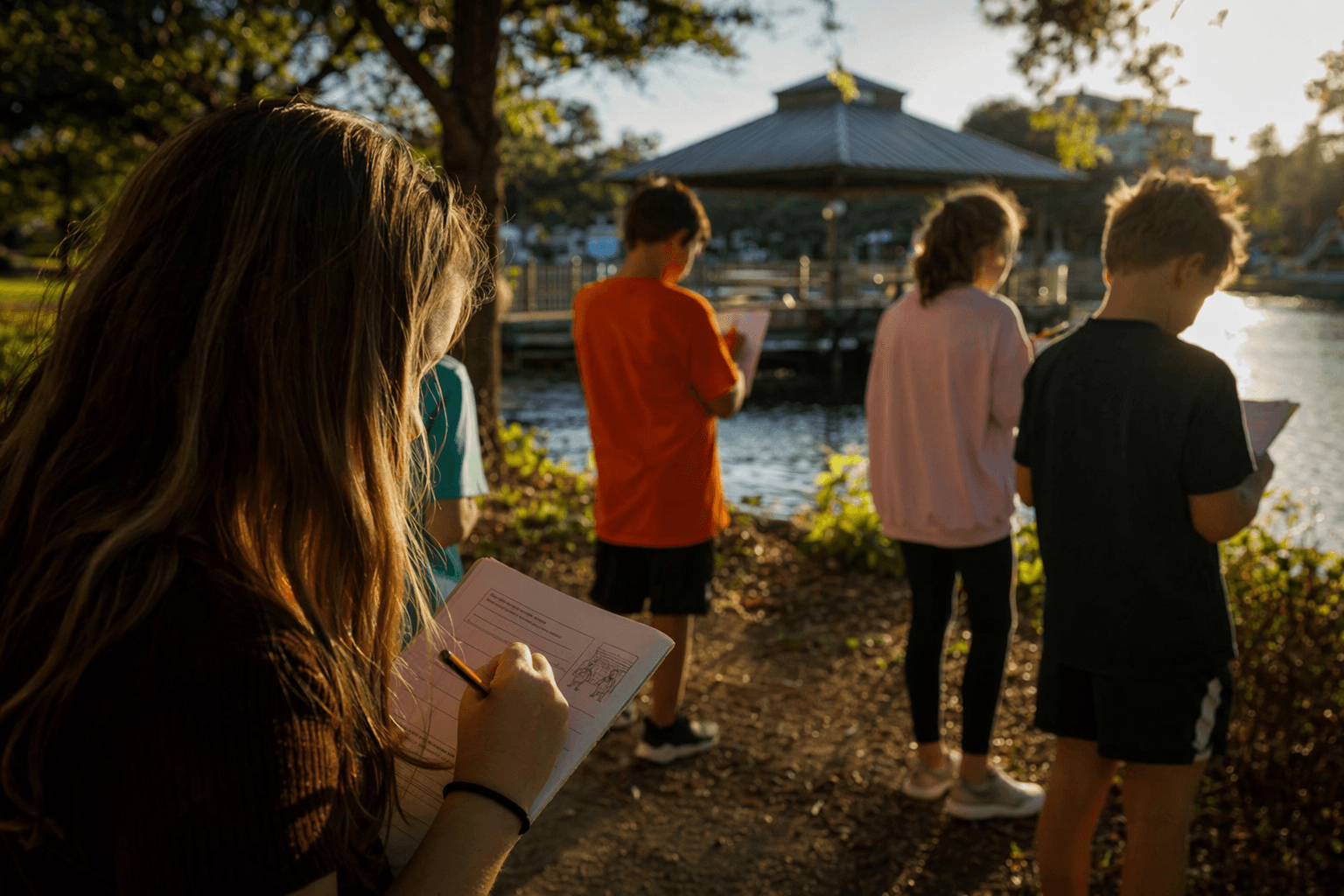
Fourth graders at Partin Elementary turned Oviedo’s streets into a history lesson, using a city-wide scavenger hunt to track down the landmarks, people and stories that shaped the Seminole County city. Julie Grunther, a Partin Elementary teacher, has organized Mission Oviedo for years, giving students a hands-on way to learn the city’s past instead of only reading about it.
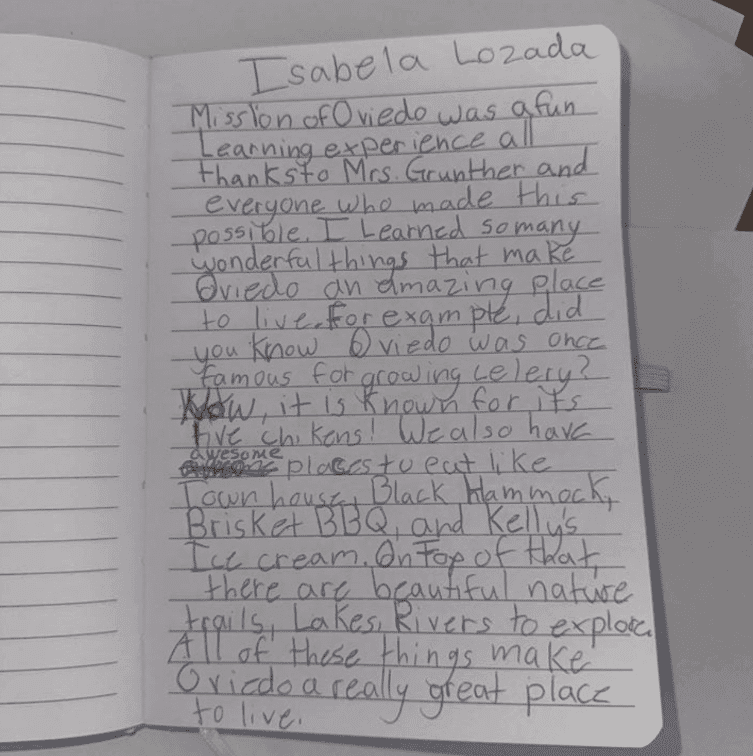
The students were preparing for the April 18 mission as the newsroom also taught them basic journalism skills so they could turn what they found into essays about their discoveries. That mix of history and reporting gave the project a practical edge: the children were not only hunting clues, they were being asked to observe closely, gather details and write clearly about what they saw.
The setting matters. Oviedo is about 16 square miles in eastern Seminole County and has a current population of about 41,934, up from 40,059 in the 2020 Census. The city says its name comes from Oviedo, Spain, a city established in the 8th century. Oviedo incorporated in 1925 and, by 1950, had become the second-largest town in Seminole County after Sanford.
The city’s deeper history gives Mission Oviedo plenty of material. RICHES of Central Florida says the community began on the south shore of Lake Jessup as a settlement called Solaria’s Wharf. Early settlers included Dr. Henry Foster, Joseph Watts and Steen Nelson. The same collection notes that Oviedo began receiving once-a-day bus service to Orlando in 1949, City Hall was built in 1950, and Florida Technological University, now the University of Central Florida, opened in 1968.
Oviedo’s identity has long been tied to agriculture, historic houses and buildings, and the downtown chickens that once wandered through the center of town. Those details are exactly the kind of local memory a scavenger hunt can preserve, especially for children learning how a community tells its own story through places they can visit and names they can remember.

The Oviedo Historical Society, organized in November 1973, says its purpose includes preserving community identity and marking historic sites and buildings. That mission lines up closely with what Mission Oviedo asks fourth graders to do: connect the present city to the older one underneath it, one clue, one stop and one essay at a time.
This article was produced by Prism’s automated news system from verified source data, official records, and press releases, then run through automated quality and moderation checks before publishing. The system is built and supervised by the people who set the standards it runs under. Read our full AI policy.
Did this article answer your question?