Sanford warns residents about deadly generator fumes after outages
After storms, Sanford families turn to generators for food, light and fans, but city leaders warn that one wrong placement can turn exhaust into a lethal threat.
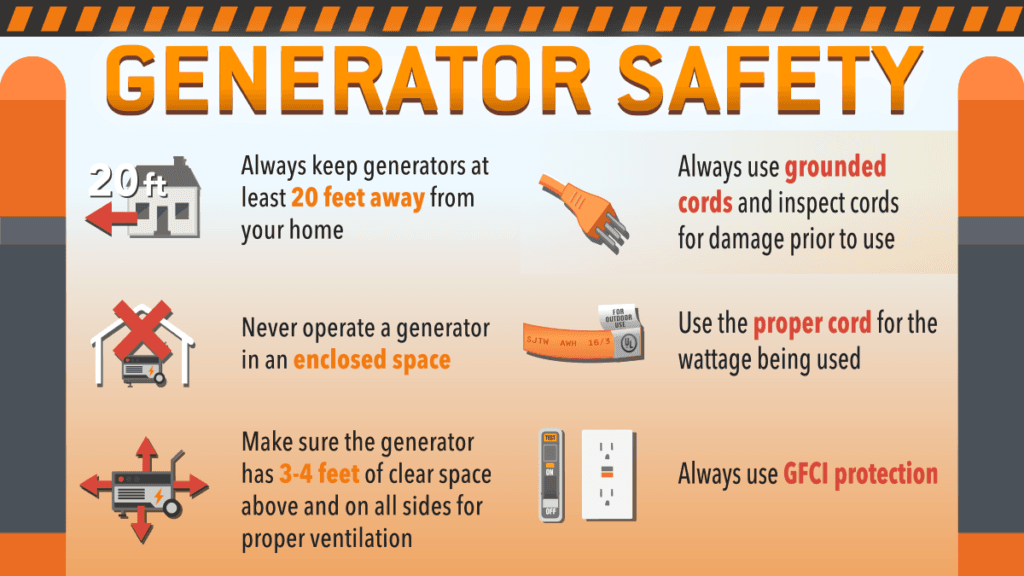
When the power goes out in Sanford, a portable generator can keep a refrigerator cold, fans moving and phones charged. It can also fill a home with invisible carbon monoxide if it sits too close to a door, window or porch.
That warning sat at the center of the City of Sanford’s May 27 safety article on the “20-foot rule,” a basic standard meant to keep generator exhaust away from homes, garages and other occupied spaces. The city’s message was clear: generator fumes are not just a nuisance. If they drift into a house, carport, porch or other partially enclosed area, they can create a deadly indoor-air hazard.

The timing mattered. The U.S. Consumer Product Safety Commission issued a May 27 hurricane-season alert saying portable generators are among the leading causes of post-storm carbon monoxide deaths. The agency said generators should be run outdoors only, at least 20 feet from homes and buildings, with exhaust pointed away from windows, doors and vents.
That distance is where many people go wrong after a storm. A generator parked in a garage, tucked under a carport, set on a porch or placed beside an open window can send exhaust back toward the living space it was meant to protect. Sanford’s warning pushed residents to think ahead about placement, cord routing and ventilation before the next outage, when there may be no time for trial and error.
The risk is serious because carbon monoxide cannot be seen or smelled. The Centers for Disease Control and Prevention says the gas can cause sudden illness and death and is responsible for more than 400 unintentional deaths each year in the United States, along with more than 100,000 emergency-department visits and more than 14,000 hospitalizations. Florida’s Division of Emergency Management says improperly using a generator can result in loss of life or property, and the Florida Department of Health says generators are one of several common household sources of carbon monoxide.
The safety message also fits Seminole County’s recent experience. Seminole County Fire Department officials told WKMG News 6 ClickOrlando in October 2024 that crews frequently respond to improper generator use after storms. That same month, a Seminole County house fire was linked to poor generator maintenance on a unit supplying power to the home.
State guidance also recommends battery-operated or battery-backup carbon monoxide alarms near sleeping areas, and warns residents not to backfeed a home by plugging a generator into a wall outlet. Sanford’s reminder turned that advice into a local checklist for hurricane season: keep the machine outside, keep it 20 feet away, direct exhaust away from the house and make sure the setup does not put the family’s recovery at risk.
This article was produced by Prism’s automated news system from verified source data, official records, and press releases, then run through automated quality and moderation checks before publishing. The system is built and supervised by the people who set the standards it runs under. Read our full AI policy.
Know something we missed? Have a correction or additional information?
Submit a Tip