Seminole County Citizens Academy opens doors to local government
Trooper Steve is the hook, but the real value is practical: Seminole County’s Citizens Academy shows how roads, emergency response and parks decisions get made.
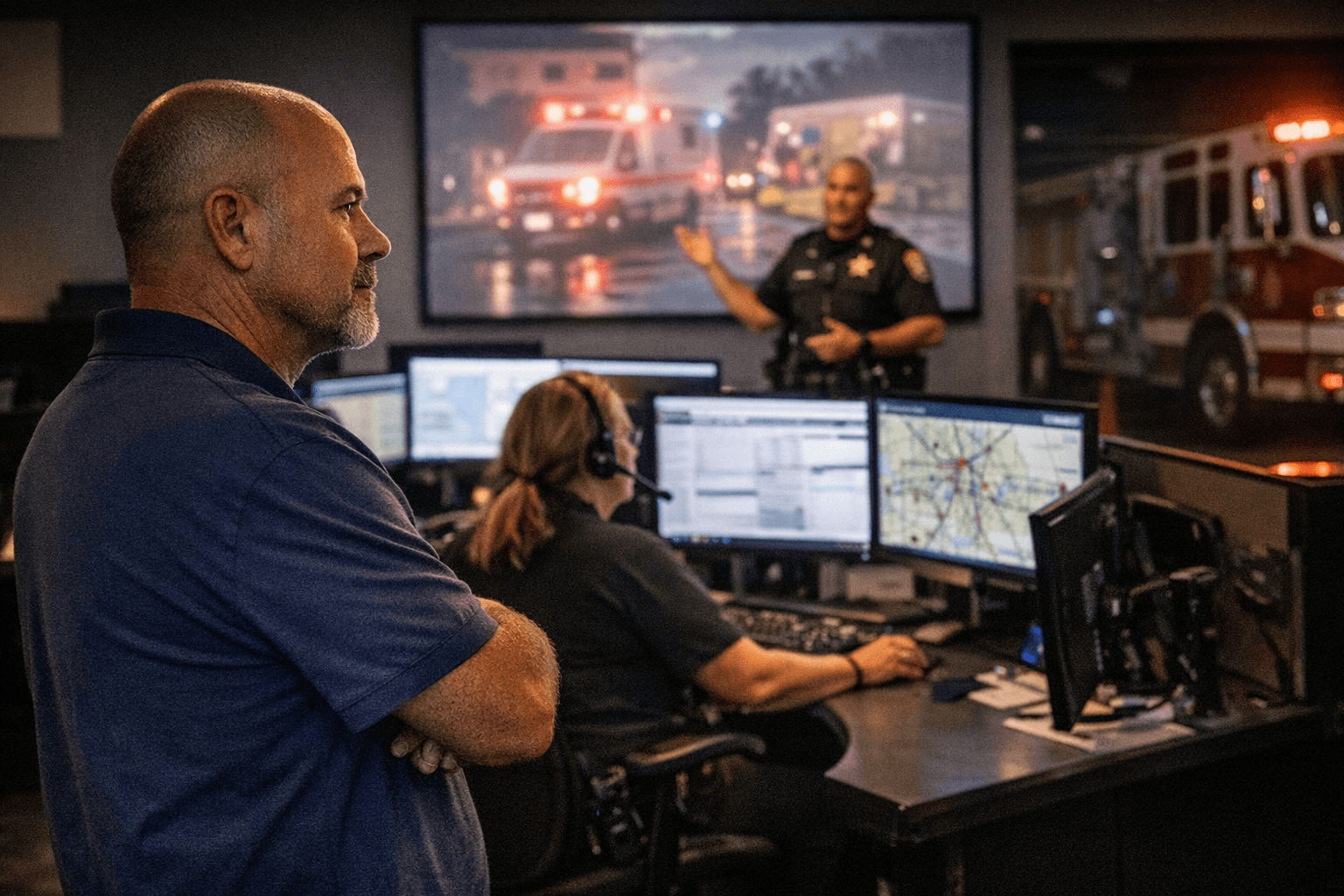
Trooper Steve behind the scenes, and residents behind the curtain
The Trooper Steve angle may pull readers in, but Seminole County’s Citizens Academy is built for something bigger than a TV tease. It gives residents a clear look at how county government works, who makes it run, and what happens before a road gets fixed, a service gets delivered, or a department decision reaches the public.
What the Citizens Academy is
Seminole County says the 2026 Citizen’s Academy kicked off April 18 and returns as a free, family-friendly open-house series. This is the academy’s second year, and county materials describe it as a department-specific experience that offers an inside look at essential county services and the teams that deliver them.
That structure matters. Instead of asking residents to absorb county government all at once, the academy breaks the work into six interactive sessions that move through different departments and functions. The county says the goal is to show the innovation and training that support service quality, which turns a familiar phrase like “county services” into something residents can actually see in motion.
For a county that serves nearly half a million people, that kind of public education is not decorative. The U.S. Census Bureau estimated Seminole County’s population at 494,605 in 2024 and 491,884 in 2025, a scale that makes transparency and access more than buzzwords. When a county that large opens its doors, even a small number of participants can become better informed watchdogs for a very large civic system.
What residents actually see
The value of the academy is not just that residents get a tour. It is that they can meet the people doing the work, ask questions in real time, and better understand how decisions are made behind the scenes. That is where local government usually feels most opaque, especially when residents only encounter it through a road closure, a service delay, or a budget discussion that seems to appear out of nowhere.
The sessions on the calendar make that clearer. Seminole County listed a Public Works session for April 23, 2026, an Emergency Management session for April 29, 2026, and a Parks and Recreation session for May 9, 2026. Taken together, those meetings give residents a cross-section of the county’s daily responsibilities, from infrastructure and preparedness to recreation and public spaces.
For residents who care about how the county keeps roads passable, responds to severe weather, or maintains public amenities, the academy offers a practical education. It is also a chance to see how the county’s departments coordinate with one another instead of functioning as isolated silos. That matters when a single issue touches more than one office, which is often the case in a growing suburban county.
Why the schedule matters
Seminole County is spreading the academy across multiple dates rather than compressing it into one event, and that is one of the most useful details for working families, retirees, and anyone juggling obligations. By making the academy accessible over several sessions through May, the county is giving different residents a better chance to fit it into their schedules.
That approach also makes the learning more durable. One session can focus on Public Works, another on Emergency Management, and another on Parks and Recreation, allowing participants to walk away with a more specific understanding of how each part of county government operates. Instead of a broad civic overview that fades quickly, the series creates repeated points of contact with the people and departments that affect daily life.
The county also points residents to its official event information for the full schedule and participation details, reinforcing that this is part of a broader public-engagement effort. It is not a one-off media moment. It is a continuing attempt to make county operations more legible to the public.
The public accountability angle
Board Chairman Andria Herr has publicly tied the academy to the importance of helping residents understand what county government does. That message fits neatly with the way the Board of County Commissioners works in Sanford, where regular meetings are held at the Seminole County Services Building, 1101 E. First Street.
That location matters because it is where county government becomes formal and visible, even when most residents only see the results. The academy creates a bridge between the building where policy is discussed and the neighborhoods where that policy is felt. For residents who want to challenge a decision, follow a service issue, or simply know where a process begins, that bridge can be invaluable.
Andy Wontor, APR, EPIO, Public Information Division Manager, is listed as the public-information contact for the academy, underscoring that the county sees this as both an education effort and a communications tool. In practical terms, that means residents are not just being invited to observe. They are being given a clearer path to ask informed questions about how Seminole County allocates attention, staff time, and public resources.
Why it matters in Seminole County
The academy lands in a county that is large enough for government to feel distant, yet local enough for decisions to have immediate consequences. A road issue in one part of the county, a preparedness question in another, or a parks decision affecting families on the weekend can quickly become a countywide concern. When residents understand the machinery behind those choices, they are better positioned to follow the next meeting, identify the right department, or question how a service is being handled.
That is the real takeaway from Seminole County’s Citizens Academy. It is not about making government look better for one evening. It is about making county operations understandable enough that residents can hold them to account long after the open-house sessions end.
This article was produced by Prism’s automated news system from verified source data, official records, and press releases, then run through automated quality and moderation checks before publishing. The system is built and supervised by the people who set the standards it runs under. Read our full AI policy.
Did this article answer your question?