Seminole County Man Arrested for Using AI Deepfake to Fabricate Crime Evidence
A Lake Worth Beach man faces a felony charge after using a 3-second AI deepfake to trick a Lake Mary deputy into investigating a crime that never happened.
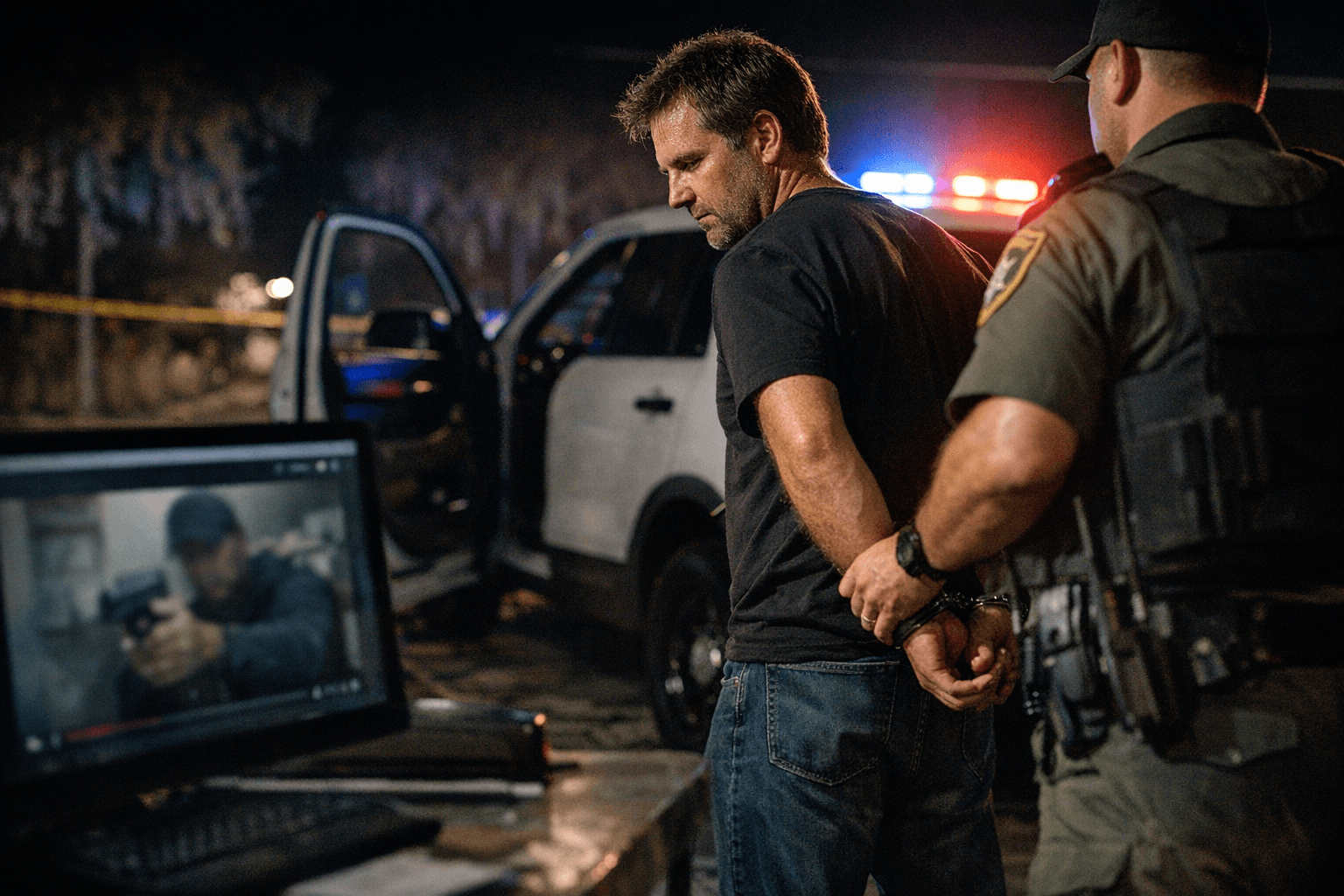
Fabricating physical evidence is a felony in Florida, and Alexis Martínez-Arizala, 25, of Lake Worth Beach, is charged with exactly that after Seminole County investigators say he walked into an Academy Sports store on Lake Emma Road in Lake Mary on March 24 and showed an on-duty sheriff's deputy a digitally manufactured video claiming to show a crime already in progress outside.
The scheme, as described by the Seminole County Sheriff's Office, unfolded in seconds. Martínez-Arizala approached the deputy inside the store and claimed he had just watched several people climb into the deputy's marked patrol vehicle in the parking lot. He offered the cellphone video as proof: a roughly three-second clip appearing to show two individuals entering the patrol car. The deputy walked out to check.
He found nothing disturbed. No doors forced. Nothing missing. When investigators reviewed store surveillance footage covering that same window of time, the footage showed no one had approached the vehicle at all. The video Martínez-Arizala presented had been digitally fabricated. What it had also produced, critically, was a deputy approaching his patrol car with his hand on his weapon, a detail the SCSO specifically noted in its release as evidence of the real physical danger these manipulated clips can create.
Investigators obtained a warrant on March 27. Martínez-Arizala was located in San Juan, Puerto Rico, and arrested there on April 8 by an officer with the U.S. Marshals Service Task Force working the outstanding Seminole County charges. He faces one felony count of tampering with or fabricating physical evidence, two misdemeanor counts for making a false report to law enforcement and knowingly giving false information to an officer, and an additional charge of unlawful use of a two-way communication device. He is being held on a $7,000 bond pending extradition.
Investigators found that Martínez-Arizala had also posted content about the encounter on social media, suggesting the video was designed in part to generate viral attention rather than any legitimate public safety purpose.
Sheriff Dennis Lemma addressed the case directly in the April 8 release. "The misuse of artificial intelligence to create deepfake videos is a growing concern, particularly when it targets public safety professionals," Lemma said. "These fabricated videos can damage reputations, create unnecessary tensions, and raise real safety concerns for the first responders who serve our communities."
The Lake Mary incident is a close-range version of what investigators call a swatting-style threat: instead of a fabricated emergency call routing armed officers to a location, a fabricated video achieves the same trigger at arm's length. The synthetic content in this case was brief enough to seem credible, specific enough to reference the deputy's own vehicle, and plausible enough to draw a weapon-ready response.
For Seminole County residents and business owners holding genuine video of a real crime, the investigative standard that unraveled this case offers a practical checklist. Preserve the original file on the device that captured it without cropping, filtering, or screen-recording it to another phone. Note the exact time and location before memory fades. Report it directly to the SCSO rather than posting to social media first. Investigators examine whether embedded metadata, including the file's timestamp, GPS coordinates, and device information, aligns with what the video depicts, and they cross-reference footage against every other available surveillance angle covering the same scene. In the Academy Sports parking lot, not a single additional camera confirmed what the three-second clip claimed to show. That contradiction alone collapsed the fabrication. The SCSO's decision to pursue a felony charge signals that in Seminole County, synthetic evidence presented to an officer is not a prank: it is a crime.
This article was produced by Prism’s automated news system from verified source data, official records, and press releases, then run through automated quality and moderation checks before publishing. The system is built and supervised by the people who set the standards it runs under. Read our full AI policy.
Did this article answer your question?