Seminole County Museums and Historic Sites Preserve Local Cultural Identity
Goldsboro once operated as its own incorporated Black municipality — one of several stories Seminole County's museums have spent decades working to keep alive.
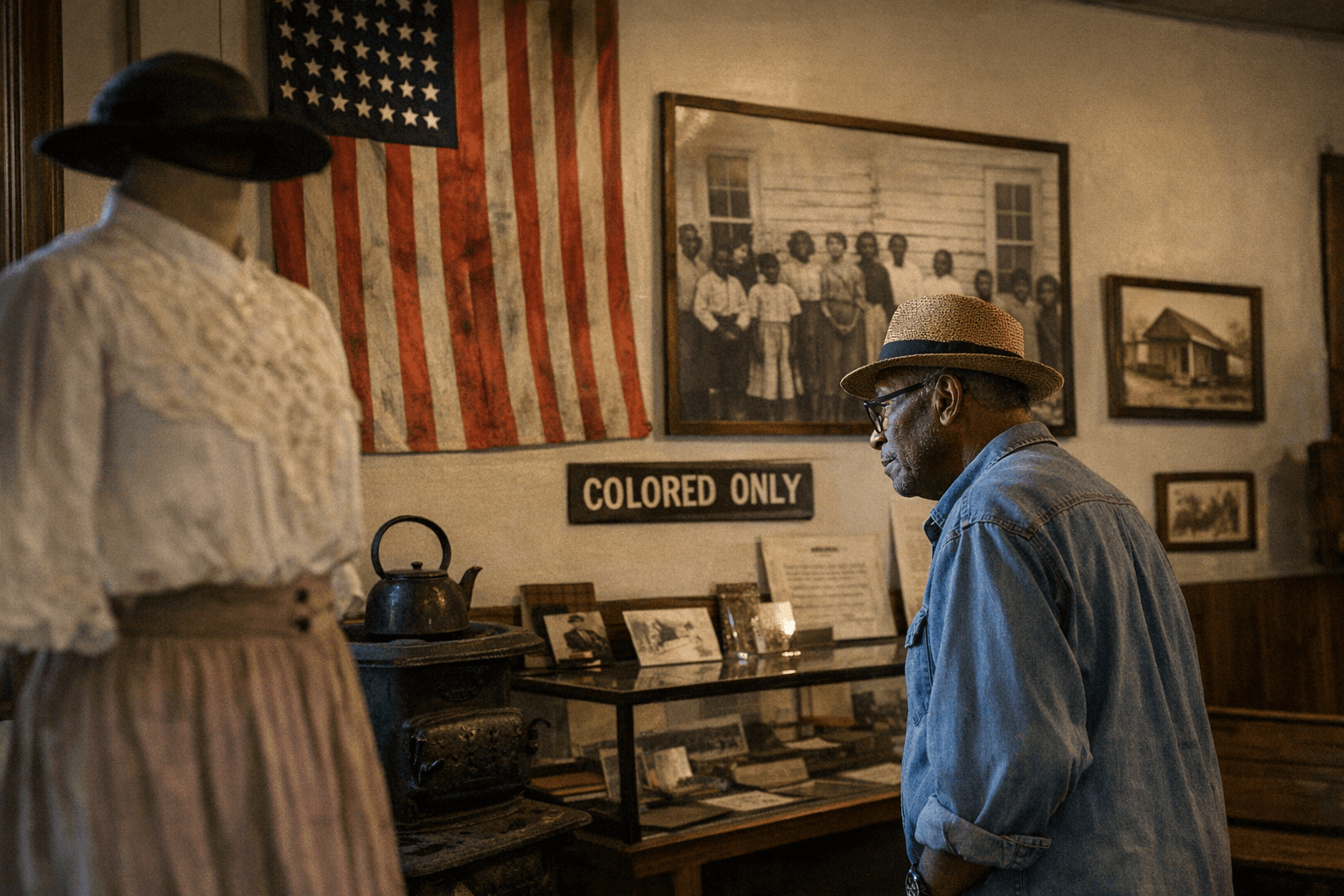
Few counties in Central Florida carry as layered a past as Seminole County, where the St. Johns River shaped commerce, Indigenous communities preceded European settlement by centuries, and a self-governing Black town once operated within what are now suburban boundaries. Three primary institutions and a network of guided tours work to hold that history in place, offering residents and visitors a way to encounter the county not as a backdrop to development but as a place with its own distinct civic memory.
The Sanford Museum: Where the City's Origin Story Lives
Downtown Sanford's cultural district anchors itself around the Sanford Museum, formally known as the Henry Shelton Sanford Memorial Library and Museum. Established in 1957 and expanded twice since, the museum preserves artifacts, documents and collections tied directly to the city's founder and to the forces that turned a riverfront outpost into a regional center. Henry Shelton Sanford's influence stretched from the St. Johns River's role as a commercial waterway to the rail lines and citrus economy that defined early Seminole County, and the museum traces all of it through rotating exhibits, a substantial research collection and educational programming designed for both school groups and independent visitors.
The research collections are particularly valuable for anyone tracing family history or studying the agricultural and commercial patterns that defined the area in the 19th and early 20th centuries. Exhibit schedules shift seasonally, so calling ahead before a research visit is the most reliable way to confirm access and availability. Special programs tied to school curricula run throughout the year, making the museum one of the more practical stops for teachers looking to connect classroom units to actual local geography.
Goldsboro Historical Museum and Francis Oliver Cultural Arts and Welcome Center
The Goldsboro Historical Museum and Francis Oliver Cultural Arts and Goldsboro Welcome Center occupies one of the most historically significant sites in the county. Goldsboro was once an independently incorporated Black municipality, a self-governing town with its own civic infrastructure at a time when that independence carried enormous stakes. The museum preserves that history through exhibits on Goldsboro's schools, churches and civic institutions, and it hosts cultural programming and performances that keep the community's living traditions visible alongside the archival record.
Admission is free, which removes one of the more common barriers to engaging with local history. The museum runs periodic public events celebrating local artists and storytellers, and its calendar includes guided tours that move through the history of Goldsboro's neighborhood fabric. For anyone interested in civil-rights era narratives specific to Central Florida, or in the longer arc of African American civic life in Seminole County, this is the essential starting point. Checking the museum's event calendar before visiting is worthwhile; performances and guided sessions offer dimensions of the history that static exhibits alone cannot convey.
Museum of Seminole County History
The county government operates the Museum of Seminole County History, which takes the broadest chronological scope of the three primary institutions. Its collections span Indigenous histories, pioneer settlement patterns and the St. Johns River's central role in shaping commercial life across the region. Maps, photographs and artifacts document the transitions that moved Seminole County from an agricultural economy anchored by river trade to the more complex suburban landscape it occupies today.
The museum functions as a go-to resource for family-history researchers and educators, with rotating exhibits that place local development within regional and national contexts. Because it operates under Seminole County Government, it also carries a certain institutional continuity that smaller volunteer-run organizations sometimes struggle to maintain. That stability makes it a reliable entry point for visitors encountering the county's history for the first time, as well as for researchers returning repeatedly to consult its collections.
Walking Tours and Seasonal Programming
Beyond the museum walls, several local historical societies coordinate guided walking tours of Seminole County's historic districts. Sanford's historic downtown is the most prominent venue for these tours, where the architecture, street grid and commercial buildings reflect layers of development stretching back to the city's founding period. Seasonal lectures and family programs run throughout the year at multiple institutions, offering a calendar of engagement that extends well past a single visit.
These tours matter because they do something exhibit halls cannot: they place historical context directly onto the physical spaces where history unfolded. Walking a block in Sanford's downtown while hearing about the citrus trade, the rail connections and the river commerce that built it changes how that block looks on every subsequent visit.
Planning a Visit
Each of the three museums posts current hours, exhibit listings, accessibility details and event calendars on their official web pages. Hours and exhibit schedules shift, particularly around seasonal programming, so checking online before arriving is more reliable than assuming consistent access. Groups visiting for research purposes, school programs or organized tours should contact the museums directly in advance; doing so helps staff prepare any accommodations needed and ensures the visit delivers what the group came for.
Accessibility information is available through official channels for each institution. The Goldsboro Museum's free admission policy makes it especially accessible for families and school groups working with limited budgets, while the county-run Museum of Seminole County History carries the resources of a government institution behind its operations.
Why These Sites Matter to the County
Visiting and supporting these museums is not a passive act of nostalgia. Small institutions like these depend on foot traffic, community awareness and consistent public engagement to remain viable. Volunteer-run cultural organizations in particular face ongoing resource pressures, and sustained attention from residents keeps them functioning. For teachers and parents, the sites provide something no textbook substitutes for: physical places where history becomes tangible, where the St. Johns River is not an abstraction but a body of water you can see from the same downtown blocks that Henry Shelton Sanford once mapped out, and where Goldsboro's story of self-governance can be told in the neighborhood where it actually happened.
Seminole County's cultural identity is not housed in a single monument or a grand institution. It lives across these three museums, in the walking routes through Sanford's historic downtown, and in the community programming that Goldsboro's cultural center sustains. Taken together, they form a picture of a place that has always been more complicated, and more interesting, than a single narrative allows.
This article was produced by Prism’s automated news system from verified source data, official records, and press releases, then run through automated quality and moderation checks before publishing. The system is built and supervised by the people who set the standards it runs under. Read our full AI policy.
Did this article answer your question?