Seminole County parks and trails link cities, expand access to nature
Seminole County maintains an extensive network of parks and trails that connects Longwood, Altamonte Springs, Lake Mary, Sanford, Casselberry, Oviedo and Winter Springs, providing recreation, transportation options and habitat conservation. The system includes destination sites such as Wekiwa Springs State Park, the Cross Seminole Trail, and large wilderness areas, making stewardship, funding and equitable access key issues for local residents and policymakers.
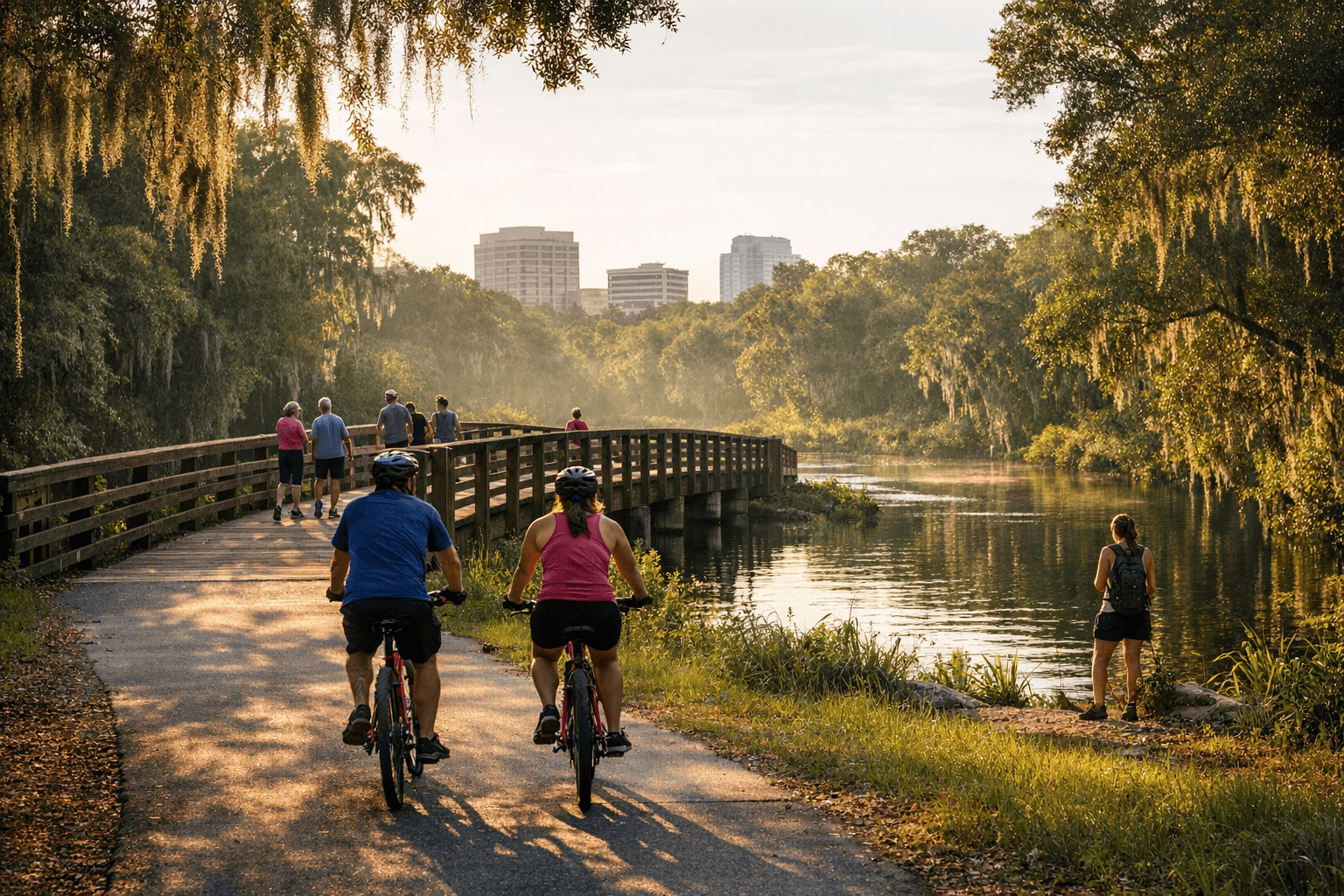
Seminole County’s parks and trails form a contiguous green infrastructure that serves both urban neighborhoods and more remote natural areas. The network supports swimming, paddling, hiking, cycling, horseback riding, camping, fishing and wildlife viewing, and it functions as a commuting and recreation corridor linking multiple municipalities across the county.
Wekiwa Springs State Park is a flagship site within the system. The spring maintains water near 72 degrees Fahrenheit year round, and the park offers up to 13.5 miles of trails, paddling and a range of user activities including primitive and group camping and horseback riding. The park includes ADA amenities such as a swim lift and posts detailed information on permitted activities and safety protocols. The Cross Seminole Trail provides a long, paved multi use corridor that connects neighborhoods, parks and regional trail systems, with multiple access points, parking areas and links to local green spaces that support walking, running and cycling.
On the more remote end of the spectrum, Black Bear Wilderness and Little Big Econ represent larger conservation tracts that offer longer hiking loops, remote paddling launches and significant wildlife habitat. These areas are better suited for experienced hikers and nature observers, and they underscore the county role in managing lands for both recreation and ecological protection.
The county’s parks and natural lands pages list volunteer and adopt a park options as well as contact information for reservations and temporary closures. Residents should check park status before traveling because seasonal closures, high water and capacity limits can affect access. Those management practices reflect broader policy choices about staffing, maintenance budgets, signage and emergency response.
For local government, the parks network raises questions about funding priorities, transportation connectivity and equitable access across the county’s municipalities. Investment decisions will shape how trails are maintained, how ADA access is expanded and how natural lands are protected against flooding and other climate impacts. Civic engagement through volunteer programs, adopt a park partnerships and participation in county budget and planning processes will directly influence the future of this public resource and its role in Seminole County life.
This article was produced by Prism’s automated news system from verified source data, official records, and press releases, then run through automated quality and moderation checks before publishing. The system is built and supervised by the people who set the standards it runs under. Read our full AI policy.
Did this article answer your question?