Seminole County Program Trains Justice-Involved Youth in AI, Workforce Skills and Entrepreneurship
Seminole County program trains justice-involved youth in AI and workforce skills to boost job readiness and broaden career pathways for returning residents.
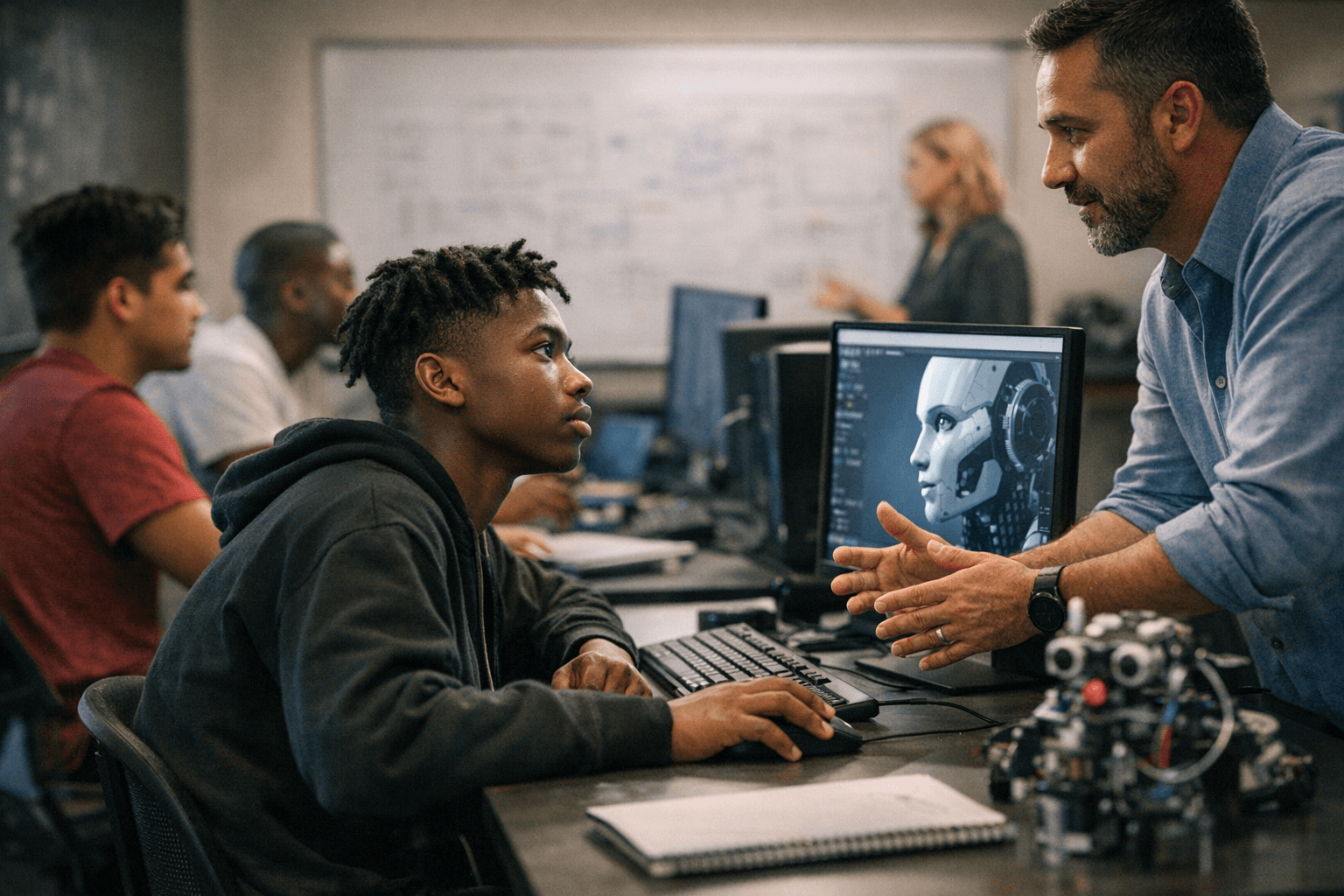
A new Seminole County training initiative is introducing justice-involved youth to foundational artificial intelligence concepts, essential IT skills and entrepreneurship, with the goal of improving employability and widening post-release career options. The program pairs technical exposure with workplace-readiness training so participants can transition into jobs or start businesses with clearer, demonstrable skills.
The curriculum blends classroom instruction and hands-on exercises that teach participants to create AI prompts, communicate with confidence, and articulate their skills in professional settings. Training modules emphasize resume writing, interviewing techniques, job search strategies, public speaking and effective communication. Entrepreneurship concepts are included to expand awareness of alternative career pathways beyond traditional employment.
Organizers say the program increases participants’ professionalism, adaptability and readiness for workforce entry while clarifying specific routes into technology careers and small-business ownership. The initiative is led in partnership with AI consultant David de Souza and DCD Project Management Solutions. Business owners or organizations interested in learning more or booking a conversation can visit dcdpmsolutions.com.
For Seminole County, the effort touches several local priorities: reducing barriers to reentry, addressing workforce shortages in IT and related fields, and offering structured alternatives to recidivism through employment and entrepreneurship. Employers seeking trained candidates may gain a local pipeline of individuals with both technical and soft skills, while community groups focused on reentry services could use the program as a model for combining skills training with supportive services.
The program also raises policy questions that county leaders and service providers should monitor. Successful transitions from training to work typically require follow-up services such as placement support, stable housing, and transportation assistance. Training in AI introduces additional considerations around data privacy, ethical use of tools and equitable access to technology; local policymakers may need to set standards for oversight, certification and long-term funding to sustain impact.
Measured outcomes will determine whether the program meaningfully improves employment rates among participants and reduces repeat justice involvement. Tracking job placements, retention at 3- and 12-month intervals, and any moves into entrepreneurship would provide concrete evidence for scaling the effort or integrating it into county workforce development programs.
For now, the program offers a practical pathway for justice-involved residents to gain marketable skills in a changing economy. Seminole County employers and community partners can connect with David de Souza and DCD Project Management Solutions via dcdpmsolutions.com to explore collaboration or to bring similar training to other local sites.
This article was produced by Prism’s automated news system from verified source data, official records, and press releases, then run through automated quality and moderation checks before publishing. The system is built and supervised by the people who set the standards it runs under. Read our full AI policy.
Did this article answer your question?