Seminole County Sheriff Lemma Testifies Before Congress on Drug Threats
Sheriff Dennis Lemma told a House subcommittee that without faster federal forensic funding and prosecution tools, Seminole County's fentanyl crisis will outrun his deputies' ability to respond.
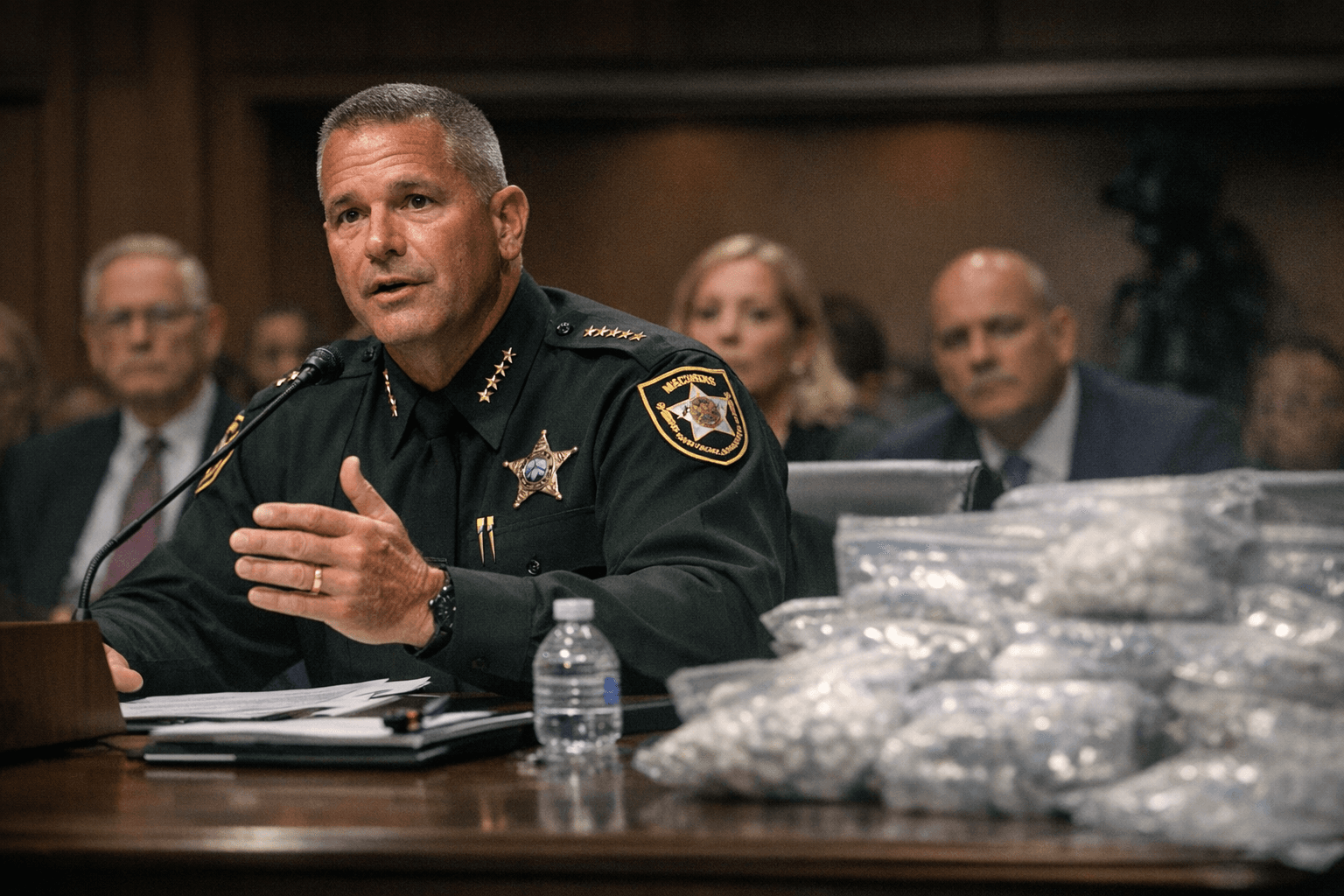
Fentanyl analogs that bypass existing drug schedules, overdose clusters stretching response resources thin, and forensic lab backlogs that stall prosecutions for months: Seminole County Sheriff Dennis Lemma put all three before the U.S. House Subcommittee on Health on March 26, pressing Congress for the funding and enforcement tools that his 1,400-person agency cannot generate at the county level alone.
Lemma, the county's 10th sheriff and current president of the Florida Sheriffs Association, filed his written statement with the House Committee on Energy and Commerce as part of a formal hearing on combating existing and emerging illicit drug threats. He used the platform to frame Seminole County as a working example of a national crisis: synthetic opioids, chiefly fentanyl and its chemical analogs, have reshaped the enforcement landscape faster than local budgets and forensic infrastructure can track.
The testimony identified four specific areas where federal action translates directly into outcomes on Seminole County streets. Faster forensic laboratory turnaround times would move cases from arrest to conviction before dealers resume distributing. Expanded federal information-sharing platforms would allow investigators to connect county-level distribution networks to the larger trafficking organizations supplying them. Stronger border and interdiction tools would cut supply chains before product reaches Central Florida. And dedicated federal funding for local prosecution and treatment diversion programs would give deputies and state attorneys the staff to pursue cases that currently stall.
The urgency is grounded in documented local numbers. In 2021, Lemma publicly reported 707 overdoses and 105 overdose deaths tied to fentanyl and other drugs in Seminole County in a single year. The continued proliferation of fentanyl analogs, synthetic compounds chemically engineered to circumvent existing federal drug scheduling, has since added layers of forensic complexity that county crime lab resources struggle to absorb, creating delays that prosecutors cannot work around.
Lemma also raised the compounding burden of cross-jurisdictional investigations, where trafficking networks operating across Seminole, Orange, and neighboring counties demand interagency coordination that no single participant can fully fund. Clandestine lab discoveries and organized distribution takedowns require specialized equipment and personnel that stretch his agency's roughly $170 million annual budget.
His standing in Washington reinforces the weight of the request. Lemma served as president of the Major County Sheriffs of America from February 2022 through February 2024, a national role that placed him in direct contact with federal appropriators and drug policy architects. That institutional credibility, combined with his current Florida Sheriffs Association presidency, gives Seminole County's asks a reach beyond what most county-level officials can access.
His March 26 statement is now part of the formal House record. What the subcommittee decides next will register not in legislative language but in how fast Seminole County's crime lab clears its backlog, how many investigators Lemma can assign to multi-county trafficking cases, and whether the next overdose cluster ends with an arrest that holds up in court.
This article was produced by Prism’s automated news system from verified source data, official records, and press releases, then run through automated quality and moderation checks before publishing. The system is built and supervised by the people who set the standards it runs under. Read our full AI policy.
Did this article answer your question?