Seminole County uses sentinel chickens to track mosquito-borne illness
Seminole County is using 42 sentinel chickens to catch mosquito-borne viruses before people get sick, while AI-assisted trapping speeds up where crews act next.
Seminole County is using 42 sentinel chickens in seven coops to spot mosquito-borne illness before it reaches people. Every Monday, Mosquito Control staff draw blood from the birds, spin the samples, and send them to a state lab in Tampa for testing, giving the county an early warning system when mosquito activity rises.
How the sentinel chickens work
The birds are deliberately low-tech for a high-stakes job. Theressa Jones, the program manager, said chickens are used because they do not get sick or die from the diseases mosquitoes may carry, so they can show exposure without becoming a casualty of it. The chickens have tested clean so far, but the point of the program is to detect trouble before human cases appear.
Seminole County has used the system every year from April through November, the stretch when mosquito activity is highest in Florida. By April 3, 2026, dozens of sentinel chickens had already been placed in coops across the county ahead of the rainy season, when standing water and heavy mosquito pressure make surveillance more important.
What the county watches for next
The chicken program is only one part of a larger mosquito-control setup. Once mosquito traps are collected, staff use an IDX machine that can identify mosquito species in seconds with AI, replacing a manual process that used to take 30 to 40 minutes per trap, Jones said. She said the equipment makes the work faster and more accessible for employees who are not insect-identification experts.
Mosquito species are not interchangeable. If crews find disease-carrying mosquitoes in a particular area, the county can move more quickly with fogging and other precautions to reduce human exposure.
What the program is for
The Mosquito Control Program sits inside the Watershed Management Division of the Environmental Services Department, and its mission is to provide environmentally safe, effective and economically responsible mosquito control for residents. Its broader strategy is integrated pest management, built around source reduction, larviciding, surveillance, targeted adulticiding, and public education.
Larviciding is the primary activity, while fogging is a last resort. That approach is practical in Seminole County because stopping mosquitoes while they are still larvae is more efficient and cost-effective than chasing adult insects after they are already flying through neighborhoods.
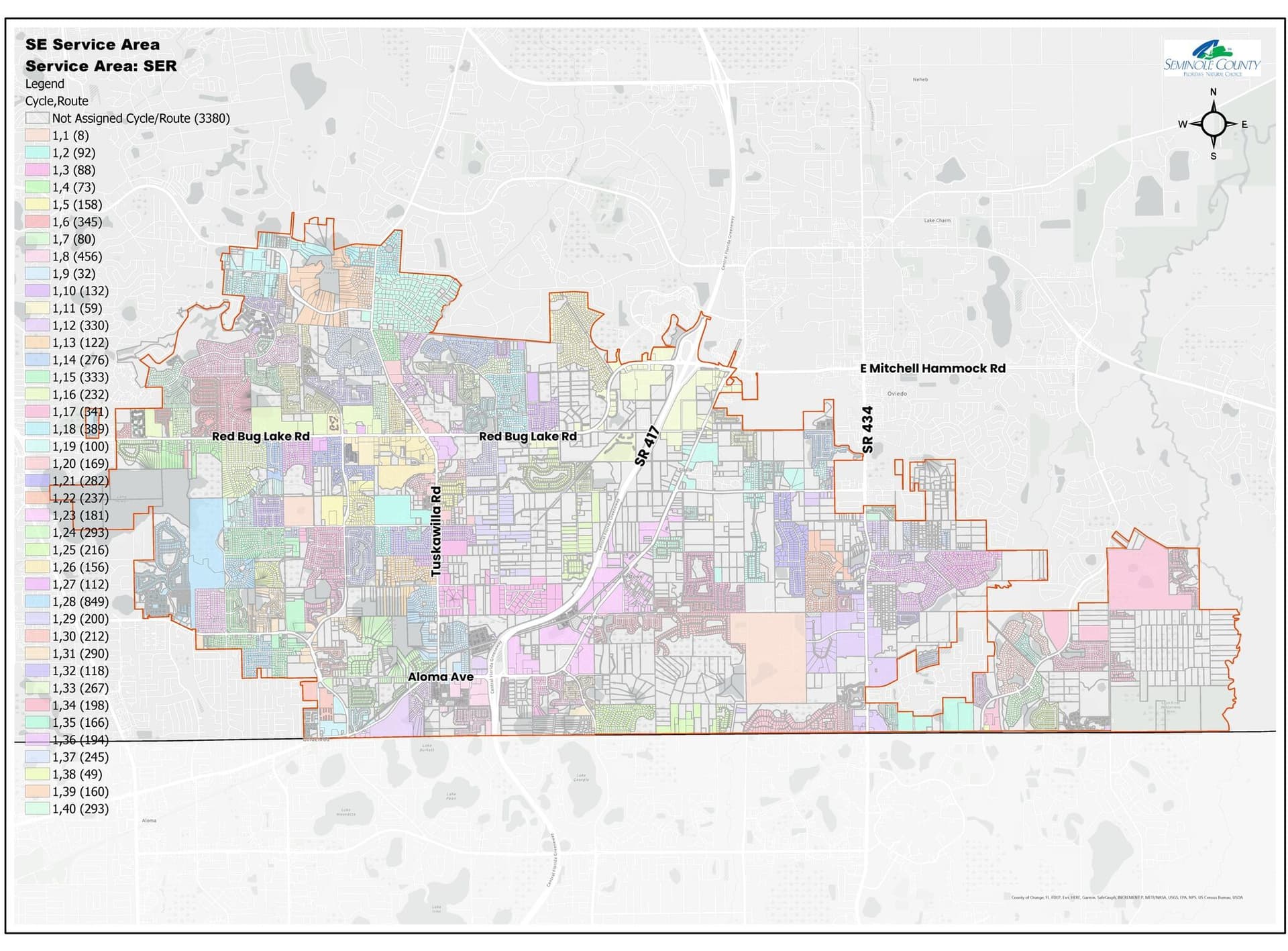
Ground fogging in Seminole County is weather-permitting and scheduled by fog zone, which means it is not a blanket response sprayed everywhere at once. Aerial mosquito treatment has not been routine in recent years, with the last aerial treatments in October 2017, 2016, 2011 and 2009.
What this surveillance should include
Florida Department of Health guidance calls for a complete mosquito-borne disease surveillance program to combine sentinel chicken seroconversion data with weather patterns, the abundance of vector and amplification host species, and human and animal disease reports. Testing of sentinel chicken samples is handled by the Bureau of Public Health Laboratories in Tampa.
Florida arbovirus surveillance includes West Nile virus, eastern equine encephalitis virus, St. Louis encephalitis virus, dengue virus, chikungunya virus, Zika virus, and California encephalitis group viruses. Arboviruses are found in mosquitoes throughout the state during most of the year, with transmission most often reported between August and November.
Questions about mosquitoes and mosquito control go to local mosquito control districts, and questions about arboviral reporting go to county health departments, including the Florida Department of Health in Seminole County and the Seminole County Health Department.
Why the county still uses chickens in 2026
Sentinel chickens are not new to Florida. A historical review dates the statewide program to 1978, after a Saint Louis encephalitis outbreak in Central Florida pushed public health officials to build an arbovirus surveillance system. A separate review dates the Pinellas County program to 1981.
The rest of the program now includes AI-assisted trap analysis and weather-based fogging schedules.
What Seminole County residents can do now
Residents should take mosquito control seriously during rainy season, especially in places where water sits long enough for mosquitoes to breed. Source reduction is the foundation of the county’s own program: emptying containers, clearing gutters, and draining standing water cut off the places mosquitoes use to multiply.
A practical Seminole County checklist looks like this:
- Use mosquito repellent when you are outside, especially during dawn and dusk hours when mosquitoes are often most active.
- Dump standing water after rain, including buckets, plant saucers, tarps, toys, and clogged drains.
- Pay attention on weather-permitting fogging days in your fog zone, but do not rely on fogging alone.
- If you feel ill after heavy mosquito exposure, call a clinician or your county health department promptly.
Residents who want to reach the county mosquito office can contact Seminole County Mosquito Control at 200 West County Home Road in Sanford, FL 32773, or call 407-665-5542.
This article was produced by Prism’s automated news system from verified source data, official records, and press releases, then run through automated quality and moderation checks before publishing. The system is built and supervised by the people who set the standards it runs under. Read our full AI policy.
Did this article answer your question?