Stalled Clubhouse Deli at Tuscawilla Prompts Review of Winter Springs Code Enforcement
An April 2025 stop work order at the planned Clubhouse Deli did not stop activity, and the case reached the Code Enforcement Board on July 22, 2025. The lapse raises questions about Winter Springs enforcement and permitting.
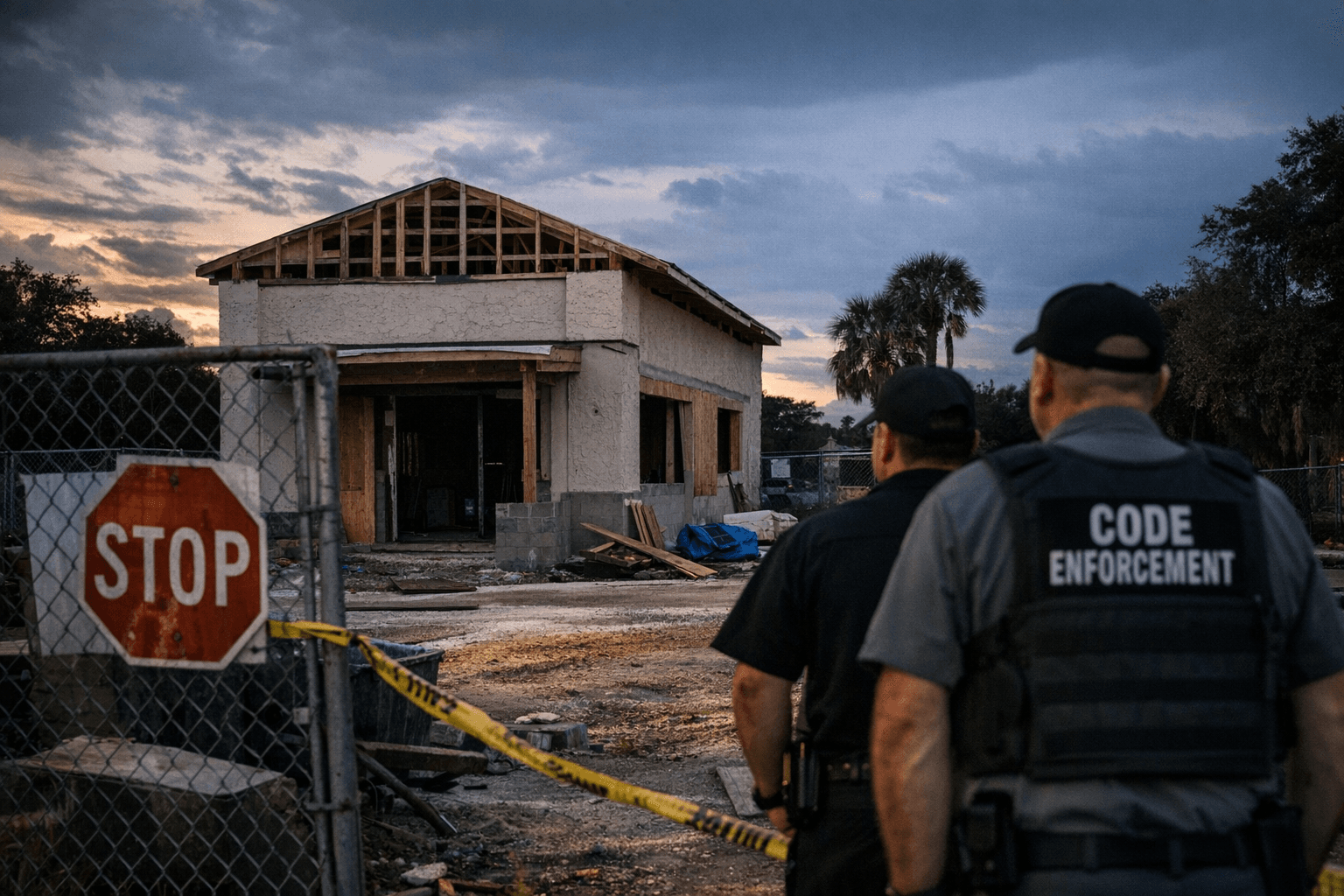
A stop work order issued in April 2025 for the planned Clubhouse Deli at the former 7-Eleven on Winter Springs Boulevard did not halt construction activity, prompting a Code Enforcement Board hearing and renewed scrutiny of Winter Springs’ enforcement practices. The property owner and a city commissioner say the episode exposed procedural gaps that could affect neighborhood safety and redevelopment timelines.
The project, identified as the Clubhouse Deli, occupied the old 7-Eleven building in the Tuscawilla area. Building owner Zaya “Z” Givargidze owns the property but not the proposed business, and she "put the blame on the city for lack of enforcement." Officials sent an official notice of code violation on April 16, 2025; a separate stop work order was issued in April 2025. Despite those actions, work continued for most of 2025, and the matter was presented to the Code Enforcement Board on July 22, 2025.
An official notice accompanying the enforcement action lays out the procedural posture of the case: "This case was presented to the [Code Enforcement Board] on July 22 2025. The case itself began on April 16, 2025 with the official notice of code violation being sent to the respondents. This is part of the normal [Code Enforcement Board] process, which allows every respondent sufficient time to address the issues presented."
The sequence has raised structural questions about which city office handles enforcement and how quickly stop work orders are converted into compliance. Winter Springs City Commissioner Paul Diaz said he is "doing the 'legwork' to bring a proposal to the city manager to update how the city enforces its codes. He said he wants to see most code enforcement moved out of the police department’s purview, and make it easier to get basic work approved. But compliance is still an issue, he said." Diaz’s comments indicate at least one pathway under consideration: reassign enforcement duties away from police and streamline approvals for routine renovations.
For Winter Springs residents and business owners, the episode highlights two practical stakes. First, unclear or slow enforcement can prolong construction-related impacts in commercial corridors and residential edges. Second, ambiguity about departmental responsibility undermines predictability for property owners seeking permits and for neighbors expecting timely enforcement of local codes.
Looking ahead, the immediate questions are whether the Code Enforcement Board will issue penalties or orders that change the site’s status, and whether Commissioner Diaz’s proposed changes move from concept to a concrete plan submitted to the city manager. Residents should expect follow-up hearings and city commission discussion if the proposal advances. The outcome will shape how Winter Springs balances timely enforcement with fair process for property owners in Tuscawilla and across the city.
This article was produced by Prism’s automated news system from verified source data, official records, and press releases, then run through automated quality and moderation checks before publishing. The system is built and supervised by the people who set the standards it runs under. Read our full AI policy.
Did this article answer your question?