Year-Round Guide to Seminole County Parks, Trails and Outdoor Loops
Discover year-round parks, trails and outdoor loops in Seminole County and practical tips for safe, equitable use by families and neighbors.
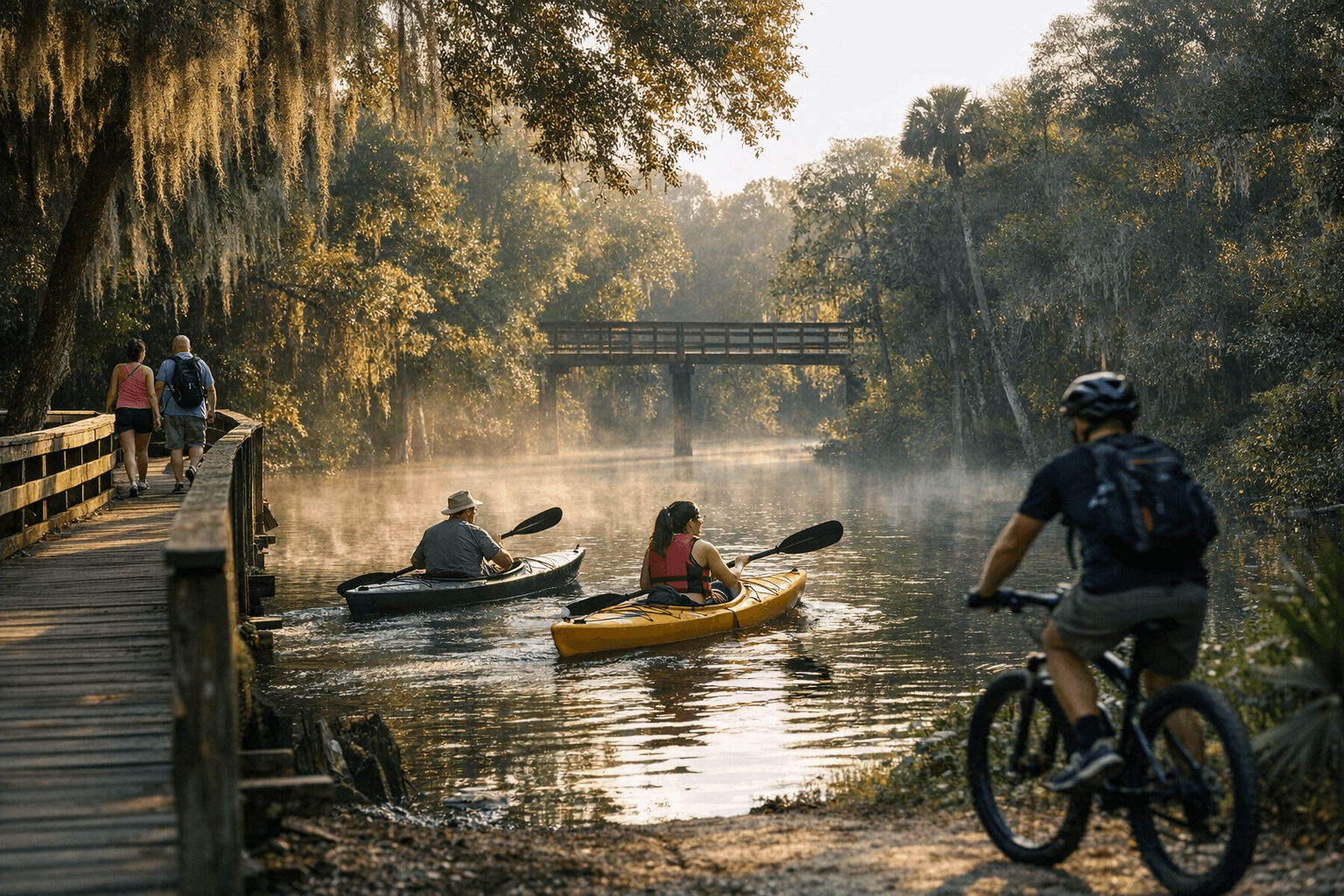
As winter, spring, summer and fall rotate through Central Florida, Seminole County’s parks and trails offer reliable places for movement, mental health breaks and community connection. This guide points you to core sites, explains what each offers, and highlights public health, accessibility and neighborhood impacts so you can plan visits that are safe, affordable and community-minded.
1. Sanlando Park (Altamonte Springs)
Sanlando Park is a neighborhood hub with shaded walking loops, playgrounds and athletic fields that support everything from pick-up soccer to family picnics. The mix of maintained turf and paved paths makes it accessible for older adults, stroller users and people with mobility aids; check surface conditions before planning longer runs. Because it’s close to residential corridors, Sanlando acts as a daily green lung, important for stress reduction, informal social cohesion and youth physical activity. Confirm park hours, permitted field uses and whether athletic leagues have reserved space to avoid conflicts.
2. Wekiva Island & Rock Springs Run (central-west Seminole access points)
Wekiva Island and access points to Rock Springs Run are prime for paddling, riverside birdwatching and seasonal events that center on the Wekiva River ecosystem. These sites support low-impact recreation that doubles as outdoor education about aquatic habitats and water quality, critical public health topics when considering stormwater and algal bloom risks. Plan for water safety: use life jackets, bring shade and check river conditions; community events often provide outreach about conservation and safe recreation. Because access requires vehicle or shuttle in some cases, coordinate carpooling or local transit where available to reduce barriers.
3. Lake Mary trails and Cross Seminole Trail segments
Lake Mary’s trail network and segments of the Cross Seminole Trail are high-traffic corridors for cyclists, walkers and commuters using active transportation to reach schools, workplaces and retail centers. Well-maintained paved stretches encourage bike commuting and can reduce vehicular trips, improving air quality and chronic disease outcomes in the long term. Expect shared-use etiquette, be courteous, announce passes, and plan for mixed speeds: training cyclists, families and dog walkers all use these routes. Mark trailheads and parking options in advance; during heat waves, shift outings to early morning or dusk to protect vulnerable community members.
4. Sylvan Lake Park and Boombah Sports Complex (Sanford)
Sylvan Lake Park and the adjacent Boombah Sports Complex provide multi-field sports, large picnic areas and organized youth leagues that create structured opportunities for physical activity and social development. For families and neighborhood leagues, these complexes are central to childhood fitness and mentorship programs; they also host large gatherings that require coordination on parking, waste management and noise. From a public health lens, organized sports promote lifelong activity habits and can be leveraged for injury-prevention education and equitable fee structures so cost isn’t a barrier. Check reservation rules, field schedules and whether ADA-accessible facilities are on-site before coordinating events.
5. Central Florida Zoo & Botanical Gardens (Sanford)
The Central Florida Zoo & Botanical Gardens blends conservation education with nature trails, providing a mixed experience of animal exhibits and native-plant habitats. For community health, the zoo delivers informal environmental learning that can increase stewardship behaviors, important for watershed protection and biodiversity in suburban landscapes. Visit days can be both recreational and educational; look for conservation programming or outreach that partners with schools and community groups. Note that admissions and special events may have fees, seek community days or discount programs that expand access.
6. Markham Woods Road trail connectors and Longwood neighborhood greenways
Markham Woods Road connectors and neighborhood greenways in Longwood knit residential streets into larger trail networks, offering short loops that are especially useful for daily walks, safe school routes and quick bike errands. These connectors reduce isolation by bridging cul-de-sacs and provide greener, quieter alternatives to busy roads, valuable for older adults and families with young children. Prioritize routes with crosswalks, lighting and shade to increase year-round usability and advocate for traffic-calming measures where needed to protect non-motorized users. Community-driven maintenance and volunteer clean-ups help keep these greenways welcoming and equitable.
- Check park pages or Seminole County alerts for hours, event schedules, seasonal trail closures and prescribed-burn notices before you go.
- Bring water, sun protection and extra layers for cooler months; heat-related illness prevention matters in Central Florida's long warm season.
- Review permitted activities, leash rules, grilling, organized sports and commercial use, to avoid fines and keep parks safe for everyone.
- If access barriers exist, contact county parks staff about mobility accommodations, fee assistance or community program schedules to increase equitable use.
Practical tips for year-round visits
Policy and community context Public parks and trails are health infrastructure: they support physical activity, mental health, active transportation and equitable access to nature. Local investments in trail maintenance, safe crossings, shade and affordable programming directly reduce chronic disease risks and expand opportunities for low-income and marginalized residents. Advocate for funding that prioritizes connectivity between neighborhoods and transit, and support community-led stewardship to ensure parks serve everyone.
Closing thought Treat Seminole County’s parks and loops as shared resources, plan smart, support equitable access, and use them not just for recreation but as places to build community resilience and everyday health.
This article was produced by Prism’s automated news system from verified source data, official records, and press releases, then run through automated quality and moderation checks before publishing. The system is built and supervised by the people who set the standards it runs under. Read our full AI policy.
Did this article answer your question?


