Anishinaabe-Guided Prescribed Burn Planned for 17 Acres on Minnesota Point
Fire shaped Minnesota Point's pine forest for centuries. Now a 17-acre Anishinaabe-guided prescribed burn aims to restore what was lost after the 1854 treaty.

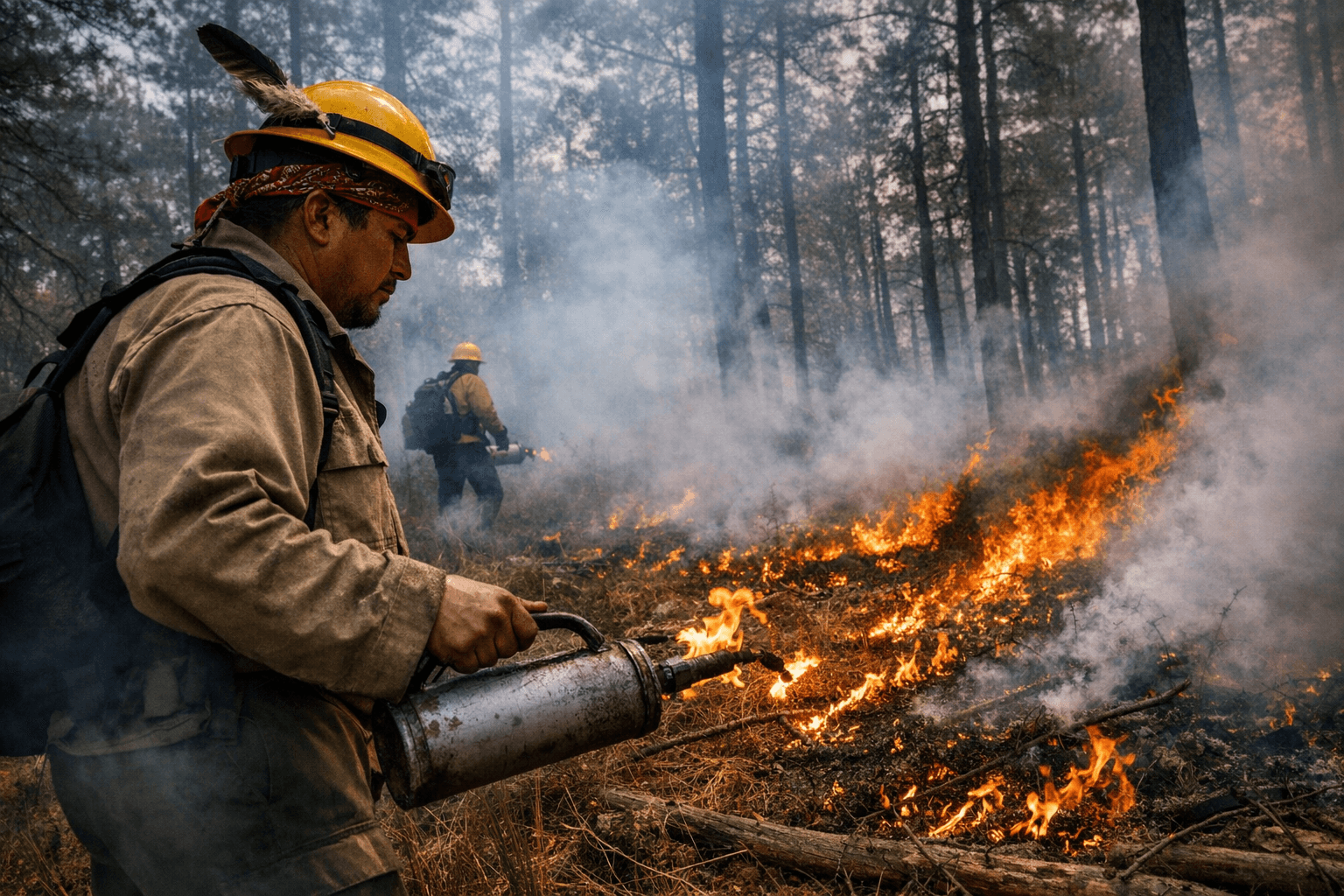
Sometime between now and late May, a carefully controlled fire will move across 17 acres of pine forest near the end of Park Point's Sky Harbor Airport, reintroducing a practice that shaped Minnesota Point's landscape for generations before disappearing in the wake of the 1854 treaty.
The project, called "Returning the Spirit of Good Fire to Minnesota Point," is led by a team facilitated by MP50. Burn operations will be directed by DNR Scientific and Natural Areas staff, with crews from the Fond du Lac Band of Lake Superior Chippewa Forestry and Wildland Fire Program, the City of Duluth Fire Department, and other professional wildland fire practitioners. Project manager Abby Andrus is the primary contact for the effort.
The ecological stakes are direct. The pine forest on Park Point is fire-dependent: it needs periodic burns for young trees to regenerate and grow. When Anishinaabe burning practices ceased on Minnesota Point shortly after the 1854 treaty cession, the forest lost the low-intensity fires that had cleared the understory and promoted blueberry growth across the sandbar. Vegetation accumulated on the forest floor, building fuel loads and stressing the red pines that rely on fire to sustain the next generation of growth.
A study published last summer in the Proceedings of the National Academy of Sciences established a detailed record of past burns on Minnesota Point and Wisconsin Point, drawing on oral histories, burn scars, and other sources. That research, carried out through a collaboration of regional colleges and universities, tribal members, and others, directly recommended reintroducing fire to the area. It also provided the scientific basis for a 22-acre prescribed fire on Superior's Wisconsin Point last fall, which served as a direct precursor to the Minnesota Point effort.
A second burn is already being planned. A 24-acre prescribed fire closer to Sky Harbor Airport is expected to follow in 2027.
The project team held two public events in early March to bring community members into the process before flames touched the ground. On March 5, local Indigenous elders shared Ojibwe stories about fire and Minnesota Point. Two days later, on March 7, partners hosted a burn site field trip and panel discussion, giving residents the chance to tour the burn unit and put questions directly to the team. Both events were free and open to all ages.
The broader program supporting these burns carries statewide ambitions. Through a Legislative-Citizen Commission on Minnesota Resources proposal, The Nature Conservancy and partner Dovetail Partners are working toward completing prescribed burns on 1,500 or more acres of priority restoration sites by December 31, 2028. The outreach components of that program carry a $199,000 activity budget and are led by TNC's Fuels Planner in collaboration with diverse communities across the state.
Minnesota Point's burn represents one of the most visible expressions of that collaboration: a convergence of tribal fire knowledge, agency operational capacity, and peer-reviewed science, all aimed at restoring what was severed more than 170 years ago.
This article was produced by Prism’s automated news system from verified source data, official records, and press releases, then run through automated quality and moderation checks before publishing. The system is built and supervised by the people who set the standards it runs under. Read our full AI policy.
Did this article answer your question?