Duluth weighs another $500,000 for cruise terminal expansion
Duluth delayed a vote on spending up to $500,000 for cruise terminal upgrades, renewing the question of whether the public payoff exceeds the tax cost.
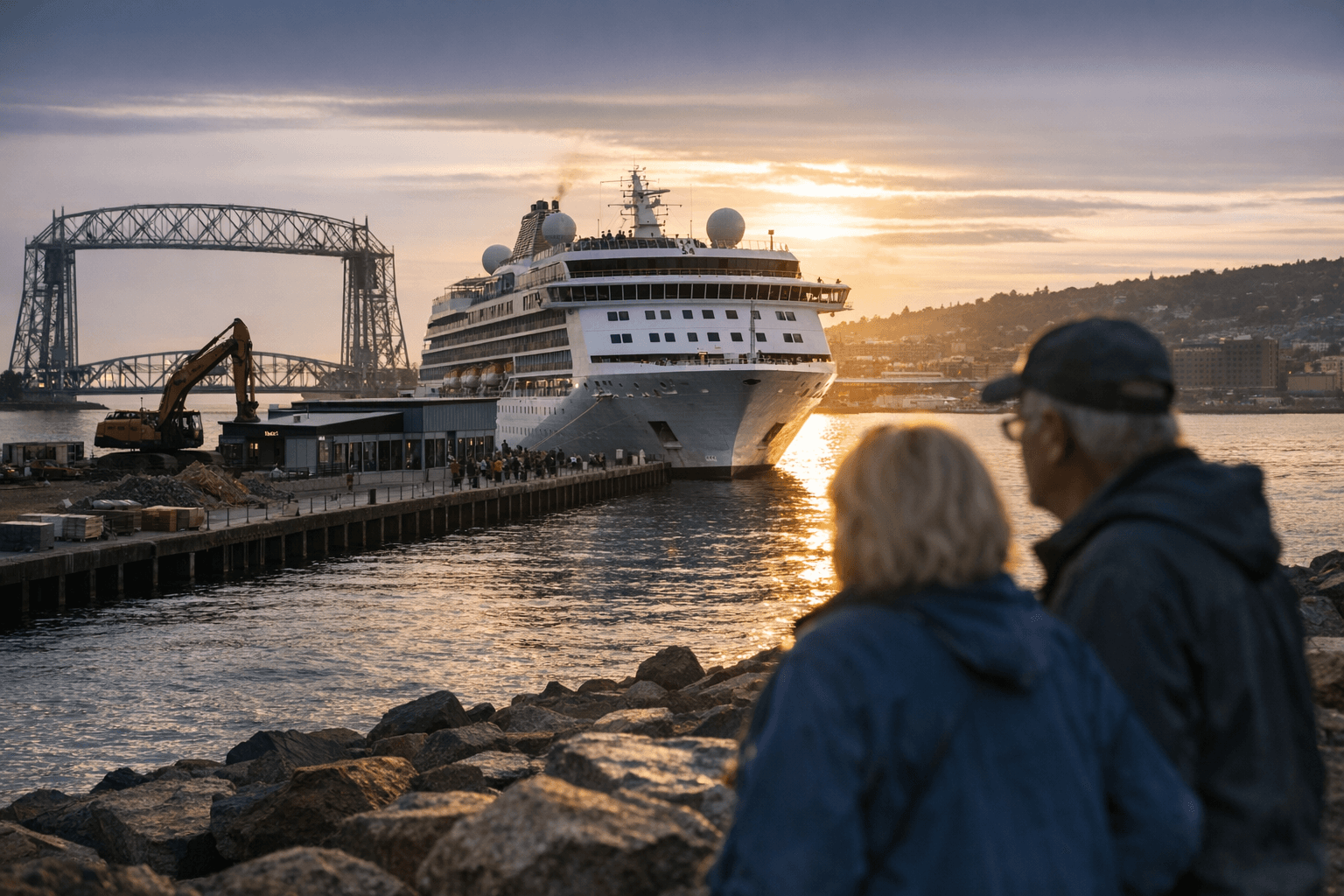
Duluth’s waterfront cruise push picked up a sharper price tag this week, as city officials delayed action on a resolution that would have authorized up to $500,000 for terminal improvements at the Duluth Entertainment Convention Center.
The spending would support baggage-handling operations for cruise passengers and is meant to help Duluth hold its place as a Great Lakes port of call even as cruise traffic has waned. The bigger question now is whether that kind of public investment can be justified against the returns it brings back to the city.
Councilor Terese Tomanek said the proposed passenger terminal upgrades would amount to more than a 1% increase in the city’s property-tax levy if the work were financed that way. That concern lands on top of a long list of public dollars already tied to the waterfront, including $13.5 million from the state of Minnesota, $4.9 million from the U.S. Department of Commerce and Economic Development and $860,000 from the Duluth Economic Development Authority.
Supporters of the cruise strategy point to signs of growth. Visit Duluth says cruise ships returned to the harbor in 2022 after nearly a decade away, and it says ten ships were scheduled to enter the Duluth-Superior harbor under the Lift Bridge in summer 2025. A 2021 cruise industry study commissioned with the University of Minnesota Duluth and Minnesota Sea Grant was intended to estimate the economic value of building the industry in Duluth-Superior.
The numbers so far are modest but real. A Star Tribune report said about 4,000 cruise passengers passed through Duluth in 2023, and DECC officials said Lake Superior cruise travel generated a $600,000 economic impact for the city that year. That leaves the city weighing whether another half-million dollars in terminal work can help unlock more visitor spending at hotels, restaurants, shops and excursions, or whether it would simply extend a subsidy for a niche waterfront market.
The cruise debate also sits beside Duluth’s larger port identity. The Port of Duluth-Superior says it averages roughly 33 million to 35 million short tons of cargo a year and handles about 20 million tons of iron ore each shipping season. It also describes itself as North America’s farthest-inland freshwater seaport, 2,342 miles from the Atlantic Ocean. That means any new cruise investment has to fit alongside a working industrial harbor that remains central to St. Louis County’s economy.
This article was produced by Prism’s automated news system from verified source data, official records, and press releases, then run through automated quality and moderation checks before publishing. The system is built and supervised by the people who set the standards it runs under. Read our full AI policy.
Did this article answer your question?