Duluth’s iconic foam dome Flintstone House hits the market again
Duluth’s foam-shell dome house resurfaced at $369,999, drawing nonstop showings and renewing debate over whether an icon can function as a home.
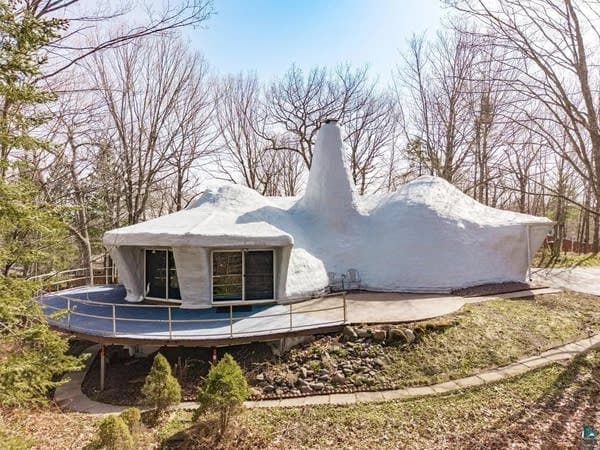
Duluth’s foam-shell triple-dome house is back on the market at $369,999, and the response was immediate. The longtime local oddity, known as the Flintstone House or Mushroom House, drew near-continuous showings as soon as it was listed, underscoring how far beyond a typical home sale this property sits.
Built in 1970 by Duluth entrepreneur and ski legend George Hovland, the house was designed by architect Stan Nord Connolly and stands on a wooded lot near the University of Minnesota Duluth campus. Its three domes are made of polyurethane foam, a construction method that gave the home its rounded profile and made it one of the city’s most recognizable architectural curiosities.
The building process was as unconventional as the finished house. During construction, giant balloons were inflated and foam was sprayed on both sides to form the exterior walls and roof, creating the dome structure that still defines the property more than five decades later. In a housing market where most listings are judged on square footage, commute times and renovation costs, this house carries a different kind of value: it is part residence, part landmark.
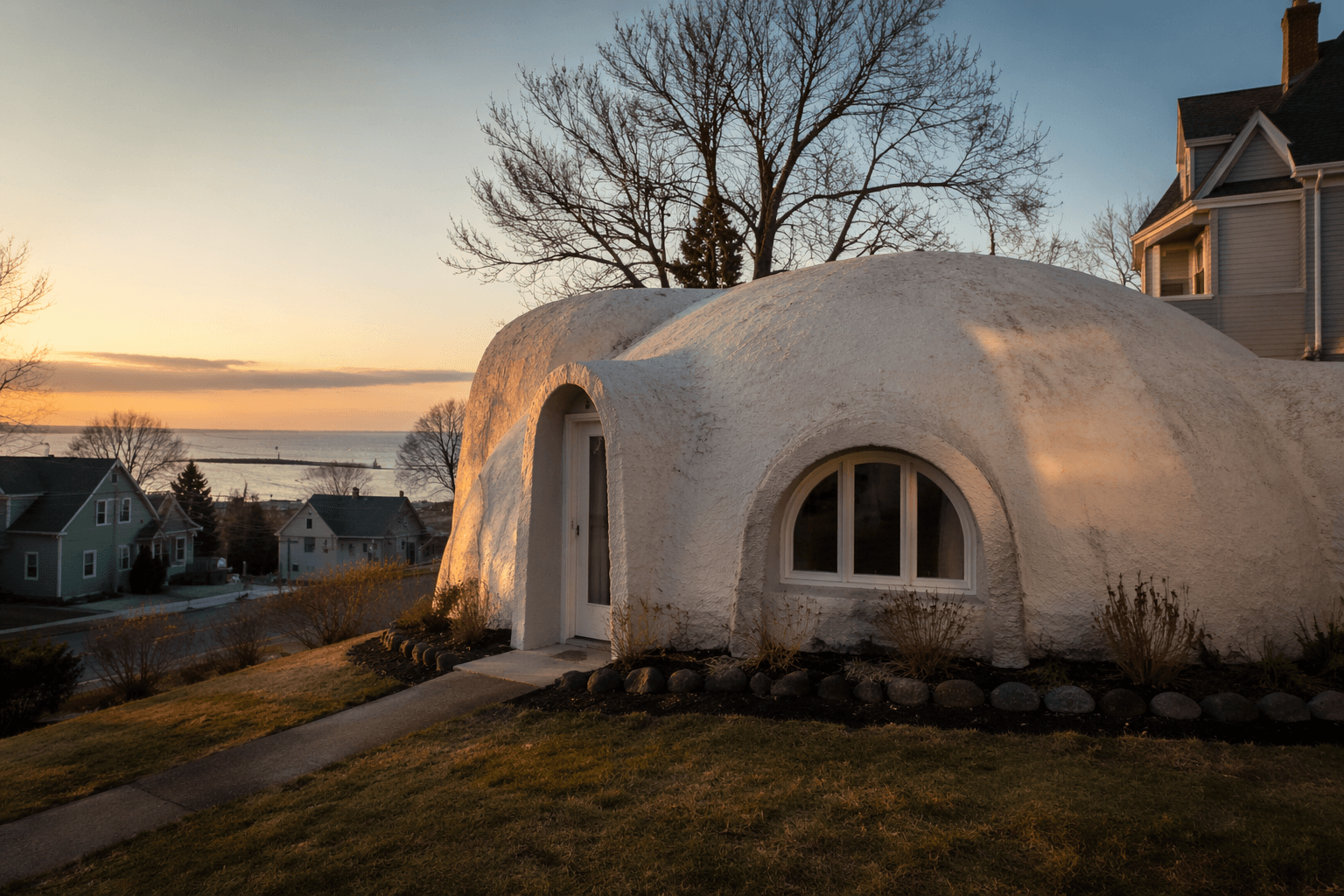
That distinction helps explain why the sale matters locally. Dome homes were more common in the early 1970s, but very few remain in the Duluth area. This one has outlasted the trend and the man who built it. Hovland died before the property last changed hands in 2021, adding another layer of historical weight to a house that already stands apart from nearby homes.
The listing also points to a practical question that comes with one-of-a-kind properties: who can realistically live in them for the long term? A house like this can attract architecture fans, nostalgia seekers and buyers drawn to something singular, but it can also pose questions about maintenance, durability and the everyday demands of living inside a structure that was never meant to blend in. That tension between landmark status and livability is what makes the sale notable.
For Duluth, the foam dome house is more than a real estate curiosity. It reflects an era of experimental design, the personality of a well-known local builder and a housing stock that still contains surprises. As the property draws attention again, it serves as a reminder that in this city, some homes are part shelter and part story.
This article was produced by Prism’s automated news system from verified source data, official records, and press releases, then run through automated quality and moderation checks before publishing. The system is built and supervised by the people who set the standards it runs under. Read our full AI policy.
Did this article answer your question?