Duluth's Route 103 stretches 23 miles, linking city neighborhoods
Route 103 runs more than 23 miles inside Duluth, showing how one bus line carries the weight of a city built on distance, hills and spread-out neighborhoods.
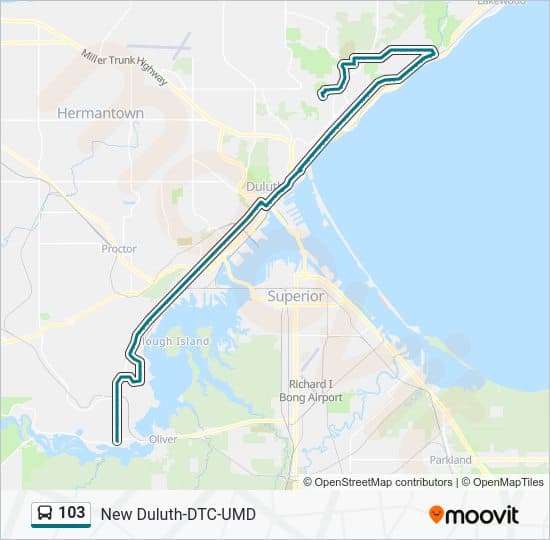
A single Duluth bus line now runs more than 23 miles without leaving city limits, linking the University of Minnesota Duluth to Gary-New Duluth and turning Route 103 into a moving map of how the city works.
The Duluth Transit Authority labels the line the New Duluth-DTC-Lakeside-UMD route, and its system map shows it connecting New Duluth, Morgan Park, Lincoln Park, the Duluth Transportation Center, Lakeside, Morley Heights and UMD. In a city stretched along hillsides and the lakeshore, that kind of reach is more than a transit curiosity. It is the route that ties together students, workers, shoppers and residents across neighborhoods that can feel far apart even when they sit under the same city government.
That breadth is also the source of the route’s value and its strain. A long bus line can make transit usable for people who do not drive or who need a cheaper, more accessible way to get across town. But the farther one route goes, the more a delay in one section can spill into the rest of the trip. For riders, that means longer waits, more dependence on transfers and a system that has to keep many communities connected on one schedule. DTA says it operates 15 fixed routes, seven days a week, generally from 4:30 a.m. to midnight, and Route 103 sits at the center of that network as one of the city’s main west-east trunks.
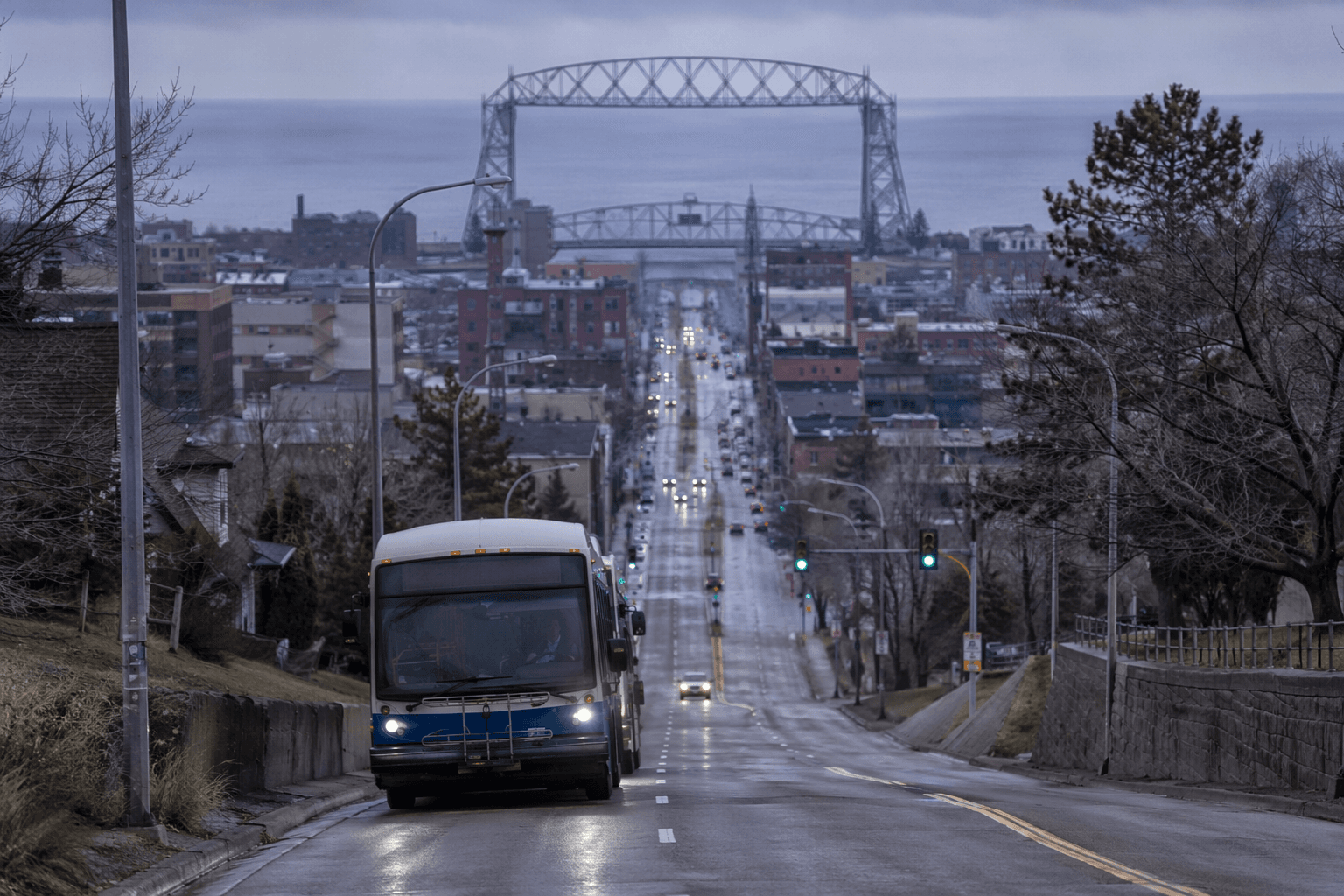
Right now, summer construction is forcing changes. DTA says Route 103 is running with an express-style segment from Downtown to 40th Avenue West, similar to Route 109, and it is not serving Morley Heights during the detour. Instead, service is running on Snively Road. The agency also says service to UMD is temporarily paused on the Blue Line for the summer, with riders directed to Routes 103, 104, 105, 106 and 112 to reach the campus. That makes Route 103 even more important for students and staff trying to get to UMD while other links are disrupted.
The line’s size fits Duluth’s transit history. The DTA says service in the Twin Ports dates to 1883, the first electric streetcar ran in 1890, gasoline buses arrived in 1924, and the last streetcar and incline railway ended in 1939. The DTA was created by the Minnesota Legislature in 1969, and the Duluth Transportation Center opened in 2016. Route 103 shows how that legacy still shapes daily travel: one bus line spanning the city, carrying the burden of both access and distance.
This article was produced by Prism’s automated news system from verified source data, official records, and press releases, then run through automated quality and moderation checks before publishing. The system is built and supervised by the people who set the standards it runs under. Read our full AI policy.
Did this article answer your question?