False confessor Henry Lee Lucas once linked to Duluth slaying
Henry Lee Lucas's false murder claims once pulled a West Duluth homicide into his orbit. The Ella Johnson case shows how sensational confessions can warp local memory without solving anything.
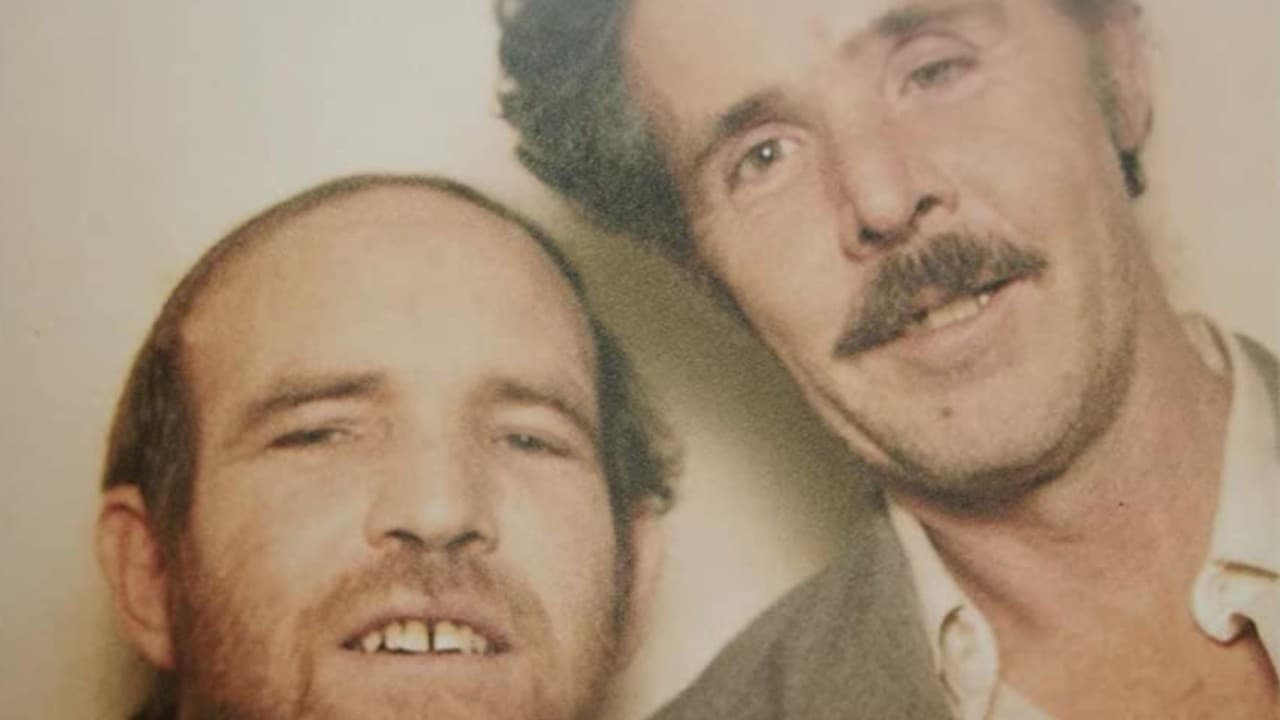
Henry Lee Lucas claimed responsibility for as many as 600 murders, but the record tied to him was far narrower. In Duluth, that gap matters because the 1979 killing of Ella Johnson in West Duluth was pulled into his orbit through Lucas and his companion Ottis Toole, even though the facts never produced a clean match. The case still sits inside St. Louis County’s unsolved-crime history as a reminder that a notorious confession can generate more noise than evidence.
The Duluth killing that stayed unsolved
Ella Johnson’s death in West Duluth remains the anchor point in this story. Duluth police briefly looked at Toole because the circumstances seemed similar to another death they were examining, but the facts did not line up. That distinction is the whole case in miniature: a high-profile name can create a trail, but the trail only matters if it leads back to the victim, the scene, and the evidence.
For Duluth, and for anyone tracking the county’s cold cases, the Johnson killing shows how public memory can drift. A local homicide can be swallowed by the mythology of a famous killer, especially when the killer has already been treated as a source of answers in crimes across the country. Johnson’s case should be read first as a Duluth murder, not as a footnote in a national true-crime legend.
How Lucas and Toole turned confession into a spectacle
Lucas and Toole became notorious not because their accounts were reliable, but because their confessions were so expansive. Lucas said he had committed 600 murders, a claim that collapsed under scrutiny, and widely cited summaries place his actual murder convictions at just three. Toole was convicted of six murders. Their names traveled far beyond Texas and Florida because investigators in multiple places were tempted to test their stories against unsolved cases.
That pattern is what makes the Duluth connection so telling. Lucas was interrogated by the Texas Rangers in 1983 while he was already facing charges in another murder, and Toole, in October 1983, confessed to the abduction and murder of Adam Walsh and implicated Lucas in that crime. Once those names became part of the national criminal vocabulary, they kept resurfacing in places where investigators were looking for closure. In local cases like Ella Johnson’s, the challenge was not finding a sensational suspect; it was separating a usable lead from a self-serving confession.
What the record actually supports
The verified outline is plain. Ella Johnson was killed in 1979 in West Duluth. Duluth police considered Toole briefly because the circumstances resembled another case, but the facts did not match. Lucas and Toole were both linked to many more crimes through confession than through proof, and most of Lucas’s claims were later found to be false or unfounded.
That matters because a confession is only one piece of information. Courts and investigators have long treated admissions carefully because a statement can be coerced, exaggerated, mistaken, or deliberately false. The Lucas-Toole saga is one of the clearest examples of why corroboration is not optional. A name alone does not solve a murder, and in a case like Johnson’s, a dramatic claim without supporting evidence can pull attention away from the work that actually counts.
Why the story still matters in St. Louis County
This is more than an old true-crime curiosity. In a county where residents still live with the legacy of unsolved violence, the public record matters as much as the police record. When a notorious false confessor gets attached to a local homicide, the danger is not just that the wrong person gets blamed. The deeper risk is that the victim’s story gets folded into a broader myth that survives long after the evidence has gone cold.
Lucas and Toole became a national crime-story magnet, but their notoriety should not be mistaken for credibility. Toole died in prison on September 15, 1996, and Lucas was convicted of only three murders despite his sweeping claims. Those numbers matter because they show the scale of the distortion. In the Duluth case, the strongest fact is still the simplest one: Ella Johnson was killed in West Duluth in 1979, and the murders attached to Lucas and Toole never added up to proof.
This article was produced by Prism’s automated news system from verified source data, official records, and press releases, then run through automated quality and moderation checks before publishing. The system is built and supervised by the people who set the standards it runs under. Read our full AI policy.
Did this article answer your question?