Historic Freighter Lee A. Tregurtha Freed After Getting Trapped in Lake Superior Ice
A WWII oiler-turned-bulk carrier spent nearly four hours trapped in Lake Superior ice Friday, the latest disruption to a Great Lakes shipping season already strained by ice and aging icebreakers.
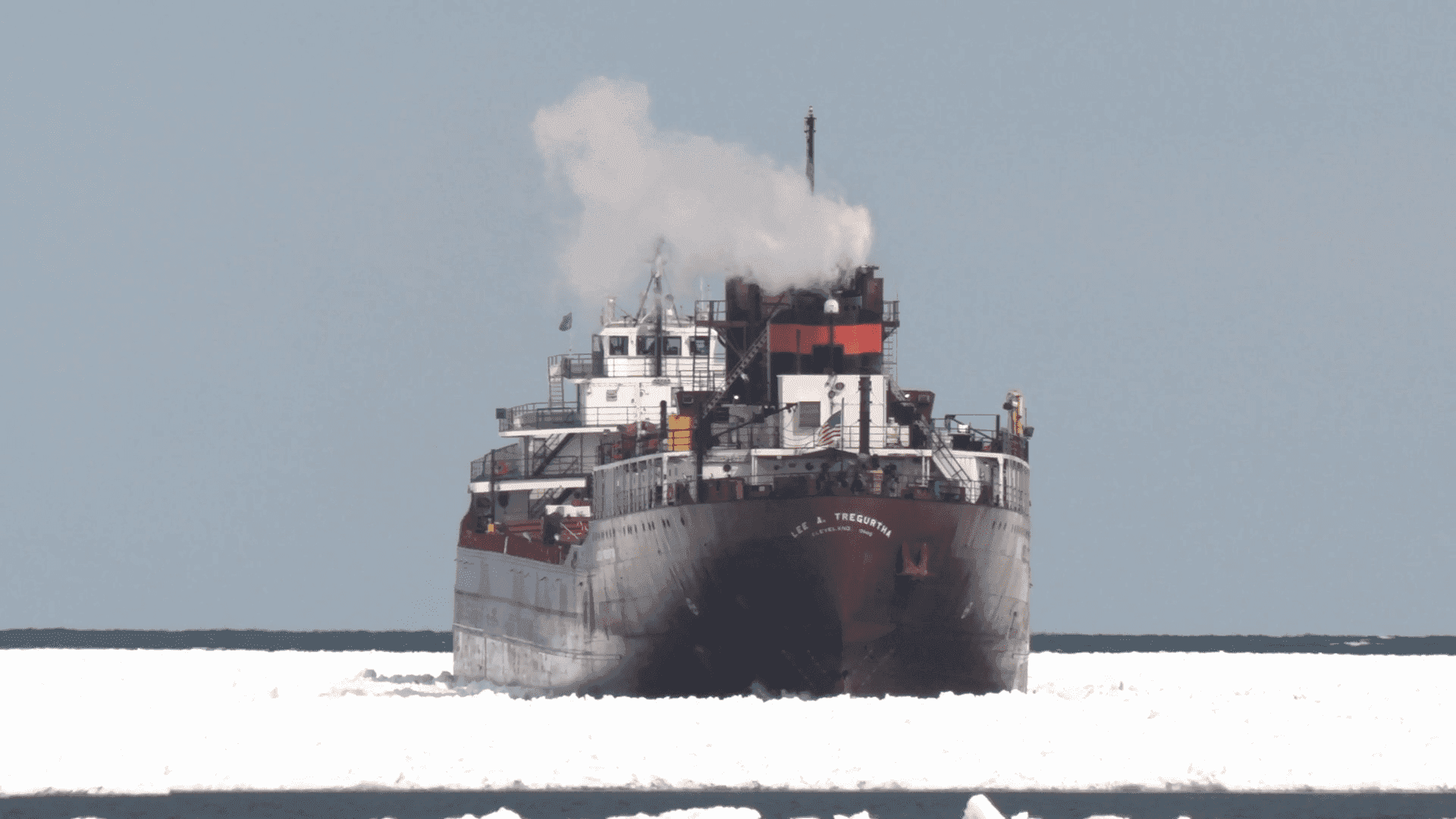
The Lee A. Tregurtha never made it to Marquette.
The 826-foot Interlake Steamship Co. bulk carrier became beset by ice near the eastern Duluth entry on Lake Superior on Friday, April 3, halting what was to be its first completed voyage of the 2026 shipping season and adding another costly disruption to what port officials are already calling one of the most difficult starts to a Great Lakes shipping year in recent memory.
U.S. Coast Guard Sector Northern Great Lakes received the distress call at 12:40 p.m. The USCG Cutter SPAR, the primary icebreaker for the main Duluth-Superior shipping channel, was on-scene around 2:45 p.m. but could not begin assisting until after 4:00 p.m. The Tregurtha was freed at approximately 4:23 p.m. and returned safely to port, passing back under the Aerial Lift Bridge at 5:15 p.m. No injuries were reported.
The delay's stakes were more than a single afternoon's lost time. The Tregurtha had wintered at Fraser Shipyards in Superior and was bound for Marquette, Michigan, to take on a load of iron ore, the cargo that connects Iron Range mines to steel mills on Lake Erie and Lake Michigan. This was not the Tregurtha's first attempt to leave the Twin Ports this season; the ship had already been turned back by conditions before Friday's incident. The Soo Locks, the critical gateway connecting Lake Superior to the lower Great Lakes, had only reopened March 24, meaning the 2026 season was barely 10 days old when the freighter was beset. Steel mills across the lower lakes had been waiting more than two months for their first iron ore deliveries.
"It's been a challenging start to the shipping season, with troublesome ice throughout western Lake Superior and also in Whitefish Bay and the St. Marys River," said Jayson Hron, Duluth Seaway Port Authority director of communication and marketing. "It emphasizes the critical importance of U.S. and Canadian Coast Guard icebreaking support, even in times when overall ice coverage doesn't reach extreme levels. They're doing what they can with aging vessels, but the resilience of our nation's steelmaking supply chain depends in part on modernization and expansion of the Coast Guards' Great Lakes icebreaking fleet."
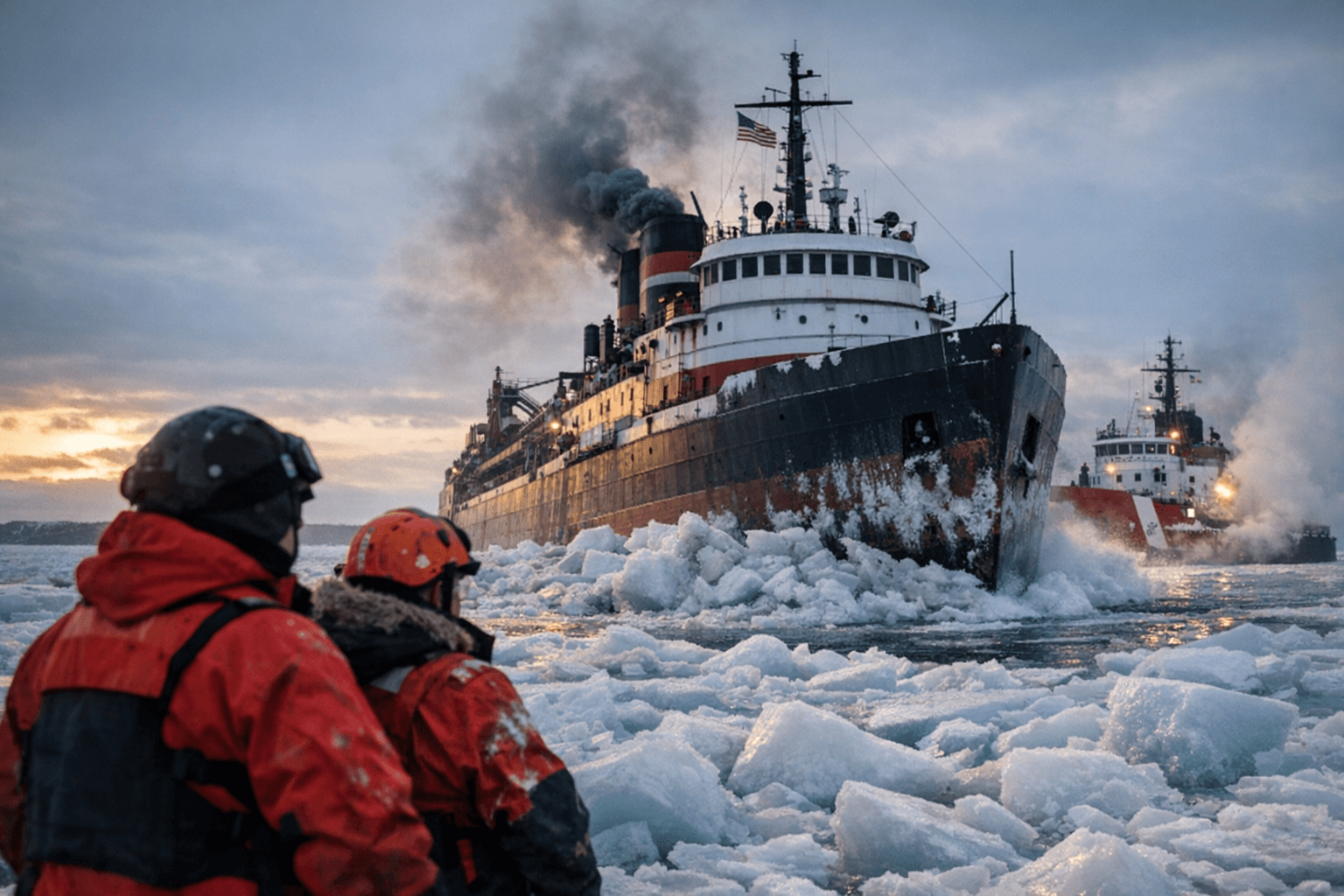
The aging fleet nearly created a coverage gap at the worst possible moment. The SPAR, which handles the main navigation channel while private operators Heritage Marine and Great Lakes Towing Co. manage individual slips and docks, had been taken out of service for repairs earlier this season, forcing the Coast Guard to temporarily deploy the Mackinaw icebreaker to cover the area. The SPAR returned to "fully mission-capable status" just days before Friday's incident. Both vessels operate under Operation Taconite, the Coast Guard's largest domestic icebreaking operation, spanning the upper Great Lakes and St. Marys River.
The Tregurtha has navigated these waters in rougher circumstances. Built in 1942 as a U.S. Navy oiler, the vessel participated in D-Day, the Battle of Okinawa, and the Japanese Surrender ceremony and still carries those combat awards on her bridge. Jonathan Ellsworth, a ship enthusiast and YouTube documentarian who was among the onlookers gathered on the Duluth shoreline Friday, put the ship's history plainly: "She was involved with D-Day. She was involved with the Japanese Surrender and the Battle of Okinawa. She displays her combat awards on her bridge."
Friday's incident had a familiar shape. In a prior season, the Tregurtha and the vessel Alpena were simultaneously beset outside Duluth Harbor, requiring the USCG Cutter Alder and most of a day to free them both. Thousands tracked Friday's rescue in real time through the Duluth Harbor Cam livestream and vessel tracking on MarineTraffic.com. With ice conditions remaining problematic in Whitefish Bay and the St. Marys River, the Tregurtha's stalled iron ore run is an early indicator of what the full 2026 season may demand from both the Great Lakes fleet and the icebreaking infrastructure meant to keep it moving.
This article was produced by Prism’s automated news system from verified source data, official records, and press releases, then run through automated quality and moderation checks before publishing. The system is built and supervised by the people who set the standards it runs under. Read our full AI policy.
Did this article answer your question?