Indigenous art and mining artifacts unite in new Iron Range exhibit
Indigenous art now sits beside mining artifacts at Mine View in north Hibbing, reframing the Iron Range through tribal history and cultural voice.
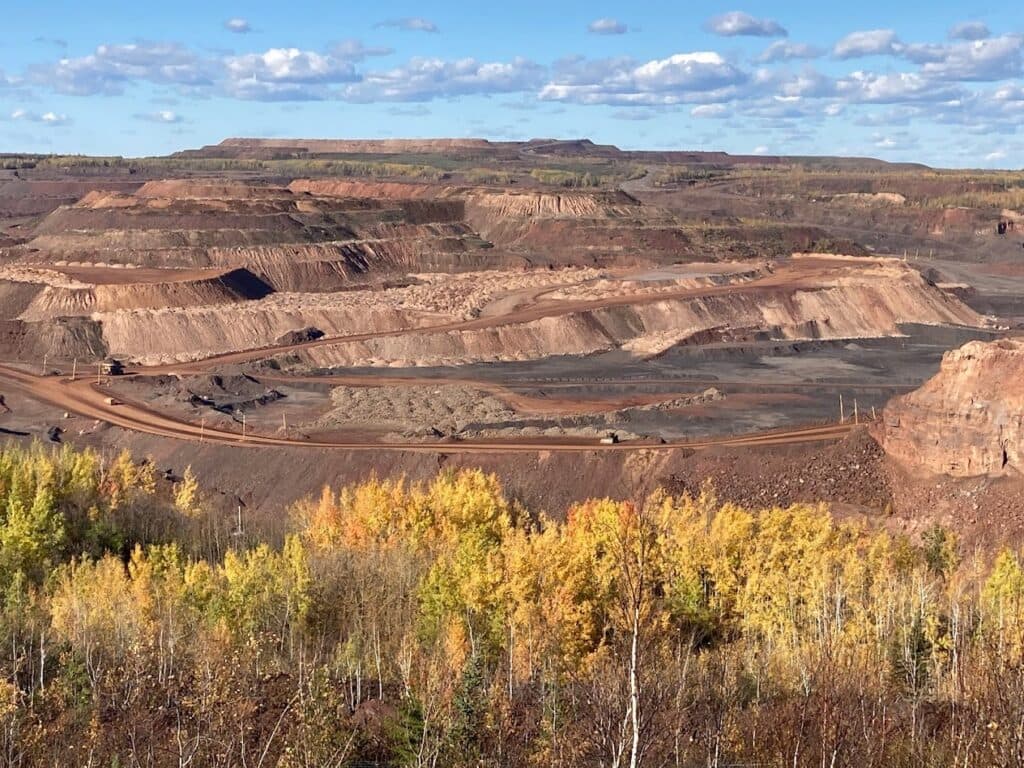
A new exhibit at the Hull Rust Mahoning Mine View is changing what visitors see when they look out over the Iron Range. In north Hibbing, Indigenous art and historical mining artifacts opened together Thursday morning in a project years in the making, turning one of the region’s most familiar overlooks into a fuller account of whose histories are tied to the land.
The installation brings together the area’s mining past and the perspectives of the people whose cultures have long been intertwined with it. Mine View describes itself as overlooking the world’s largest open-pit iron ore mine, a landscape more than 120 years in the making, and says the site overlooks more than 125 years of iron ore mining. The new exhibit builds on that setting by broadening the story beyond production, excavation and scale.

Roughly 100 people connected to the Science Museum of Minnesota supported the unveiling, underscoring how much work went into the project before it reached the public. The opening also included a performance by the Bois Forte Singers, which gave the morning a ceremonial note and rooted the exhibit in living cultural practice rather than static display.
Cathy Chavers, the tribal liaison and former Bois Forte chair, said the project matters because many people have never been to the site before and many tribal people are still learning their culture. Chavers stepped away from her Bois Forte chair position in January 2025 after nearly 50 years of service, a long record that has made her a visible figure in tribal leadership and cultural outreach.
Robert Moyer, Jr., a current tribal representative, said the work over the past couple of years had been good to see because it involved cooperation with the mines and a commitment to telling a more complete history. That approach is central to what sets the exhibit apart from a traditional mining display: it does not treat Indigenous presence as background. It places tribal history, art and memory alongside the machinery and ore that shaped the Iron Range.
Bois Forte says the Band has lived in northern Minnesota for centuries and is part of the Minnesota Chippewa Tribe, which also includes Fond du Lac, Grand Portage, Leech Lake, Mille Lacs and White Earth. The partnership behind the exhibit included St. Louis County, the City of Hibbing, Cleveland-Cliffs and Bois Forte Band of Chippewa leaders, signaling a rare blend of public, corporate and tribal cooperation around local history.
Mine View said more than 20,000 visitors came in 2022, and the new exhibit gives that audience a different reason to stop in. In a place long defined by iron ore, the display asks visitors to consider the people, voices and cultural continuity that mining history alone can leave out.
This article was produced by Prism’s automated news system from verified source data, official records, and press releases, then run through automated quality and moderation checks before publishing. The system is built and supervised by the people who set the standards it runs under. Read our full AI policy.
Did this article answer your question?