Lightning sparks three wildfires near Boundary Waters, one now contained
Lightning fires near Boundary Waters shifted fast: the 16-acre Loon Fire was fully contained, while the Buck Fire still needed helicopter drops north of Buck Lake.

Lightning that rolled through the Boundary Waters on June 4 set off three wildfires, and by June 10 the picture had split sharply: the 16-acre Loon Fire was fully contained, the Tiger Fire was at 100 percent containment, and the Buck Fire was still active north of Buck Lake. For people headed toward Ely, Crane Lake and other Boundary Waters entry points, the immediate flames were easing in some places but the wilderness was still an active response zone, with crews mopping up hotspots, patrolling for flare-ups and shifting command back to local units where appropriate.
The Loon Fire, east of East Loon Bay on Loon Lake about 11 miles east of Crane Lake, was declared 100 percent contained by the evening of June 9. Rain over the previous two days helped crews slow the fire, but firefighters still stayed on watch to make sure no hidden heat reignited in the timber or along the shoreline.
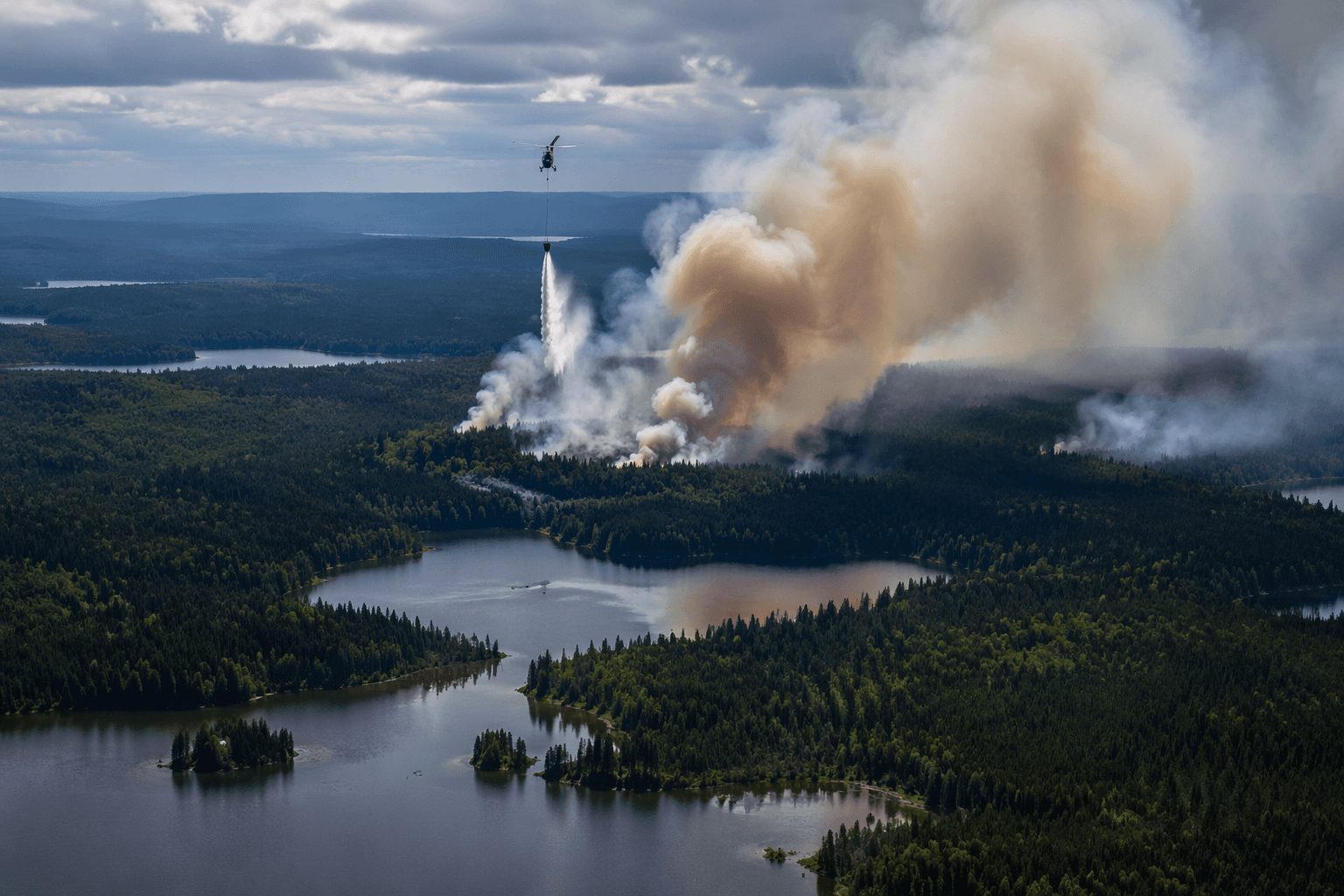
The Buck Fire remained active as of June 10, about a quarter-mile north of Buck Lake inside the wilderness area. A large helicopter made several bucket drops on the fire while ground crews used tools, water and continued patrols to keep hotspots from flaring again. Forest officials warned that even when flames are knocked down, fire-weakened trees can fall without warning, and they told travelers not to fly drones near the fire because aircraft are working the area and drones are illegal in federally designated wilderness.
The Tiger Fire, near the east end of Lac La Croix between Tiger Bay and Boulder Bay, was listed at about 1 acre and fully contained. It threatened 2 to 4 wilderness campsites, a portion of the Sioux-Hustler Hiking Trail and the Lac La Croix Administrative Site. Early in the response, four firefighters and gear were flown in by a large Chinook helicopter, then crews built a fire line, set up water pumps and hoses and completed cold trailing to make sure the fire was dead out.
The lightning cluster also underscored why Superior National Forest tightened restrictions before the fires were even contained. An emergency order issued June 4 barred campfires in the Boundary Waters starting June 6 at 12:01 a.m. and set the restriction to run through June 30 unless rescinded or extended. Gas or propane cook stoves were still allowed, but charcoal grills, charcoal, wood-burning stoves and similar fuel sources were prohibited as the Forest Service said wildfire potential remained high across northern Minnesota.
Superior National Forest spans about 3 million acres and includes the 1-million-acre Boundary Waters Canoe Area Wilderness, so even a small number of lightning starts can ripple through a vast backcountry of campsites, portages, lakes and trails. The Forest Service says InciWeb is its real-time public incident-information platform for wildland fire emergencies, a reminder that this early-season cluster was as much a test of preparedness and visitor safety as it was a fight against flames.
This article was produced by Prism’s automated news system from verified source data, official records, and press releases, then run through automated quality and moderation checks before publishing. The system is built and supervised by the people who set the standards it runs under. Read our full AI policy.
Did this article answer your question?