Mesabi Miner Loads Iron Ore in Duluth, Kicking Off Shipping Season
The Mesabi Miner loaded iron ore at CN docks in West Duluth Monday, marking the Twin Ports' first laker move of 2026 as steelmaking climbs 6% and the Soo Locks prepare to open.
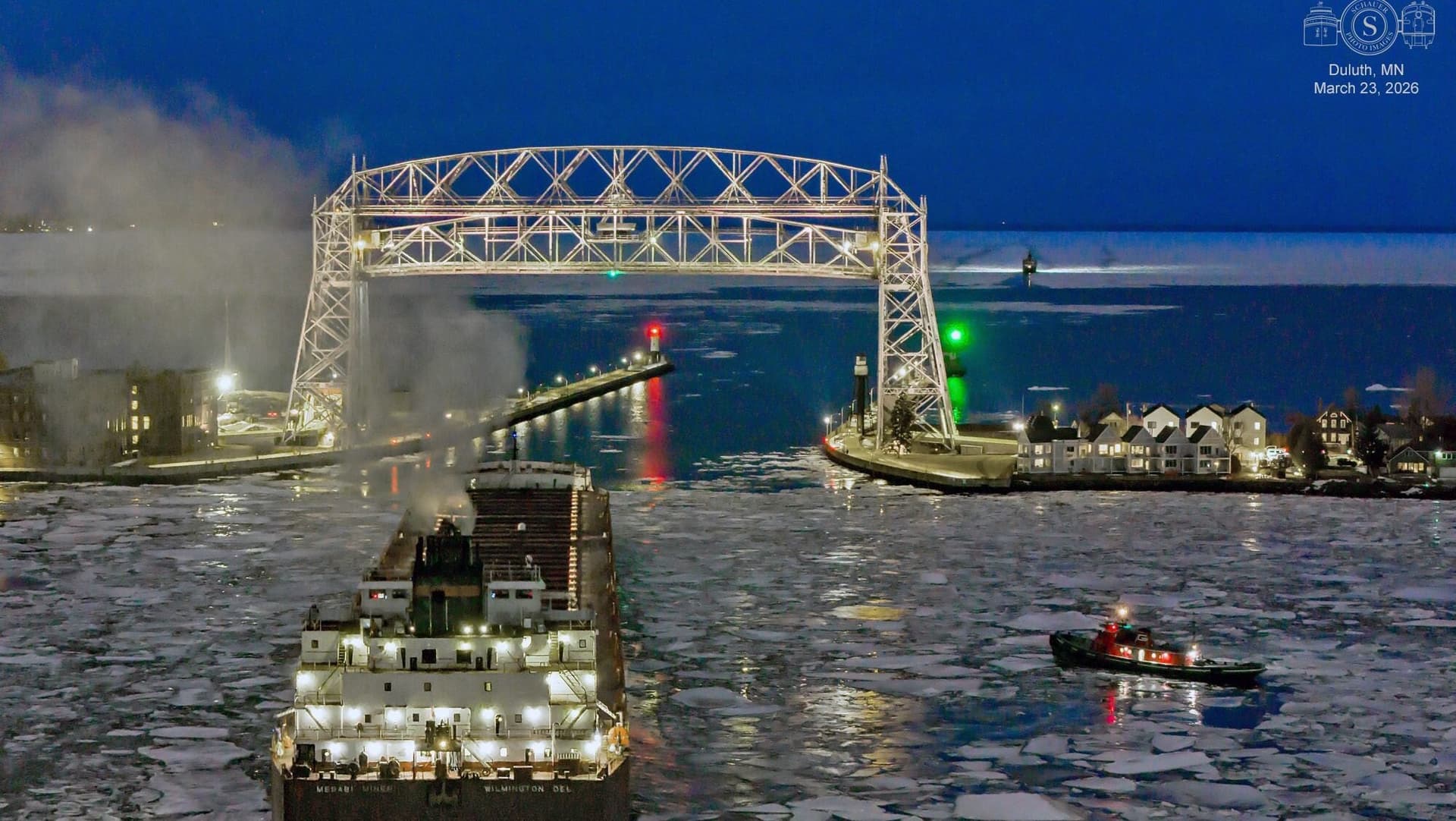
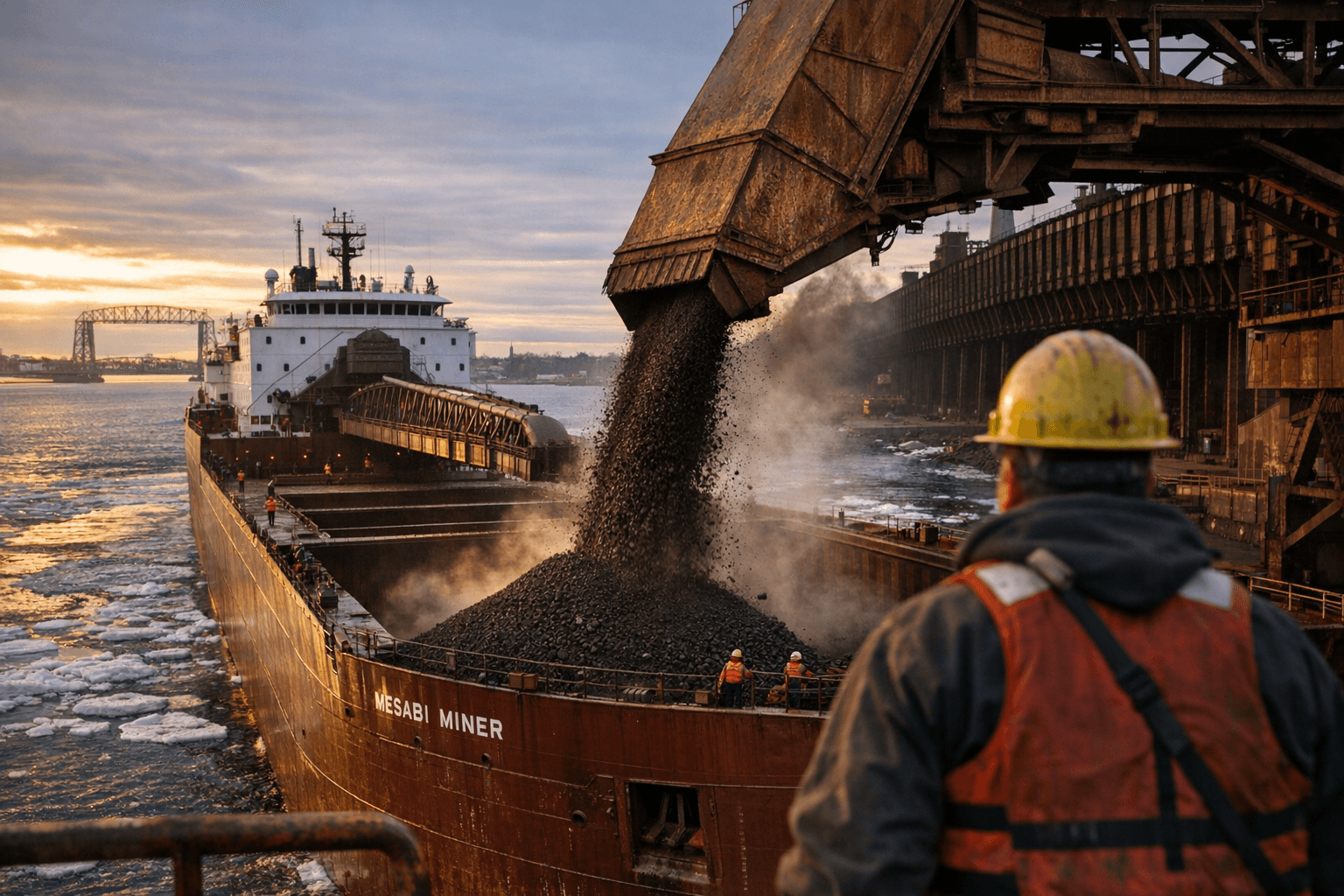
The 2026 shipping season got underway with the Mesabi Miner leaving her winter berth Sunday and heading to the CN ore docks in West Duluth. Owned by Interlake Steamship, the vessel took on iron ore bound for Cleveland. By Monday evening, the 1,004-foot laker had loaded and departed, making it the first vessel movement out of the Twin Ports this season.
The timing comes as the Soo Locks prepare to swing open. The U.S. Army Corps of Engineers Detroit District announced that the Poe Lock, the only Soo lock large enough to handle 1,000-foot lakers, will reopen to all marine traffic just after midnight Wednesday following a 10-week winter maintenance shutdown that began Jan. 15. The U.S. Coast Guard and Canadian Coast Guard said stepped-up icebreaking is clearing narrow corridors ahead of the first big freighters.
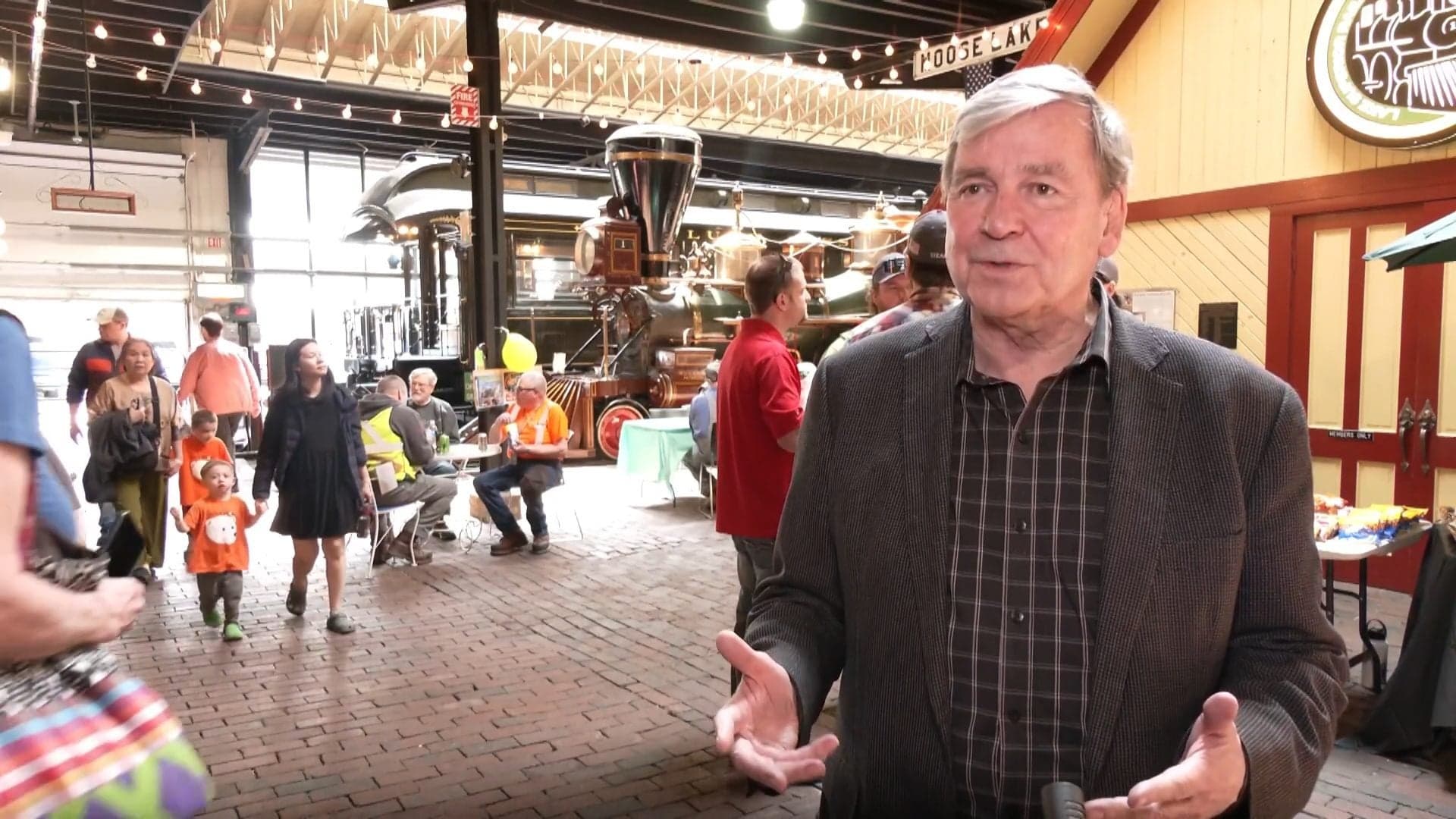
Ice management in the Twin Ports is already underway. Jayson Hron from the Duluth Seaway Port Authority said the port received an update about the ice from the Coast Guard Monday: "While the overall ice cover at this point in the season is not all that severe, there still are some areas where some ice will require some help and some management with the Coast Guard." Those areas include the Duluth-Superior harbor and near Whitefish Bay and the St. Mary's River. The USCG SPAR is also back on the ice for routine cutting in the port to ensure a clear path for tugboats.
The start of the season carries strong economic expectations. The Duluth Seaport Authority reported that steelmaking is up 6 percent from last year, a figure that could push iron ore tonnage higher through the port. Break-bulk cargoes, including wind turbine parts, are also expected to have a strong performance. Hron, Director of Communications at the Duluth Seaport Authority, said demand for oversized freight looks promising heading into the new season: "Last season was a good season for break ball cargos. We're expecting more of the same based on the schedule that's lining up this year. Most of those are the high, wide and heavy cargos, the ones that can't be poured into the cargo holds of ships. So that is looking like it'll be promising again this season."
The winter layup period that preceded the Mesabi Miner's departure kept the Iron Range supply chain humming in a different way. Six lakers spent the off-season in winter berth at the Twin Ports, and the refit and maintenance work kept hundreds of workers at Fraser Shipyards employed through the coldest months.
More than 4,500 vessels carrying up to 80 million tons of cargo move through the Soo Locks annually, with iron ore, coal, wheat and limestone among the most frequently hauled commodities. For the Iron Range communities that depend on taconite shipments reaching Great Lakes steel mills, the Mesabi Miner's Monday evening departure is the clearest signal yet that the commercial season is fully in motion.
Hron captured the mood at the port plainly: "So it's a great time of year. It's always exciting. And for sure in the shipping industry to see those first vessel moves, that's especially exciting for us.
This article was produced by Prism’s automated news system from verified source data, official records, and press releases, then run through automated quality and moderation checks before publishing. The system is built and supervised by the people who set the standards it runs under. Read our full AI policy.
Did this article answer your question?