Minnesota funding falls short for lead pipe replacement efforts
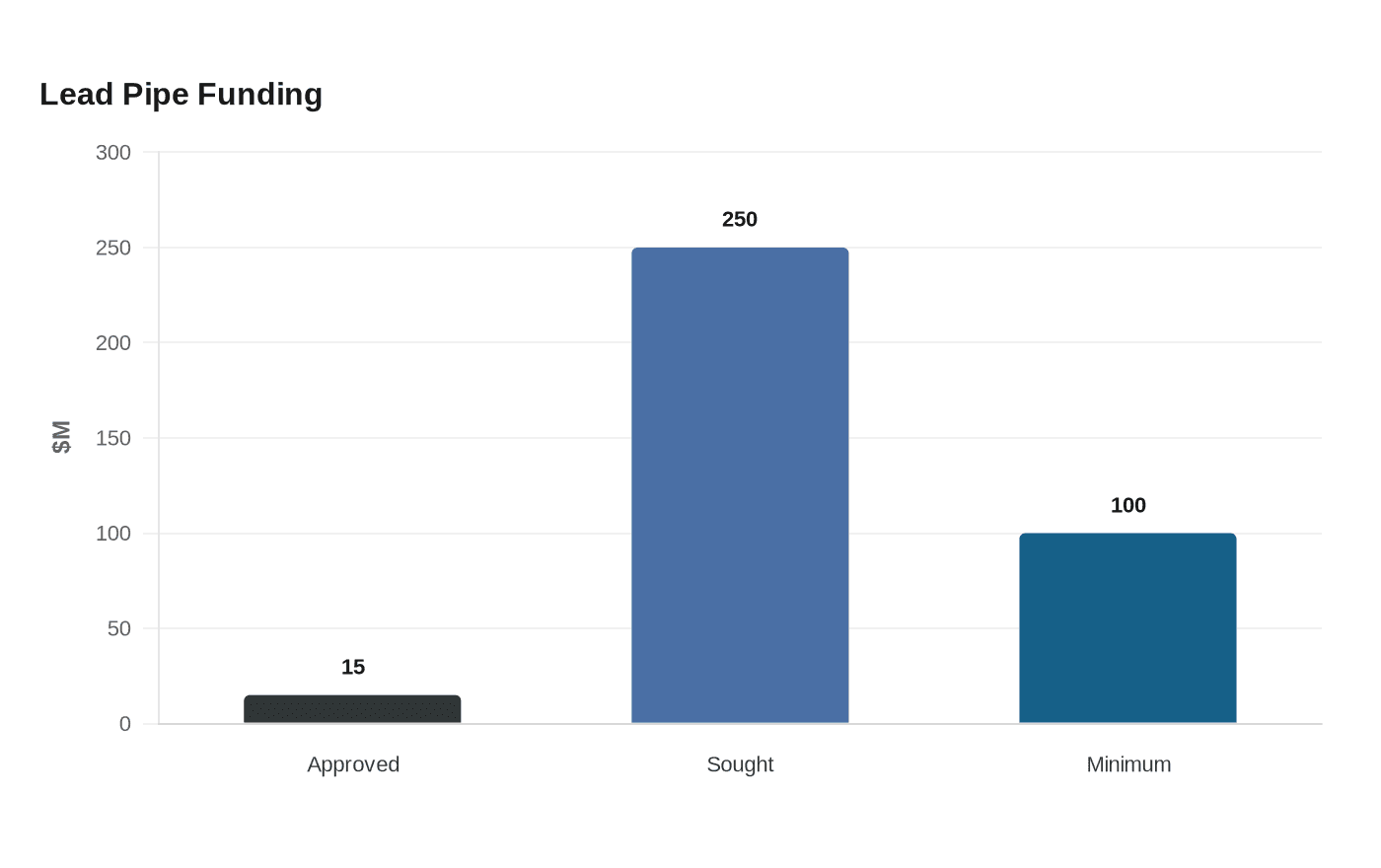
Minnesota set aside just $15 million for lead pipe replacement, far below the $100 million advocates sought and the $250 million they first asked for.

Minnesota’s latest bonding bill left lead pipe replacement with far less money than local governments expected, a gap that could keep old service lines in Duluth and other St. Louis County neighborhoods in the ground longer. The state approved just $15 million for the work, a fraction of the $250 million advocates first sought and still well below the $100 million they said would at least have kept projects moving through the 2027 construction season.
The shortfall matters because lead line replacement is expensive, disruptive and tied directly to public health. The Minnesota Department of Health estimates the state has about 1.5 million service lines, with just under 90,000 made of lead and another 280,000 still needing verification. Minnesota created its Lead Service Line Replacement Program in 2023 and set a goal of replacing all lead service lines by 2033, but the new funding level makes that schedule harder to keep.

Demand for the program has been statewide, not just a Twin Cities issue. By late 2024, the department had applications for 129 lead service line replacement projects in 78 municipalities, showing how many communities are still trying to line up money, construction crews and utility work. The program is jointly administered by the Minnesota Department of Health and the Minnesota Public Facilities Authority, and it is designed to work with federal Drinking Water State Revolving Fund dollars from the Infrastructure Investment and Jobs Act.
Duluth has already shown how much progress is possible when the money is there. In 2024, the city received $62.8 million in state funds to replace lead water service lines, and it has used state and federal dollars to replace lines at no cost to property owners when the work is folded into city-planned projects. The city has said that coordination with street reconstruction is essential so digging only happens once, limiting disruption for households and businesses.
That coordination has produced real results. A 2026 update said Duluth had eliminated 2,665 lead lines since its 2021 pilot project, including more than 1,750 in 2025 alone. But that momentum now depends on a funding stream that is not keeping pace with the scale of the problem. Federal support is only guaranteed through 2027, and the U.S. Environmental Protection Agency has set a 2037 nationwide replacement goal, leaving Minnesota’s 2033 target even more difficult if state aid stalls.
For St. Louis County, the practical effect is straightforward: older neighborhoods will wait longer for replacement, local utilities will keep juggling excavation with road projects and permit work, and households will continue relying on a patchwork of local dollars, utility rates and outside grants. The state has started the job, but the 2026 funding level did not come close to matching the need.
This article was produced by Prism’s automated news system from verified source data, official records, and press releases, then run through automated quality and moderation checks before publishing. The system is built and supervised by the people who set the standards it runs under. Read our full AI policy.
Did this article answer your question?