Multi-agency rescue airlifts injured father from Boundary Waters wilderness
A 59-year-old Louisville father hurt his back on Lake Lac La Croix, and a multi-agency air rescue pulled him and his 17-year-old son out of the Boundary Waters.

A 59-year-old father injured his back on the southern edge of Lake Lac La Croix and had to be airlifted out of the Boundary Waters Canoe Area Wilderness, turning a remote canoe trip into a coordinated rescue effort north of Ely.
The St. Louis County Sheriff’s Office said the distress signal came from GPS coordinates near the Canadian border on May 29, a spot far from roads, easy access points and fast medical care. The father was traveling with his 17-year-old son from Louisville, Kentucky, when the injury triggered a response from the St. Louis County Rescue Squad, the U.S. Forest Service, Ely Ambulance Service and a Minnesota Department of Natural Resources conservation officer.
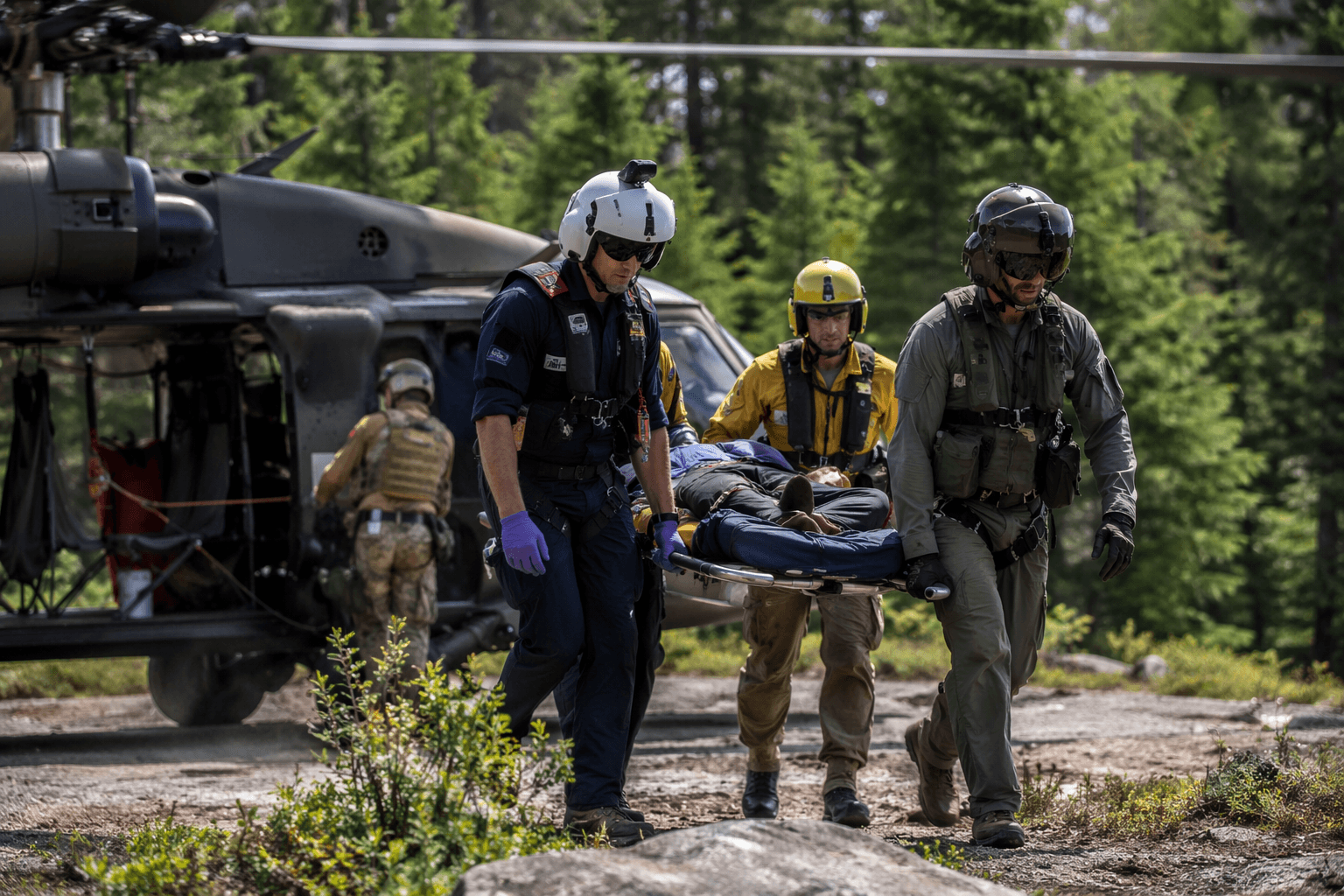
Because the location sat deep in wilderness country, responders relied on air support and specialized rescue work rather than a simple ground transport. The Forest Service flew resources to the scene, then moved the pair back to the U.S. Forest Service seaplane base in Ely. From there, they were taken to the hospital. The father was treated for his injury and later released, and his son was recovered safely.
The rescue underscores how quickly a trip in the Boundary Waters can become a medical emergency. The wilderness spans more than 1,098,000 acres, stretches nearly 150 miles along the international boundary and includes more than 1,200 miles of canoe routes and over 2,000 designated campsites. Its size and isolation make it one of Minnesota’s most iconic destinations, but they also make every injury harder to reach and more expensive to solve.
The Forest Service says the Boundary Waters was set aside in 1926, became part of the National Wilderness Preservation System in 1964 and was further shaped by 1978 legislation. Those protections preserve the area’s remoteness, but they also mean visitors need to be ready for delayed help when something goes wrong.
St. Louis County officials have repeatedly told travelers to carry first-aid supplies and know how to use them because emergency services are not readily available in the wilderness. That warning has been reinforced by other recent rescues, including a September 2025 case in which an injured Iowa man used an axe, tourniquet and bandages before he could be recovered.
In this case, the rescue succeeded because county, federal and medical partners moved quickly across the water and the air. It was a reminder that in the Boundary Waters, a minor misstep can become a major operation long before a boat reaches shore.
This article was produced by Prism’s automated news system from verified source data, official records, and press releases, then run through automated quality and moderation checks before publishing. The system is built and supervised by the people who set the standards it runs under. Read our full AI policy.
Know something we missed? Have a correction or additional information?
Submit a Tip