New transmission line to bring more wind power to St. Louis County
A 67.5-mile transmission line would push more North Dakota wind toward Hermantown, while a separate $940 million upgrade could nearly triple the grid’s transfer capacity.

On June 11, the Minnesota Public Utilities Commission opened a comment period on the Iron Range-St. Louis County-Arrowhead 345-kilovolt line, a 67.5-mile project meant to move more wind power into the Arrowhead region and strengthen the grid serving Hermantown, Duluth and the rest of St. Louis County. The route would run from the Iron Range Substation near Grand Rapids to the St. Louis County Substation near Hermantown, with a connection to the Arrowhead Substation.
The line is designed to add transmission capacity and address current reliability problems in northern Minnesota. About 92% of the route would follow existing high-voltage transmission corridors, but the plan still calls for 32.7 miles of new 345-kV line, replacement of about 33.3 miles of existing 230-kV line with 345-kV line, and substation expansions.
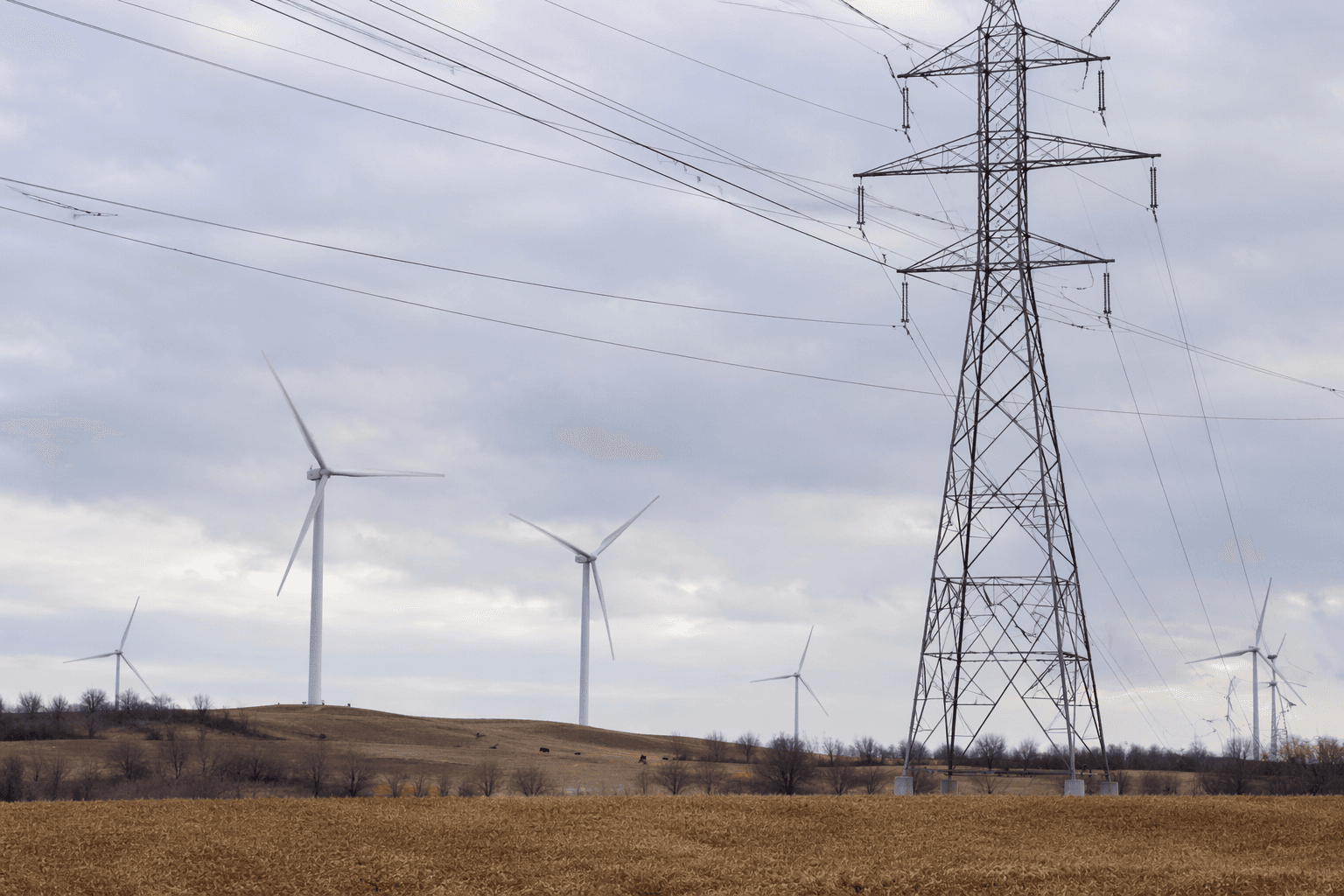
The county project is tied to a much larger overhaul of Minnesota Power’s aging high-voltage direct-current system, which was commissioned in 1977 and acquired by the utility in 2009. That 465-mile line currently carries nearly 500 megawatts of wind energy from Center, North Dakota, to Hermantown. The upgraded system would replace converter stations at both ends, allow two-way power flow and nearly triple the line’s transfer capability to 1,500 megawatts.
The upgraded HVDC system is expected to be in service between 2028 and 2030. The broader modernization effort is estimated at roughly $940 million to $960 million, backed by a $50 million federal grant and $25 million from Minnesota, including a $15 million legislative appropriation.

The buildout comes as Minnesota’s carbon-free electricity law requires utilities to be 100% carbon-free by 2040. It also follows a broader Midcontinent Independent System Operator expansion, with 24 new transmission projects worth $21.8 billion approved in December 2024 after an earlier 18-project package in 2022.
This article was produced by Prism’s automated news system from verified source data, official records, and press releases, then run through automated quality and moderation checks before publishing. The system is built and supervised by the people who set the standards it runs under. Read our full AI policy.
Did this article answer your question?