Pulsar Helium begins Jetstream #6 appraisal, finds high-pressure gas zones
Drilling near Babbitt found multiple pressurized gas zones in Jetstream #6, including two intervals above 1,000 psi; rig to mobilize to Jetstream #7 after reaching ~3,000 ft.
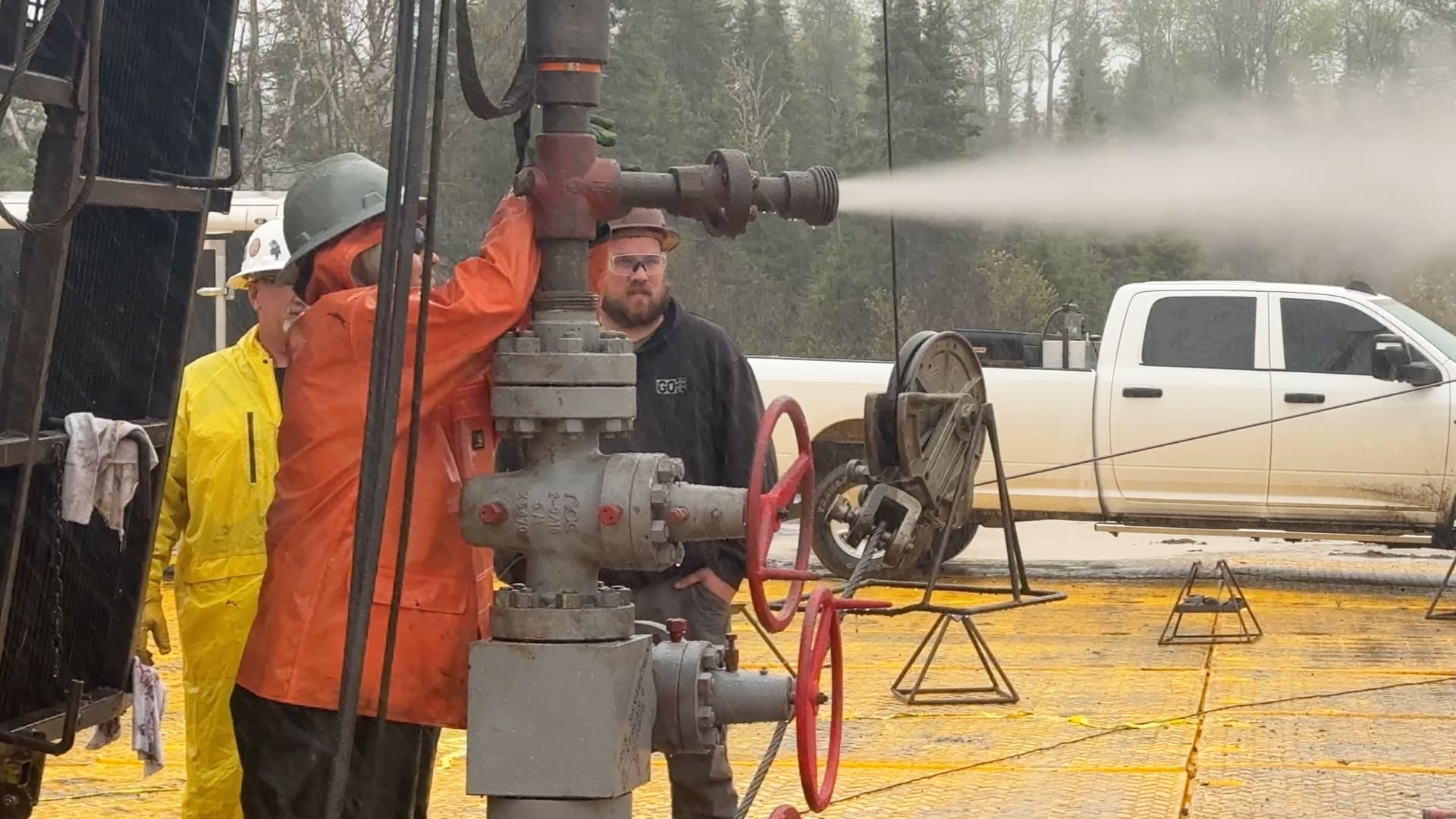
Drilling crews working near Babbitt in northeastern Minnesota have begun and progressed the Jetstream #6 appraisal well at Pulsar Helium’s Topaz Helium Project and reported multiple pressurized gas intervals while drilling to a target depth of roughly 3,000 feet. The company’s Feb. 16 release and reposts list four interval depths and pressures at Jetstream #6, including 2,187 feet at an estimated bottom‑hole pressure of 1,012 psi and 2,377 feet at an estimated 1,100 psi, and state the rig will mobilize to Jetstream #7 after Jetstream #6 reaches total depth.
The wider appraisal campaign that put a rig at Topaz began months earlier with Jetstream #5, which was spudded on Nov. 28, 2025. Pulsar reported on Jan. 9 that Jetstream #5 encountered pressurized gas at approximately 837 feet and 1,481 feet with an early calculated bottom‑hole pressure of about 662 psi, and that “Jetstream #5 encountered additional high‑pressure gas at ~2,857 feet depth, with a bottom‑hole pressure of approximately 1,292 psi (the highest observed at Topaz so far).” Pulsar also planned “a combined flow testing and pressure build‑up program” to begin in early February covering Jetstream wells 3, 4 and 5 for about six weeks per well.
Jetstream #6’s drilling method is being run as continuous HQ core drilling using a 3.8‑inch core barrel to maximize geological sample recovery, and Pulsar’s Feb. 16 materials list the Jetstream #6 interval depths and estimated bottom‑hole pressures as 1,287 feet at 576 psi (previously reported Feb. 9), 2,120 feet at 981 psi, 2,187 feet at 1,012 psi, and 2,377 feet at 1,100 psi. The company’s public statements say it “has encountered three additional pressurized gas zones including two intervals with estimated bottom‑hole pressures exceeding 1,000 psi.” Surface crews also observed gas bubbling through drilling fluids, noted in the Feb. 16 repost.
Pulsar emphasized measurement caveats when releasing the drilling data. As reposted, “These pressure readings were obtained during drilling operations and represent preliminary measurements. They do not constitute stabilized reservoir pressures or sustained flow test results.” The Jan. 9 release had likewise described the 1,481‑foot reading as an “early calculated bottom‑hole pressure,” and no stabilized flow test rates or compositional analyses are included in the Feb. 16 materials.

Project context for St. Louis County area stakeholders remains preliminary but measurable: Pulsar’s reposts state a total of six appraisal wells have been drilled at Topaz, with the sixth in progress, and claim a 100% success rate to date in intersecting pressurized gas. Share‑Talk language circulated with the Feb. 16 release highlights potentially saleable concentrations of helium, helium‑3 and carbon dioxide and notes helium‑3’s strategic applications in national security, quantum computing and advanced energy technologies as potential upside.
Key unresolved items for local residents and investors include whether the early‑February flow testing program for wells 3, 4 and 5 proceeded on schedule and what interim test results show for flow rates and gas composition, calibration of drilling‑derived bottom‑hole pressures to stabilized reservoir pressures, and the exact timing of rig moves between Jetstream #5, #6 and #7. Pulsar’s public materials also carry standard distribution restrictions and list corporate tickers AIM: PLSR, TSXV: PLSR and OTCQB: PSRHF.
Know something we missed? Have a correction or additional information?
Submit a Tip