St. Louis County revises zoning rules for data centers, junkyards
County commissioners approved zoning changes that push data centers into a stricter industrial category and loosen some rural junk-vehicle rules.

St. Louis County has approved a rewrite of Ordinance 62 that would move data centers into a stricter zoning category and relax some rural junk-vehicle rules on shoreland property. The changes, approved by the County Board on June 3, cap a months-long review shaped by concerns over where large industrial uses belong and how they could affect utilities, emergency services and surrounding land uses.
The zoning code was first adopted in 2015 and amended in 2016, 2020, 2022, 2023 and 2025. County planning staff said the latest rewrite was meant to reduce ambiguity, keep the ordinance consistent with other rules and remove unnecessary administrative requirements. The Planning Commission held a workshop on December 18, 2025, opened the public review period, and then held a public hearing on February 5 after a 45-day comment window. The County Board later held its hearing on April 14 at 10 a.m. in White Township, near Aurora.
One of the most closely watched changes would reclassify data centers from Commercial III to Industrial II. County planners said Commercial III covers uses such as call centers, retail stores and service establishments, while Industrial II includes crematories, factories and industrial parks. Allison Hafften of Proctor urged county officials to define and regulate data centers more specifically, saying hyperscale facilities can place long-term demands on public infrastructure and utilities, electrical power, water supply, emergency services and nearby land uses. She said a data-center-specific category would help ensure projects are evaluated, sited and mitigated under the county comprehensive plan.
The debate unfolded against a regional backdrop already centered on Hermantown, where Google is behind a proposed data center that has drawn intense public attention. Draft development documents for that project described a buildout of about 1.2 million square feet, roughly $130 million in public infrastructure, an estimated $33.5 million tax abatement over 28 years and more than $40 million for the local school district.
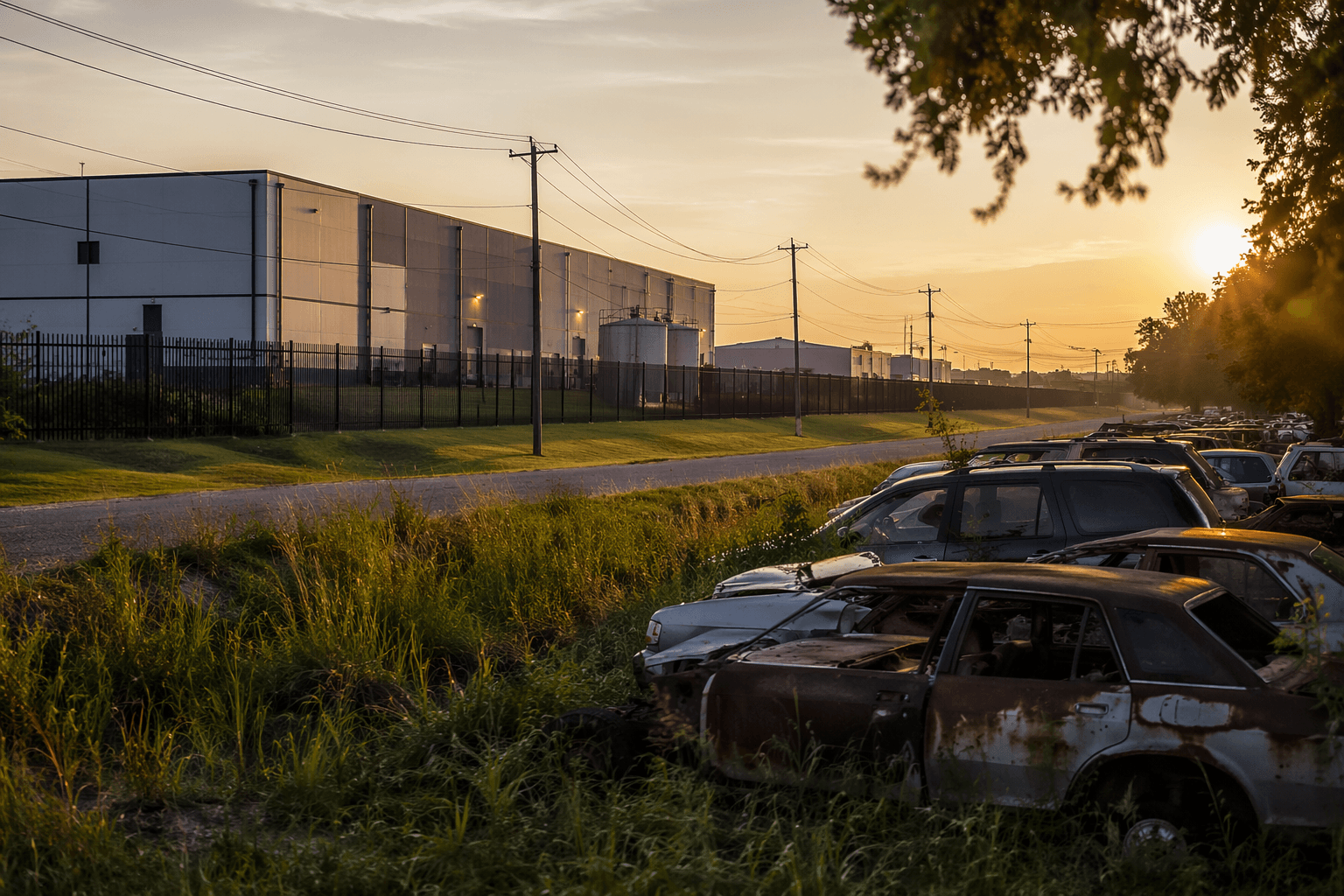
The ordinance revision also changes the county’s approach to junk vehicles. Under the draft, the county would eliminate a 2.5-acre minimum lot-size requirement for shoreland properties with more than five inoperable vehicles, while limiting riparian properties to five operable vehicles if they are screened from public view and meet setback rules. Non-riparian property would remain unchanged. Planning Director Ryan Logan said the goal was to make the ordinance less restrictive and reflect practices already in use for years.

Not everyone agreed. Jim Hofsommer, a Colvin Town Board supervisor who was involved in the original late-1990s debate, said he saw no need to reopen the issue and questioned the cost and reach of conditional-use permits. Jack Carlson, president of the Duluth Building and Construction Trades Council, said project labor agreements matter because workers’ jobs and careers can be put at risk. Commissioner Mike Jugovich said the board needed to listen to constituents while weighing the interests of building trades. The final approval now gives St. Louis County a new precedent for where industrial uses can go, and how tightly rural landowners and developers will be regulated.
This article was produced by Prism’s automated news system from verified source data, official records, and press releases, then run through automated quality and moderation checks before publishing. The system is built and supervised by the people who set the standards it runs under. Read our full AI policy.
Did this article answer your question?