St. Louis County seeks adult trial for Duluth attempted murder teen
Prosecutors want a 17-year-old Duluth shooting suspect moved to adult court, a shift that could bring harsher sentencing and more open proceedings.
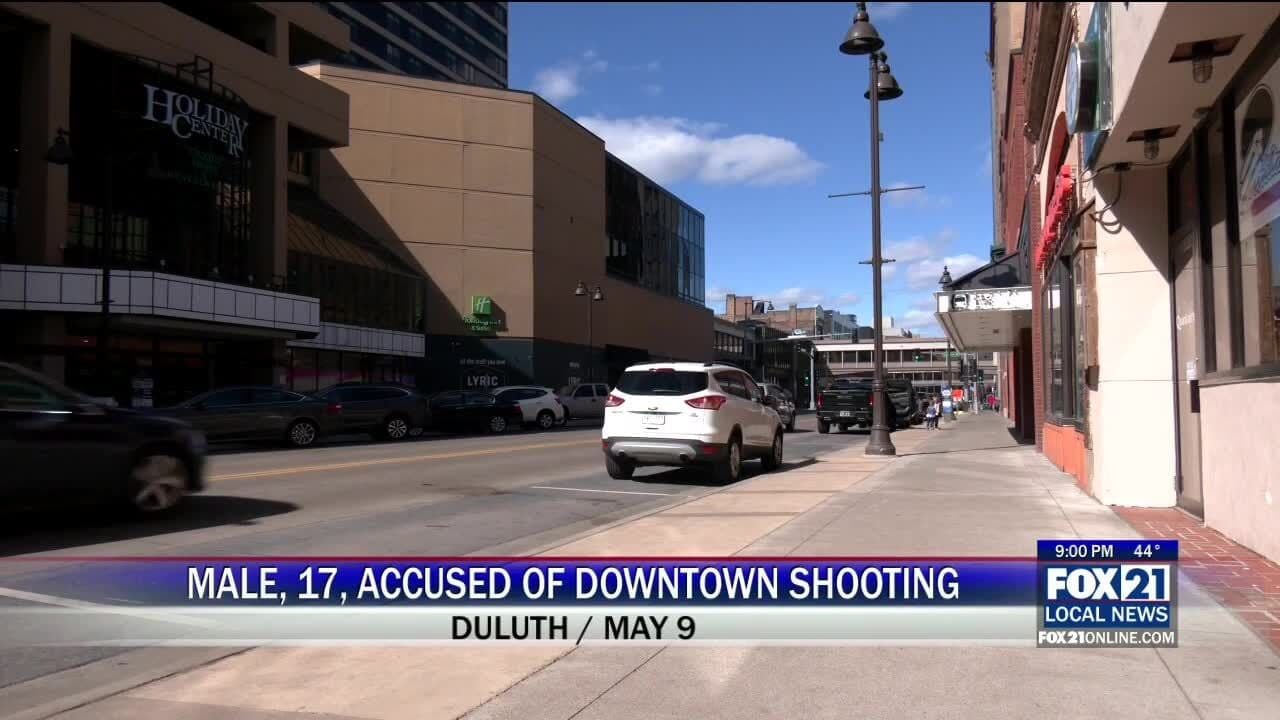
St. Louis County prosecutors want a 17-year-old accused in a downtown Duluth shooting moved out of juvenile court and into the adult system, a step that could expose the teen to harsher punishment and a more public case.
The request centers on a May 9 shooting near R.T. Quinlan’s Saloon at 220 West Superior Street, where police responded around 9:38 p.m. and found a man who had been shot in the upper right chest and taken to the hospital. Investigators say they identified the suspect through witness descriptions and city-camera surveillance footage, and the teen was later arrested on May 14 in Gordon, Wisconsin, with help from the Douglas County Sheriff’s Office.
Court documents say the juvenile faces four felony charges: attempted second-degree murder with intent but not premeditated, assault with a dangerous weapon, intentional discharge of a firearm that endangers safety, and possession of a pistol while under 18. The county attorney’s office is now asking St. Louis County District Court to certify the case for adult prosecution, a move that would shift the matter from juvenile delinquency rules to criminal court.
That distinction matters. In juvenile court, the focus is typically on rehabilitation and a closed system that keeps more of the case out of public view. Adult certification would place the case in a more open courtroom and expose the defendant to adult sentencing if convicted.
Minnesota law allows certification when a child is alleged to have committed, after age 14, a felony that would also be a felony for an adult. It also creates a presumption in favor of certification for some 16- and 17-year-olds when the petition alleges an offense that would result in a presumptive prison commitment under the sentencing guidelines, or any felony committed while using a firearm. Judges weigh the seriousness of the offense, the teen’s culpability, prior record, programming history, whether juvenile sanctions are adequate, and what dispositional options are available.
If the case is moved, sentencing exposure could change sharply. Minnesota sentencing guidance says attempted offenses are generally punished at one-half of the guideline duration or the mandatory minimum, whichever is greater. For a case built around an alleged shooting, prosecutors are signaling that they believe the facts warrant the adult system rather than a juvenile outcome. The court’s certification decision will determine whether that question is answered in juvenile court or in the full criminal process.
This article was produced by Prism’s automated news system from verified source data, official records, and press releases, then run through automated quality and moderation checks before publishing. The system is built and supervised by the people who set the standards it runs under. Read our full AI policy.
Did this article answer your question?