Superior National Forest lifts campfire ban in Boundary Waters
Campfires were allowed again in the Boundary Waters on Friday after rain lowered fire danger, but Superior National Forest said the wilderness was still dry enough for caution.
Campfires were allowed again in the Boundary Waters Canoe Area Wilderness on Friday after Superior National Forest ended its temporary ban, reopening fires for campers across one of Minnesota’s most heavily visited wilderness areas. The change came after recent rain reduced fire danger, but forest officials still warned that the region remained dry enough that caution was essential.
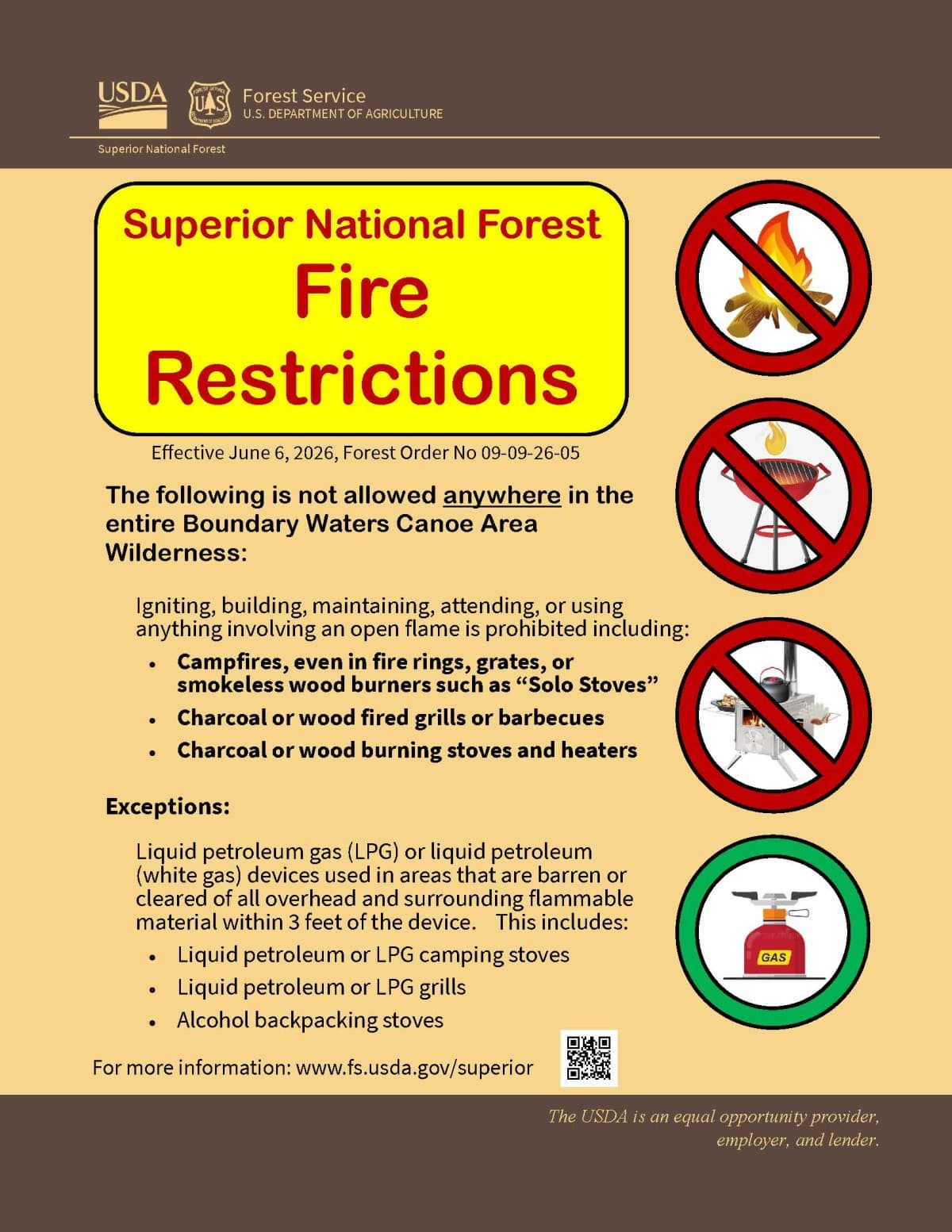
Superior National Forest Supervisor Drew Stroberg signed the termination notice that lifted the emergency forest order. The restriction had been issued June 4, took effect at 12:01 a.m. June 6, and was originally set to remain in place through June 30 unless rescinded or extended. While it was in force, the order banned campfires and also prohibited charcoal- or wood-fueled stoves, grills and barbecues inside the BWCAW. Gas and propane cook stoves were still allowed.
The temporary ban followed three wildfires in the BWCAW, the Buck, Loon and Tiger fires, which were started by lightning from thunderstorms earlier in the week. Superior National Forest said the order was necessary because of continued dry conditions and elevated wildfire danger in the wilderness. By June 11, the Minnesota Department of Natural Resources had dropped fire danger in northern Minnesota to low and moderate levels, and local reporting said recent precipitation across the region and the Boundary Waters helped officials end the ban early.

The decision mattered well beyond the canoe routes and portages of the wilderness. The Boundary Waters draws campers, outfitters and visitors from Duluth, Ely and across St. Louis County, and even a short-lived restriction can affect summer travel plans on the North Shore and in inland forest country. Minnesota fire officials say escaped debris fires are the state’s leading cause of wildfires, one reason even a temporary campfire ban in a place as fire-sensitive as the BWCAW draws close attention from land managers and visitors alike. Officials are now watching whether more rain holds fire danger down after some parts of northern Minnesota went nearly a week without precipitation and saw temperatures in the 70s and 80s before the rain arrived.
This article was produced by Prism’s automated news system from verified source data, official records, and press releases, then run through automated quality and moderation checks before publishing. The system is built and supervised by the people who set the standards it runs under. Read our full AI policy.
Did this article answer your question?