Walz Brings $907 Million Bonding Bill Push to Duluth on Statewide Tour
The 148th Fighter Wing's 65-year-old hangars need $28M; Walz's bonding bill offers only $3M for design, and needs a 60% supermajority to survive the Legislature.
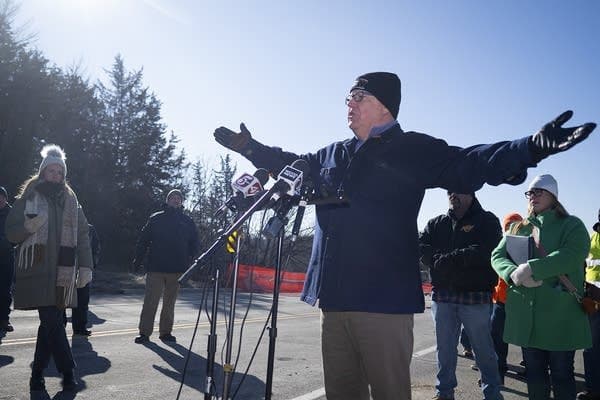
Governor Tim Walz brought his statewide infrastructure push to Duluth on Thursday, making the city his second tour stop as he campaigns for a $907 million bonding bill that cannot pass without a three-fifths supermajority in the Minnesota Legislature and will not reach a single construction site without bipartisan votes Republicans have not yet committed to cast.
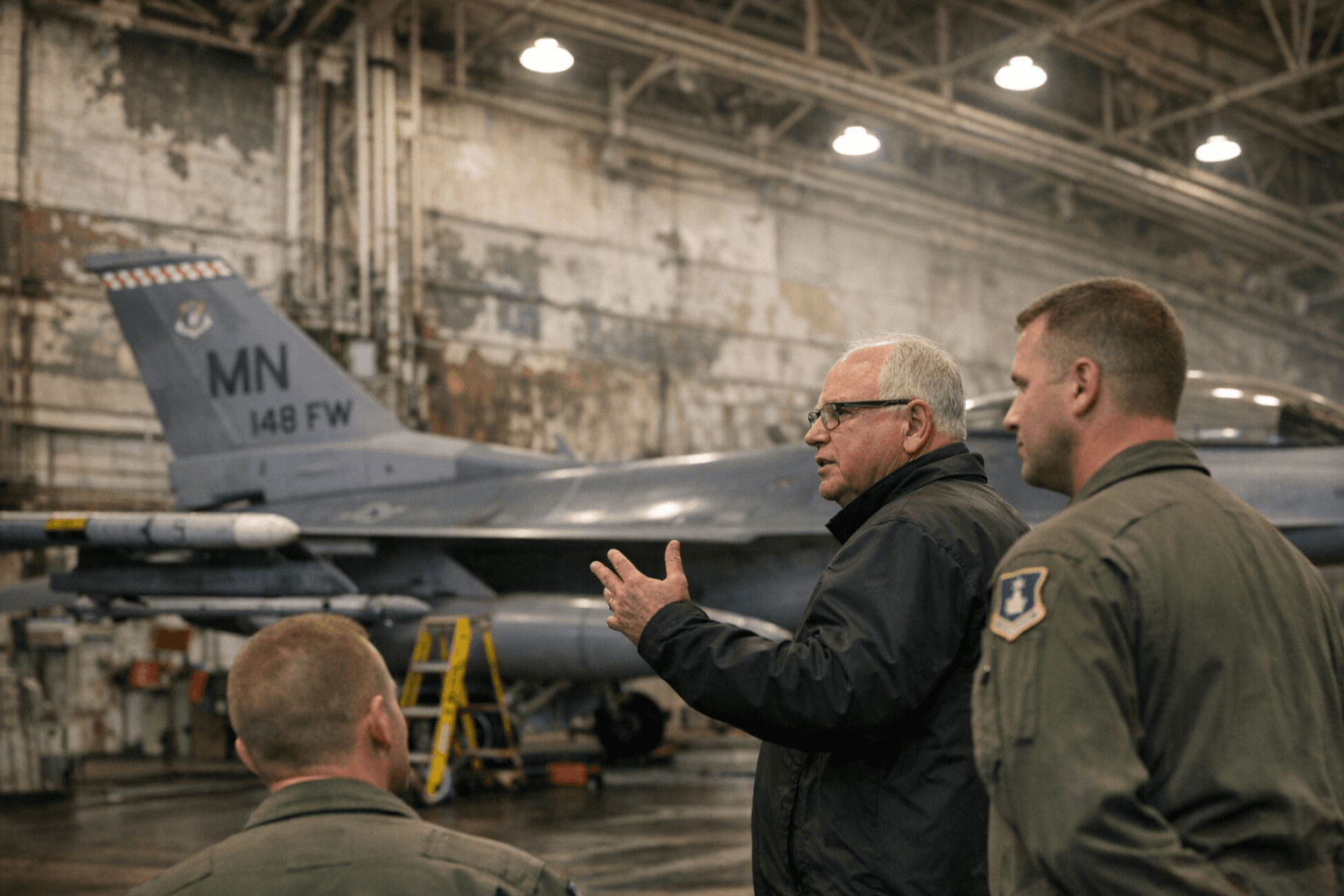
The most urgent local test of that political math sits at Duluth Air National Guard Base, where the 148th Fighter Wing of the Minnesota Air National Guard has operated out of the same metal hangars since the late 1950s, over 65 years without replacement. A full rebuild would cost an estimated $28 million. Walz's 2026 capital investment plan allocates just $3 million, covering only the design phase. If the bonding bill stalls in the Legislature, that $3 million disappears with it, and a base with pre-Vietnam-era infrastructure keeps waiting.
The economic pressure behind the project is substantial. Matt Baumgartner, president of the Duluth Area Chamber of Commerce, has noted the 148th Fighter Wing is Duluth's seventh-largest employer, supporting roughly 1,100 jobs and contributing more than $100 million annually to the local economy. Advocates also point out that new hangars would be purpose-built to house next-generation F-35 aircraft, a specification the U.S. Air Force considers when determining which bases receive upgraded fighter planes, making this a competitive positioning question, not just a maintenance one. During a 2025 visit to the base, Walz toured the aging facilities with Col. Nathan Aysta and was direct about the stakes: "We need to do more. Federal government's probably not going to do it. It doesn't change the fact that it's needed."
Walz was joined Thursday by Duluth Mayor Roger Reinert, along with labor, building industry, and business leaders for the infrastructure event. The broader $907 million proposal, formally unveiled on January 15, would be funded by $700 million in general obligation bonds and $207 million from appropriation bonds and trunk highway bonds. The spending breakdown allocates 35 percent to preserving existing state assets, 19 percent to water and transportation, 16 percent to public safety, and 11 percent to affordable housing and local economic development.
Even at $907 million, the proposal covers less than 15 percent of Minnesota's identified need. The state's total infrastructure gap stands at an estimated $6.8 billion, and state agencies and local governments submitted more than $7 billion in combined requests. Labor unions have drawn the line at $1 billion as the minimum acceptable figure. Joel Smith, president and business manager of LIUNA Minnesota and North Dakota, framed the urgency plainly: "Every year is the year to keep up our infrastructure. Governor Walz's bonding proposal will continue to fix our crumbling roads, bridges, water infrastructure and public buildings."
The political backdrop makes passage genuinely uncertain. In 2024, the Legislature failed to pass a bonding bill at all, drawing sustained criticism from labor groups who watched projects stall without funding. The 60 percent supermajority threshold means Walz cannot rely on Democratic support alone, and no Republican lawmakers in the Duluth delegation have yet stated publicly whether they will vote yes on the current proposal.
Walz made a second Duluth stop Thursday to announce a child care affordability legislative proposal, joined by Minnesota Department of Revenue Commissioner Paul Marquart, education and child care leaders, and local parents.
The visit follows a year of state attention to the region. In April 2025, Walz attended the groundbreaking for a $200 million expansion at the Sofidel paper plant in the Irving neighborhood of West Duluth, a 600,000-square-foot addition projected to bring approximately 160 jobs to the Northland with construction completing in 2026. Sofidel, which produces tissue products under multiple brands, acquired the former ST Paper Mill in Duluth in 2023.
For the 148th Fighter Wing, the path from a $3 million design investment to a functional new hangar runs directly through a legislative vote that, as of Thursday, remains unresolved.
This article was produced by Prism’s automated news system from verified source data, official records, and press releases, then run through automated quality and moderation checks before publishing. The system is built and supervised by the people who set the standards it runs under. Read our full AI policy.
Did this article answer your question?