Water pipe burst shuts down PAVSA art room, group to resume soon
A burst pipe in Duluth’s Building for Women paused PAVSA’s therapist-led art group, showing how one repair can disrupt survivor support.

A burst water pipe in Duluth’s Building for Women shut down PAVSA’s art room and forced the weekly survivor art group to pause, exposing how quickly a single building failure can interrupt trauma support for women who rely on the nonprofit’s services.
The room matters far beyond craft materials. PAVSA staff described the group as a therapist-led space where survivors can process trauma through artistic expression while sitting with peers and having clinical support available if needed. The loss of that room was especially significant because PAVSA says the art group is part of a larger safety net that also includes free and confidential crisis counseling, a 24-hour helpline, and group counseling options such as trauma-informed yoga.
PAVSA marked 50 years of service in the Northland in September 2025, tracing its start to 1975 as a small grassroots effort. Today, the organization says it provides advocacy, legal services, therapists and nurses, with all services free and no insurance required. That makes the Building for Women more than an office address at 32 E 1st Street in Duluth. It is part of the local response system for sexual violence survivors, and the art room outage briefly narrowed that access.
The Building for Women itself has long been a shared community asset. It was founded in 1993, when PAVSA, WE Health Clinic and the Duluth YWCA bought the property together. The building became a safe community space for women and LGBTQIA+ people, and the pipe burst again showed how dependent those services are on the condition of an aging structure.
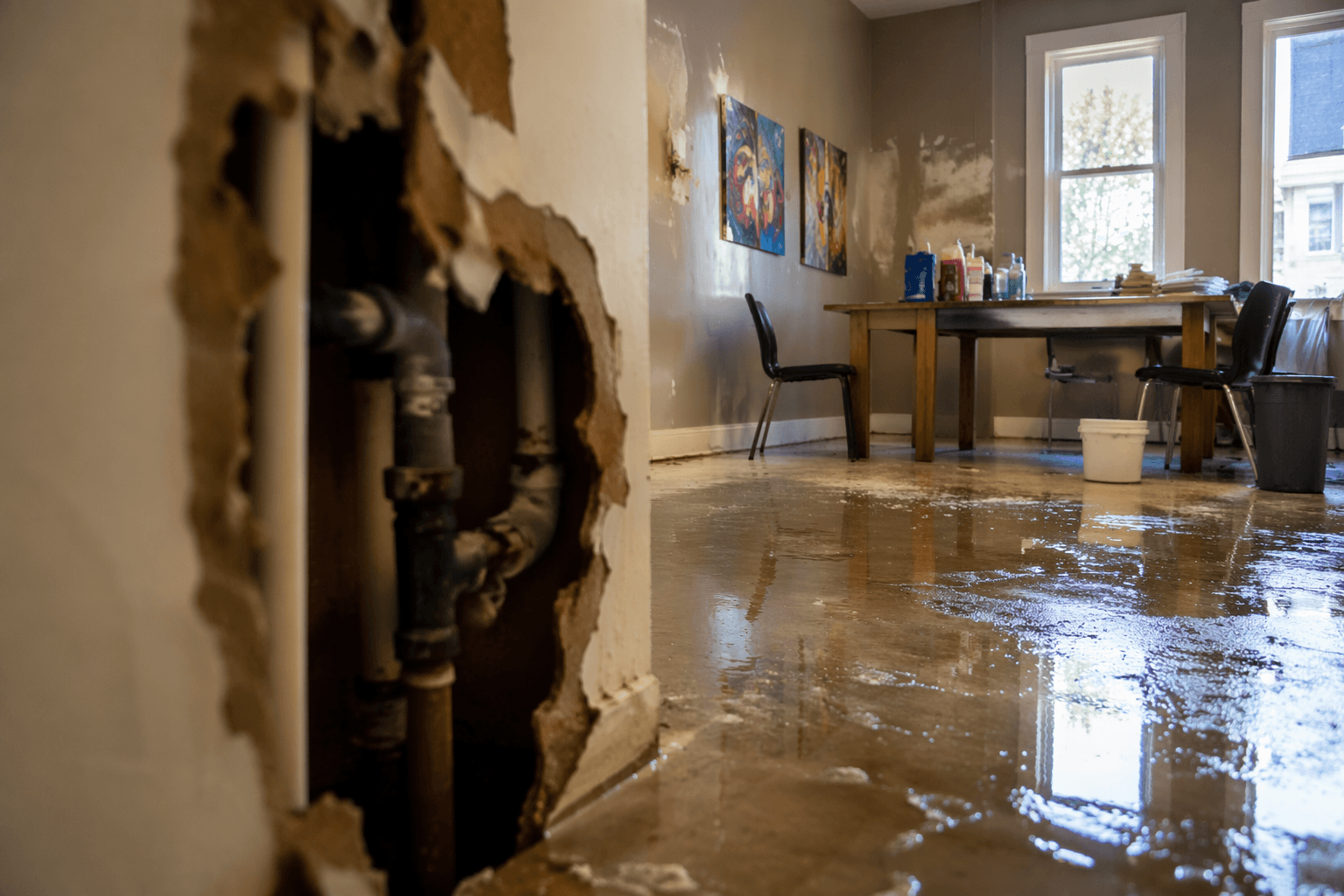
Northern Bedrock Historic Preservation Corps stepped in as repairs moved forward. The organization says its work centers on historic preservation, workforce development and community stewardship. Executive director Charley Langowski has said historic buildings are “community infrastructure,” and that failures can disrupt entire support systems. In this case, workers began making changes meant to limit the damage if another spill happens, including moving some soft materials, removing cabinetry from the water path and discussing longer-term maintenance strategies.
The episode also fits a longer pattern. A 2023 WDIO report said a GoFundMe campaign sought $100,000 for critical repairs at the Building for Women, including elevator problems, water leaks and aging equipment, and the effort had reached nearly $20,000 at the time. For a building that houses three nonprofits, the lesson is blunt: when infrastructure falters, survivor services can be the first to feel it.
This article was produced by Prism’s automated news system from verified source data, official records, and press releases, then run through automated quality and moderation checks before publishing. The system is built and supervised by the people who set the standards it runs under. Read our full AI policy.
Did this article answer your question?