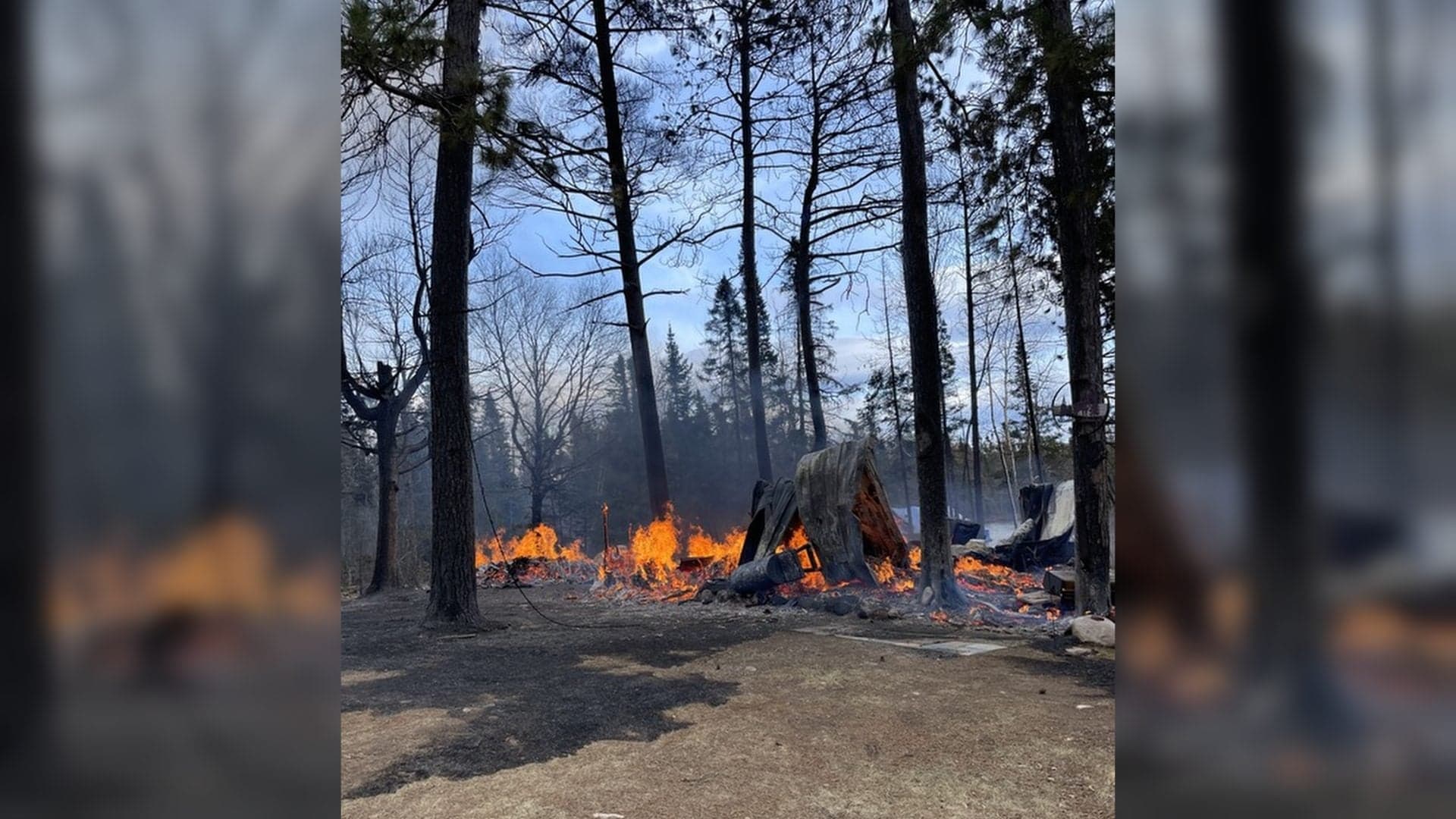
Weed trimmer sparks grass fire near Highway 100 in White Township
A weed trimmer ignited a grass fire near Highway 100 in White Township, but quick mutual aid kept it from spreading beyond just over an acre.
A walk-behind weed trimmer turned a routine yard job into a grass fire near Highway 100 in White Township, burning just over an acre before crews stopped it from reaching any homes or outbuildings.
The fire was reported around 12:51 p.m. on May 1, about 11 miles south of Aurora, in a part of St. Louis County where open grass, tree lines and scattered rural homes can make even a small ignition risky. The St. Louis County Sheriff’s Office said the blaze started after a homeowner used the trimmer shortly before flames broke out.
No structures were damaged, and that outcome was shaped by a fast, coordinated response. Along with the sheriff’s office, the Minnesota Department of Natural Resources, Palo Fire Department, Colvin Fire Department, Lakeland Fire Department and St. Louis County Emergency Management all responded to the scene. In rural parts of the county, that kind of mutual aid often decides whether a fire stays a field fire or becomes a home loss.
The White Township blaze is a reminder that early-season conditions can be unforgiving. The Minnesota Department of Natural Resources says more than 99% of wildfires in Minnesota are caused by people, and Karen Harrison, a fire prevention specialist with the agency’s Forestry Division, has said spring is consistently the most dangerous time of year. She said about 75% of all wildfires in Minnesota happen in April and May, when snowmelt leaves dry or dead vegetation on the ground.
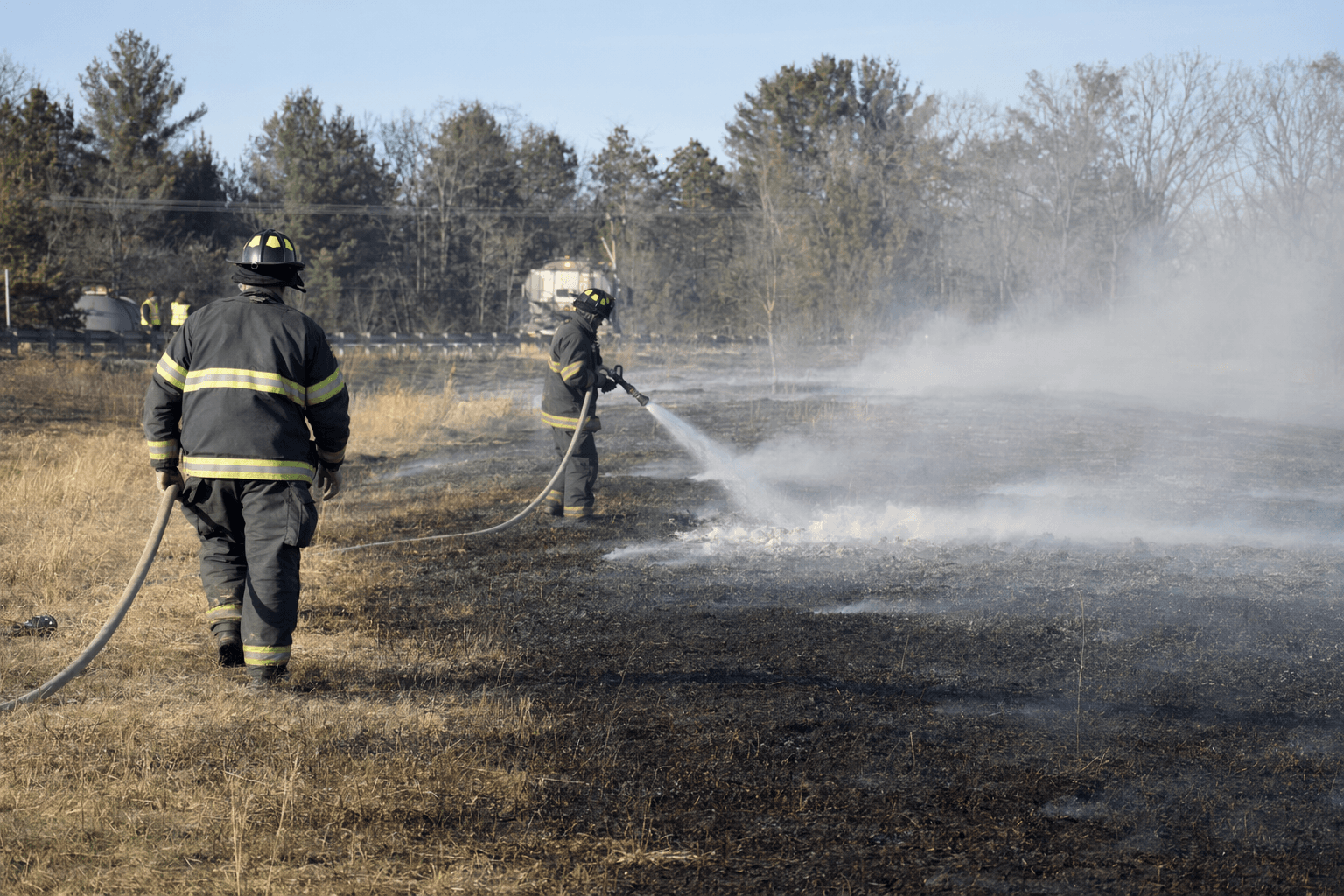
St. Louis County Firewise says escaped debris fires are the number one cause of wildfires in Minnesota and urges residents to check the fire danger rating and burning restrictions before doing outdoor work. That warning carries extra weight in White Township and other wildland-urban interface areas, where grass, brush and timber sit close to driveways, roadside ditches and older outbuildings. The county also says emergency management operates as a division out of the sheriff’s office, underscoring how closely fire response is tied to public safety operations in rural areas.
The fire near Highway 100 did not cost any structures, but it showed how quickly sparks from ordinary equipment can spread through cured grass. For property owners with wooded lots, ditch lines or fields near County Road 100 and other rural roads, the safest move now is to treat every spark-producing task as a fire risk and make sure dry vegetation is cleared before the next hot, windy afternoon turns a small mistake into a larger emergency.
Know something we missed? Have a correction or additional information?
Submit a Tip