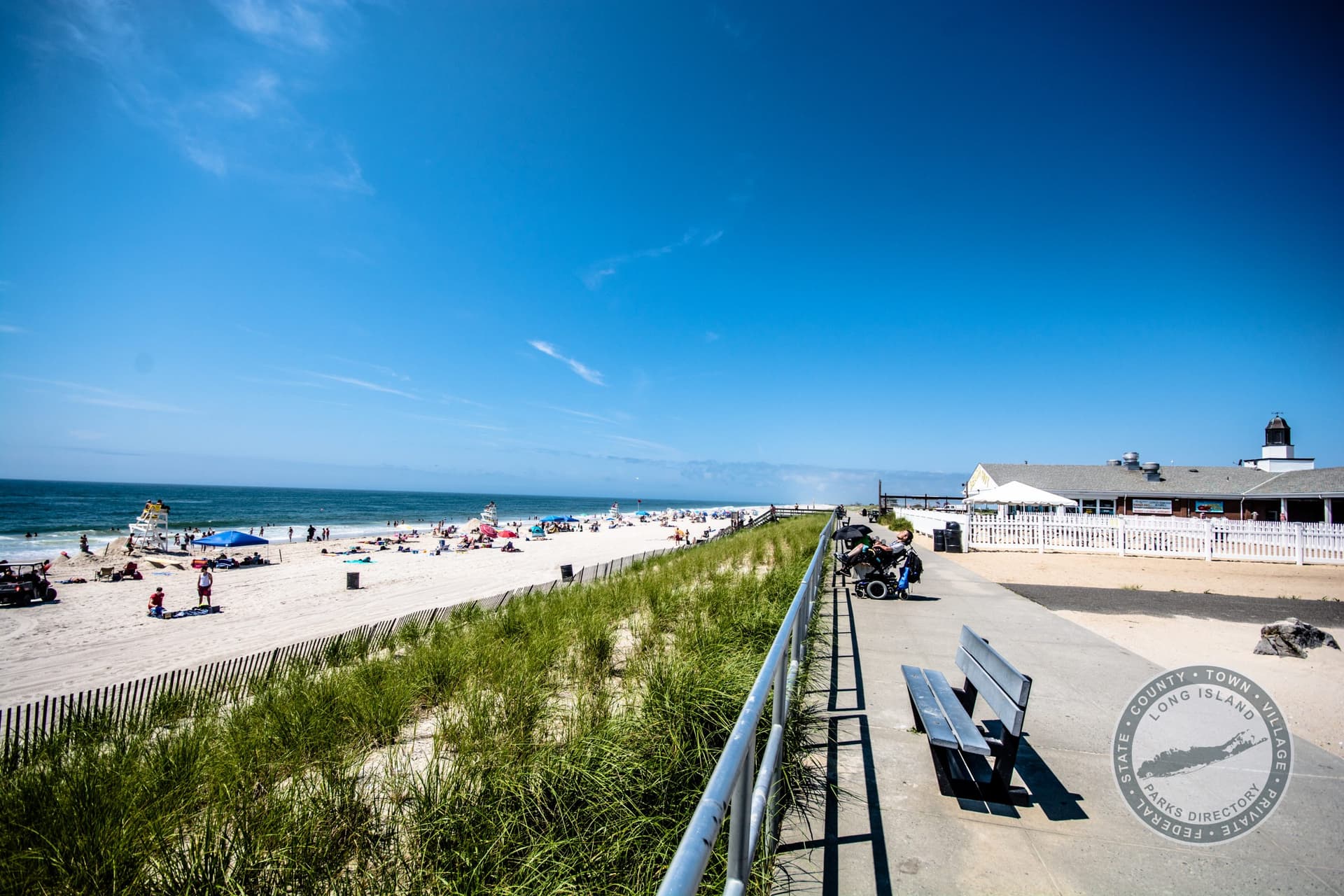
Coast Guard Helicopter Crew Hoists Four From Disabled Yacht Near Fire Island
Four boaters drifted nearly four hours in 12-foot swells off Fire Island before a helicopter launched from Cape Cod finished the rescue that a Shinnecock lifeboat couldn't.
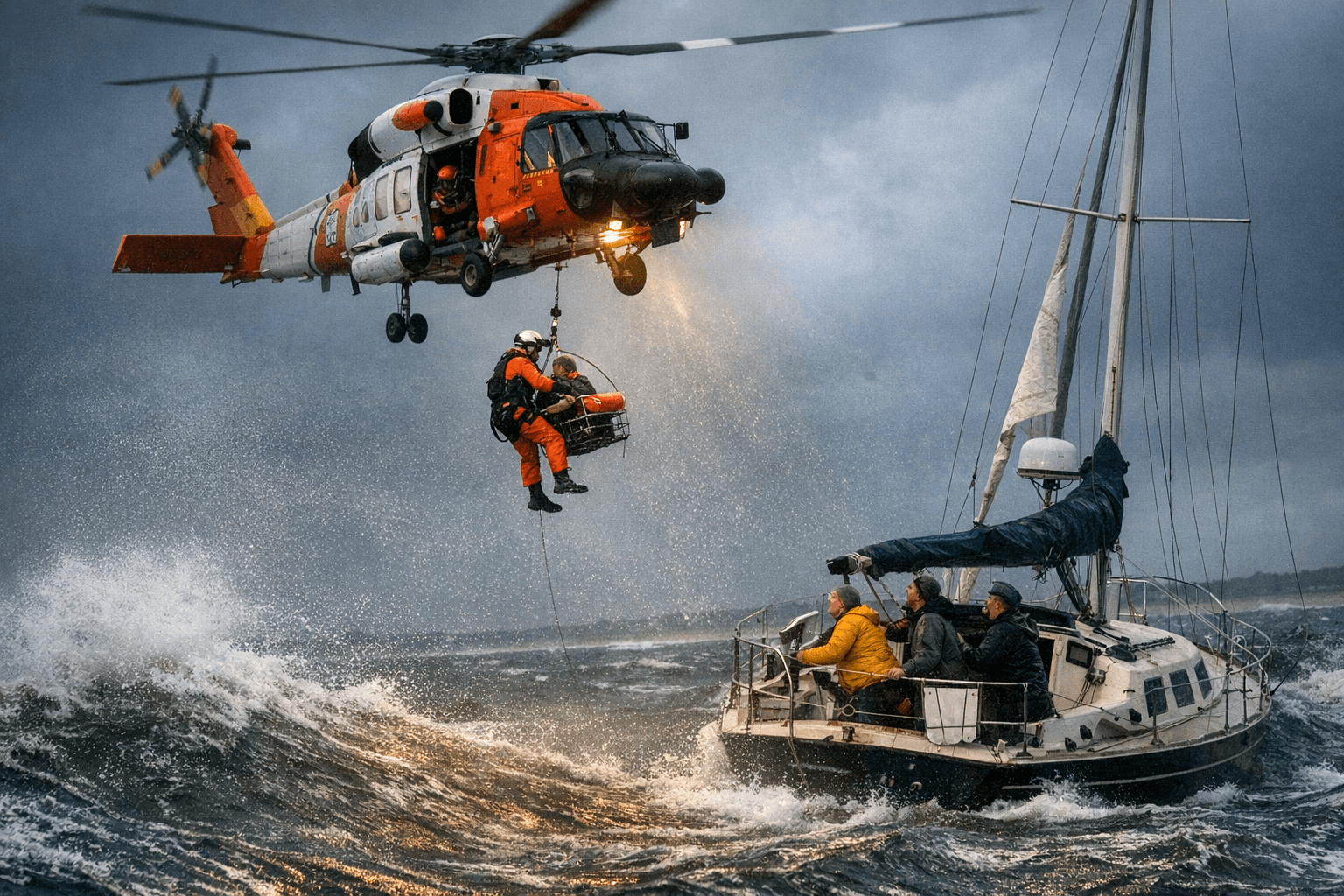
A 42-foot sportfishing yacht that left the Connetquot River near Oakdale on Saturday afternoon was disabled and adrift in 12-foot seas three miles southwest of Moriches Inlet by early evening, triggering a nearly four-hour Coast Guard rescue that exhausted every surface option before an aircraft 150 nautical miles away finished the job.
The Coast Guard command center received the distress call at 5:45 p.m. on April 4. Four people aboard, two men aged 55 and 30 and two women aged 45 and 40, were unable to maneuver the vessel in the building Atlantic swell. Responders at Coast Guard Station Shinnecock in Hampton Bays launched a motor lifeboat, but the 12-foot seas made it impossible for the surface craft to safely reach the disabled yacht. That gap in surface response is what stretched a salvageable breakdown into a full helicopter hoist operation.
With no boat able to cut through to the vessel, an MH-60 Jayhawk helicopter was scrambled from Coast Guard Air Station Cape Cod, roughly 150 nautical miles from the scene. While the aircraft made the crossing, the four boaters remained adrift as the Atlantic swell pushed the yacht steadily toward Democrat Point on the western end of Fire Island. At 8:30 p.m., the Jayhawk reached the scene and a rescue swimmer was lowered to the water. All four survivors were hoisted aboard. By 9:42 p.m., the crew confirmed everyone was aboard and transported them to shore, where local EMS evaluated all four. No injuries were reported. The yacht, left behind in the hoist, washed ashore intact at Democrat Point.
That the vessel arrived at Democrat Point in one piece tells the most important part of the story: the boat was disabled, not sinking. The four aboard had enough time, and enough working equipment, to reach the command center while they were still on deck. That call, made before the situation became unmanageable, is why a rescue swimmer could lower to them rather than a diver searching for them.
The waters off Moriches Inlet are unforgiving in April. Ocean temperatures along Long Island's South Shore run in the low 40s Fahrenheit in early spring, meaning unprotected immersion time is measured in minutes. The same winds that shut down the Shinnecock lifeboat can push a disabled vessel miles offshore in under two hours. For anyone launching from the Connetquot River, Fire Island marinas, or the Great South Bay's South Shore access points this spring, the gaps in this rescue are the checklist.
A working VHF marine radio on Channel 16 is the baseline for reaching the Coast Guard command center; no other piece of gear substitutes for it in an offshore emergency. A registered EPIRB or personal locator beacon provides an independent distress signal that transmits even if the operator cannot. Filing a float plan with a shore contact before departure gives responders a departure time, a vessel description, and a route before any call is made. Towing membership coverage can close out a mechanical failure before it becomes a hoist scenario; once seas reach 12 feet off Fire Island, that option is gone.
Coast Guard officials have repeatedly flagged skipping the pre-departure weather check as the single most preventable factor in offshore rescues off Long Island. Saturday's forecast for the Atlantic south of Fire Island was not favorable, and the conditions the four Oakdale boaters encountered matched exactly what the National Weather Service had indicated for the area. The four-hour window between their distress call and the final hoist was compressed by every asset the Coast Guard could mobilize; a later call, or no call at all, would have closed it entirely.
This article was produced by Prism’s automated news system from verified source data, official records, and press releases, then run through automated quality and moderation checks before publishing. The system is built and supervised by the people who set the standards it runs under. Read our full AI policy.
Did this article answer your question?