Copiague Schools to Deploy 10 Electric Buses Funded by NYSERDA
Copiague Public Schools deployed 10 battery-electric buses funded mainly by NYSERDA, cutting local emissions and serving about 4,500 K–12 students.
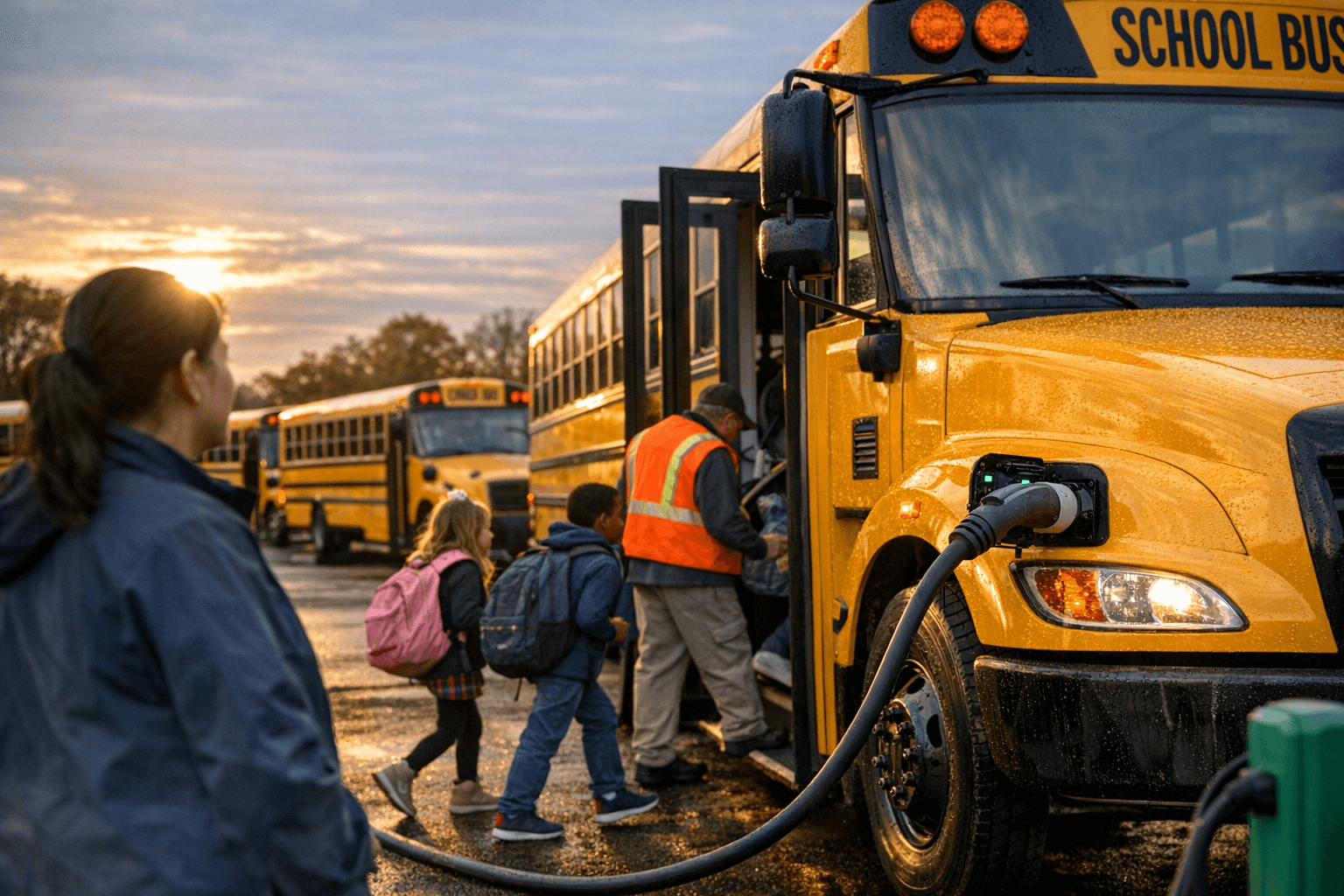
Copiague Public Schools deployed an initial fleet of 10 battery-electric school buses as part of a partnership between Educational Bus Transportation and fleet-electrification company Zenobē. The project was funded primarily through the New York School Bus Incentive Program administered by NYSERDA, with additional funding and turnkey charging services provided by Zenobē.
The buses and a scalable charging infrastructure will serve roughly 4,500 K–12 students across the Copiague district. Officials cited cleaner local air and quieter rides as immediate community benefits, and framed the rollout as a step toward New York State’s policy goals that new school bus sales be zero-emission and that the statewide fleet convert fully by 2035. The initial batch was configured for overnight charging to cover typical daily routes, and the charging setup was designed to expand as more buses are added.
Educational Bus Transportation will operate the new vehicles while Zenobē supplies the charging hardware and installation services. The New York School Bus Incentive Program, administered by NYSERDA, provided the principal financial support that enabled the purchase and infrastructure work. Zenobē’s contribution included additional funding and a turnkey approach to charging, meaning Copiague schools will receive both vehicles and the systems needed to keep them charged without piecemeal contracting.
For Copiague and neighboring communities in Suffolk County, the short-term impacts are operational and environmental. Route noise at pickup and dropoff points should decrease, and emissions along school routes are expected to fall, improving local air quality near schools and neighborhood streets. The overnight charging model means most buses will not require midday depot charging to maintain standard route schedules, but the district’s ability to increase fleet size will hinge on expanding electrical capacity and charger installations.
Policy and institutional implications extend beyond mechanics and air quality. The Copiague deployment illustrates how state incentive programs can accelerate local adoption of zero-emission vehicles, while placing new demands on school-district planning, procurement, and utility coordination. Future purchases will require elected school board members and district administrators to budget for infrastructure scaling, maintenance training, and longer-term total cost assessments compared with diesel fleets.
What happens next for Copiague Public Schools will matter to parents and voters. District officials will monitor range performance, charging reliability, and student experience as the buses enter regular service. If the initial deployment performs as planned, the district can expand its electric fleet using the scalable charging footprint and available state incentives, advancing the 2035 conversion goal while changing the soundscape and air quality for local streets and schoolyards.
This article was produced by Prism’s automated news system from verified source data, official records, and press releases, then run through automated quality and moderation checks before publishing. The system is built and supervised by the people who set the standards it runs under. Read our full AI policy.
Did this article answer your question?