Firefighters rescue osprey tangled in fishing line in Sands Point
An osprey tangled in monofilament was cut free from a high tree limb in the Village of Sands Point and rushed to Wildlife In Need of Rescue and Rehabilitation for treatment.
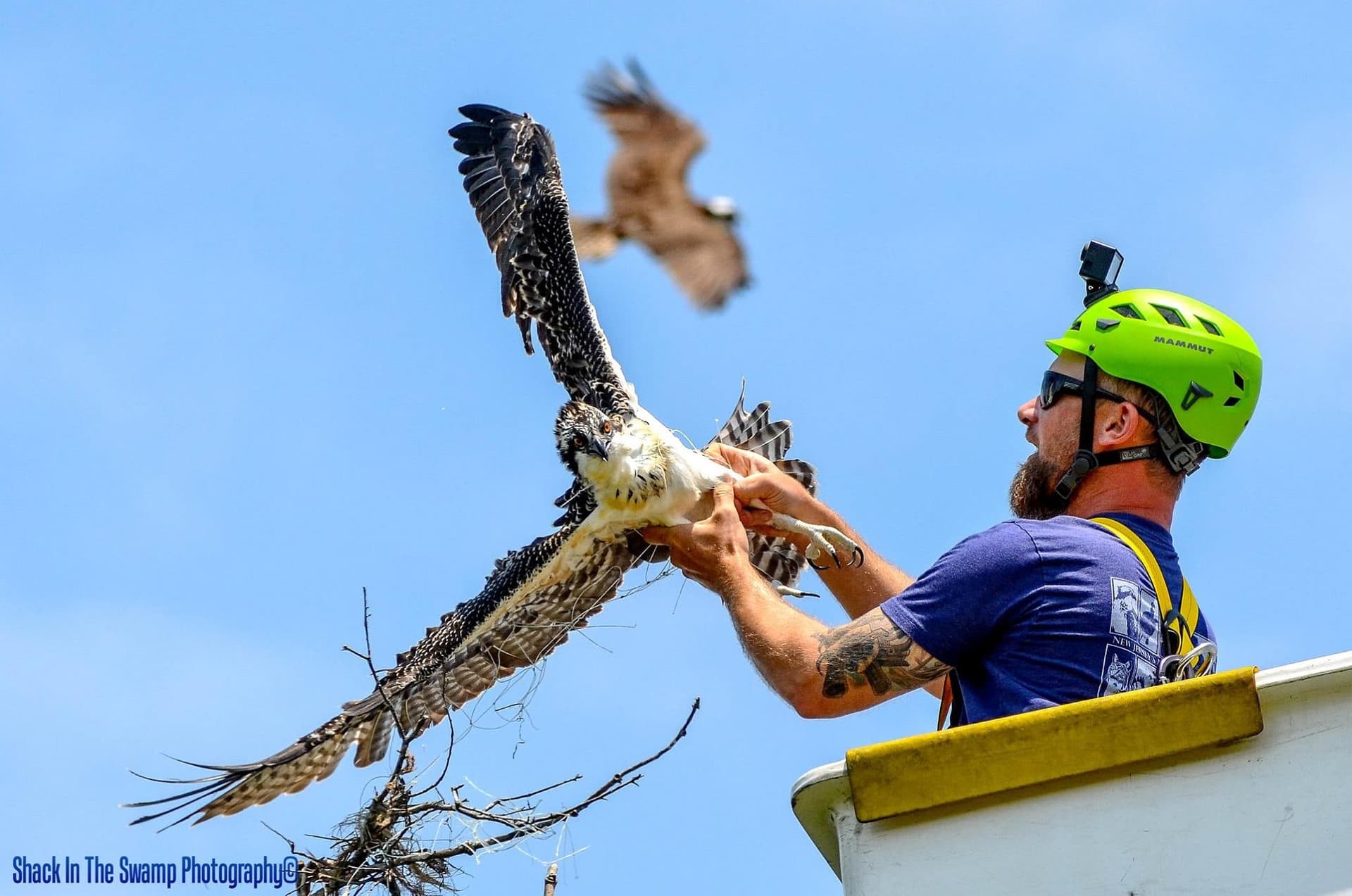
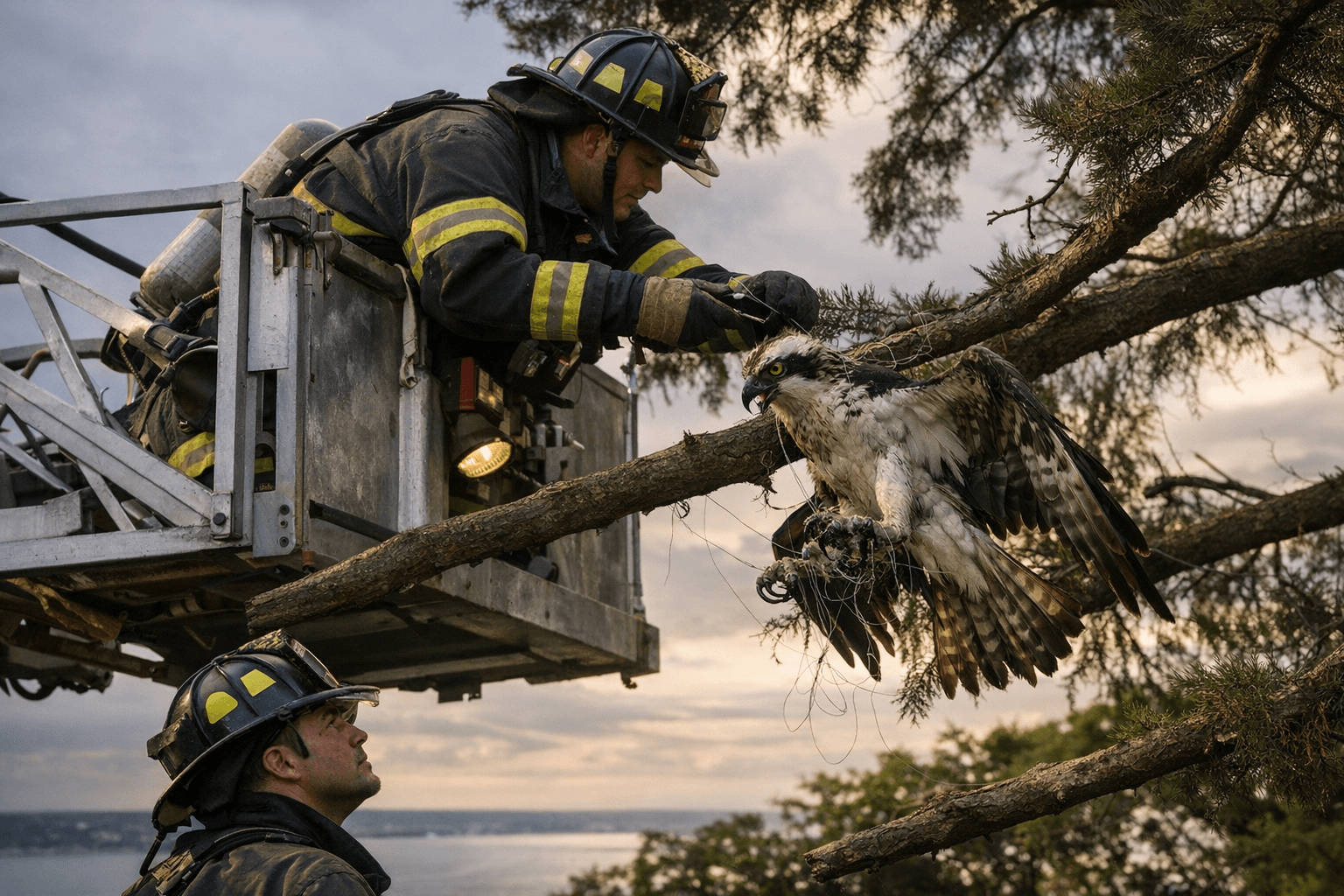
An osprey, its talons knotted in clear fishing line, hung high in a tree over a Sands Point yard before firefighters used a tower ladder and a saw to cut a branch and pull the bird into a bucket. The rescue in the Village of Sands Point, Nassau County, took place Thursday, April 9, 2026, after crews were dispatched at about 11:30 a.m., Port Washington Fire Department Company 1 said.
Members of Company 1 were returning from a department funeral when they received the call and responded with a tower ladder, video from the department shows. Firefighters cut the branch trapping the female osprey and brought her down without major injury; PWFD posted on social media, "Great work by all involved in ensuring the safe rescue of this protected bird," and added the bird "will receive proper care and treatment before being released back into the wild."
The bird was turned over immediately to Wildlife In Need of Rescue and Rehabilitation, a New York State licensed wildlife rehabilitator serving the New York City and Long Island region. WINORR reported the female had swollen toes from the entanglement but was expected to make a full recovery and to be released back to the coast after rehabilitation.
Entanglement in discarded monofilament and tackle is the clear culprit in this case, highlighting a persistent hazard to waterbirds across Long Island. Federal and state conservation groups and wildlife rehabs regularly identify fishing line as a common cause of injury for ospreys, herons, gulls and turtles; rehabilitation centers on Long Island treat entanglements repeatedly, including a prior Hampton Bays osprey that required wire removal and rehabilitation at the Evelyn Alexander Wildlife Rescue Center under the care of Kathleen Mulcahy.
Ospreys are a protected species under the federal Migratory Bird Treaty Act and state regulations administered by the New York State Department of Environmental Conservation, and nesting-season protections apply as birds return to Long Island in March and April. The regional population suffered a dramatic mid-20th century decline when DDT and related contaminants reduced breeding pairs from roughly 1,000 in the 1940s to about 109 in the early 1970s, with recovery following the DDT ban and conservation efforts; nests typically produce chicks beginning in mid-May in many local sites.
Prevention programs exist: BoatUS Foundation and the Berkley Conservation Institute promote monofilament recycling, and New York State Parks places fishing-line recycling bins at many coastal access points. Anglers and beachgoers can help prevent future rescues by cutting used line into small pieces before disposing of it, placing cut line into trash or recycling bins provided by BoatUS or state parks, and by carrying a small line-disposal container while fishing.
If you find an entangled raptor or waterbird, contact local fire or rescue services or a licensed wildlife rehabilitator and notify the NYSDEC; do not attempt to free a raptor yourself because handling can injure both the person and the bird. The Sands Point rescue underlines a simple truth for Long Island shorelines: small changes in how anglers discard line can keep protected birds like ospreys aloft and nesting across the region.
This article was produced by Prism’s automated news system from verified source data, official records, and press releases, then run through automated quality and moderation checks before publishing. The system is built and supervised by the people who set the standards it runs under. Read our full AI policy.
Did this article answer your question?