More than 100 troopers honor Riverhead sergeant who died from 9/11-related illness
More than 100 state troopers attended a Riverhead funeral for retired Sgt. Michael L. Piro, who died Jan. 6 from a 9/11-related illness. Flags on state buildings were ordered at half-staff.
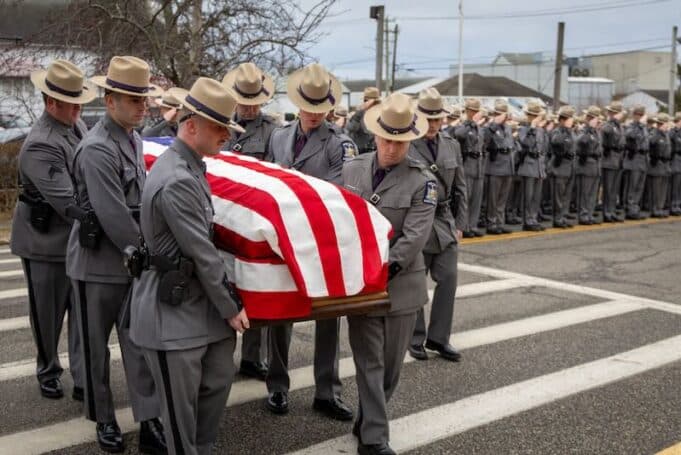
More than 100 New York State troopers turned out in Riverhead to honor retired Sgt. Michael L. Piro, whose funeral services drew a state police escort and formal formation as pallbearers carried his casket into St. Isidore’s Church. Piro, 63, died Jan. 6 from an illness linked to his duty at the World Trade Center site after the Sept. 11 attacks; he is the 39th member of the New York State Police to die from a 9/11-related illness.
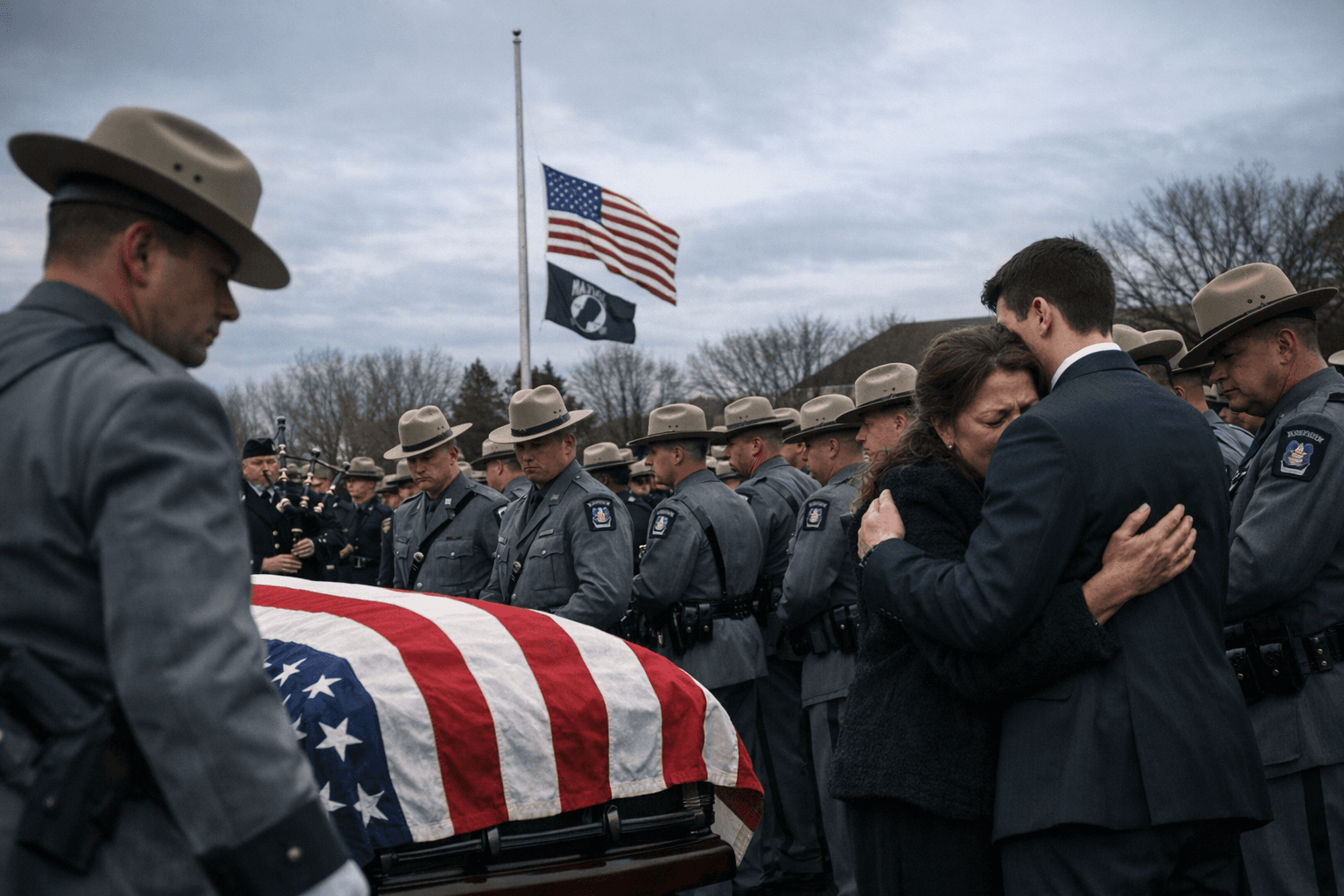
The display of solidarity underlined both the personal loss to colleagues and the institutional toll on the state police nearly a quarter-century after the attacks. Troopers escorted the hearse through Riverhead streets and stood in formation at the church, a public sign of mourning that Governor Kathy Hochul recognized by directing flags on state buildings be flown at half-staff.
Piro served for decades with the state police, responding to the World Trade Center site in the days and months after Sept. 11. His death and the growing number of 9/11-related fatalities among New York State Police personnel highlight long-term health consequences for first responders and the continuing need for monitoring, treatment and compensation programs at the state and federal level.
For Suffolk County residents, the funeral is a reminder that the local first responder community continues to absorb the costs of 9/11. Many troopers who live and work on Long Island balance visible public duties with long-term health concerns that can affect family finances, retirement planning and access to care. The growing list of service-related deaths also has institutional implications for recruitment, retention and morale within the state police and other public safety agencies that relied on retired and active personnel in the aftermath of the attacks.
Policy implications are immediate and practical: ensuring timely access to specialized health care, sustaining workers’ compensation and disability processes, and holding elected officials accountable for funding and oversight of programs serving 9/11 responders. At the local level, families and unions will likely press state and federal representatives to maintain benefits and to streamline claims processes as illnesses emerge years after exposure.
The turnout in Riverhead was both a ceremonial farewell and a civic signal about unresolved responsibilities to first responders and their families. Our two cents? If you or a loved one served in responder roles after Sept. 11, check with your union or local elected officials about eligibility for health and benefit programs, and bring the issue to town hall discussions so policymakers feel the community urgency.
Know something we missed? Have a correction or additional information?
Submit a Tip