Riverhead board presses Halpin on early retirement incentive plan
Riverhead board members pressed Jerry Halpin for hard numbers on a retirement plan that could tap up to $5 million in surplus funds. The payoff could reach $1.7 million a year.
Riverhead Town Board members pressed Supervisor Jerry Halpin to spell out the price tag, the savings and the staffing fallout from an early retirement incentive that could tap as much as $5 million in surplus funds and reshape the town payroll for years.
The friction came after Halpin introduced the idea in a two-minute prerecorded video posted to the town’s social media on May 27, followed by a press release that offered no program details. By the time the proposal reached a public work session on May 29, board members were already questioning why it had been discussed in two executive sessions before the public got the basics. Councilman Kenneth Rothwell put the concern bluntly: “We’re not putting blind trust in you.”

Halpin said the plan was made possible by stronger-than-expected 2025 revenues and investment earnings reflected in the town’s annual financial report. He said it could save Riverhead taxpayers up to 3% in 2027 and continue producing savings for five years. The town’s 2025 Annual Financial Report showed the general fund balance climbed from $28.4 million to $33.4 million, a gain of about $5 million.
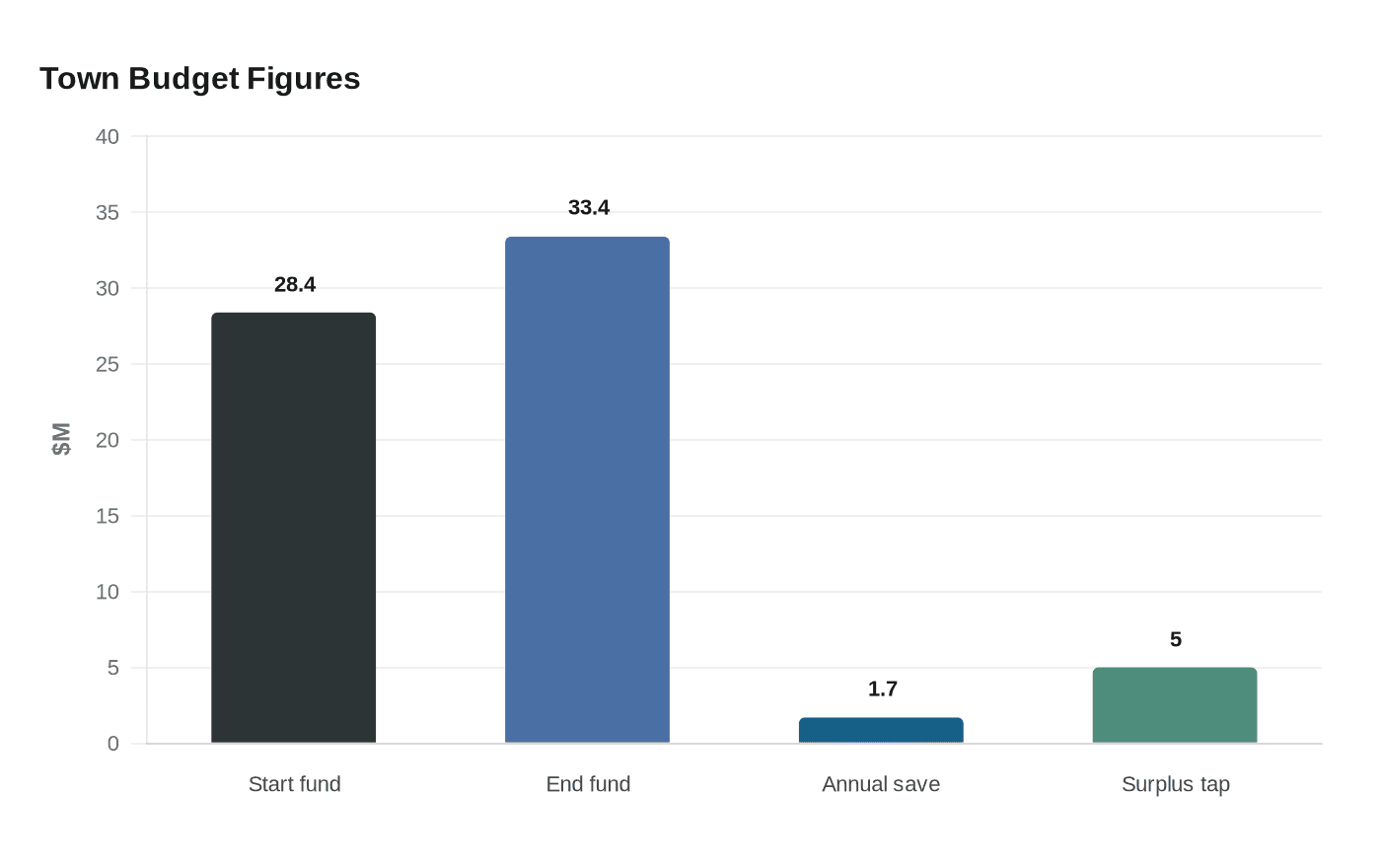
Jeanette DiPaola, the town’s financial administrator, told the board that if all roughly 32 eligible employees in CSEA, the Police Benevolent Association and the Superior Officers Association accepted the offer, the town could save up to $1.7 million annually. She said that amount would offset roughly three percentage points of the general fund tax levy, but warned that fund balance is usually better reserved for projects or emergencies.
The workforce stakes are just as sharp as the budget question. The proposal would require talks with the town’s three unions, and it could open gaps in the ranks of town workers, police officers and supervisory officers if experienced employees walk out together. That risk comes after Riverhead already approved a 2026-2029 CSEA contract in December 2025 with wage increases totaling 10.5% and higher retiree health-insurance buyback payments, another sign of the pressure on retention and labor costs.
Riverhead has used retirement incentives before, including programs in 2010 for CSEA members, 2012 for PBA members and 2019 during CSEA contract talks under Laura Jens-Smith. The 2010 and 2012 plans were adopted by Town Board resolution after public hearings, a precedent that helps explain why members want a fuller, more public accounting now.
The dispute lands after Riverhead pierced the state tax cap with a 7.89% tax hike, the town’s largest increase since 2012, and after that same burden helped shape Halpin’s narrow election win over Tim Hubbard. Before any incentive can be sold as a savings plan, the board wants the numbers laid out in public, and the town’s taxpayers are waiting for the full ledger.
This article was produced by Prism’s automated news system from verified source data, official records, and press releases, then run through automated quality and moderation checks before publishing. The system is built and supervised by the people who set the standards it runs under. Read our full AI policy.
Know something we missed? Have a correction or additional information?
Submit a Tip