Riverhead board questions early retirement plan, seeks cost details
Riverhead officials said up to 32 union workers could take an early exit plan, but board members demanded the cost before judging any savings.

At Riverhead Town Hall, Town Board members pressed Jerry Halpin’s early retirement idea for a full accounting of who could leave, what the incentives would cost and whether the town would actually save money. The proposal was still conceptual, but the board made clear it did not want the supervisor framing a public plan before the numbers were settled.
Halpin first rolled out the idea on May 27 in a two-minute prerecorded video and press release, after discussing it in executive session. That sequence drew sharp criticism from Republican Councilman Kenneth Rothwell, who said the Town Board had not been included before the public announcement. The proposal later came before the board in a work session, where members questioned whether the town had enough detail to approve anything responsibly.

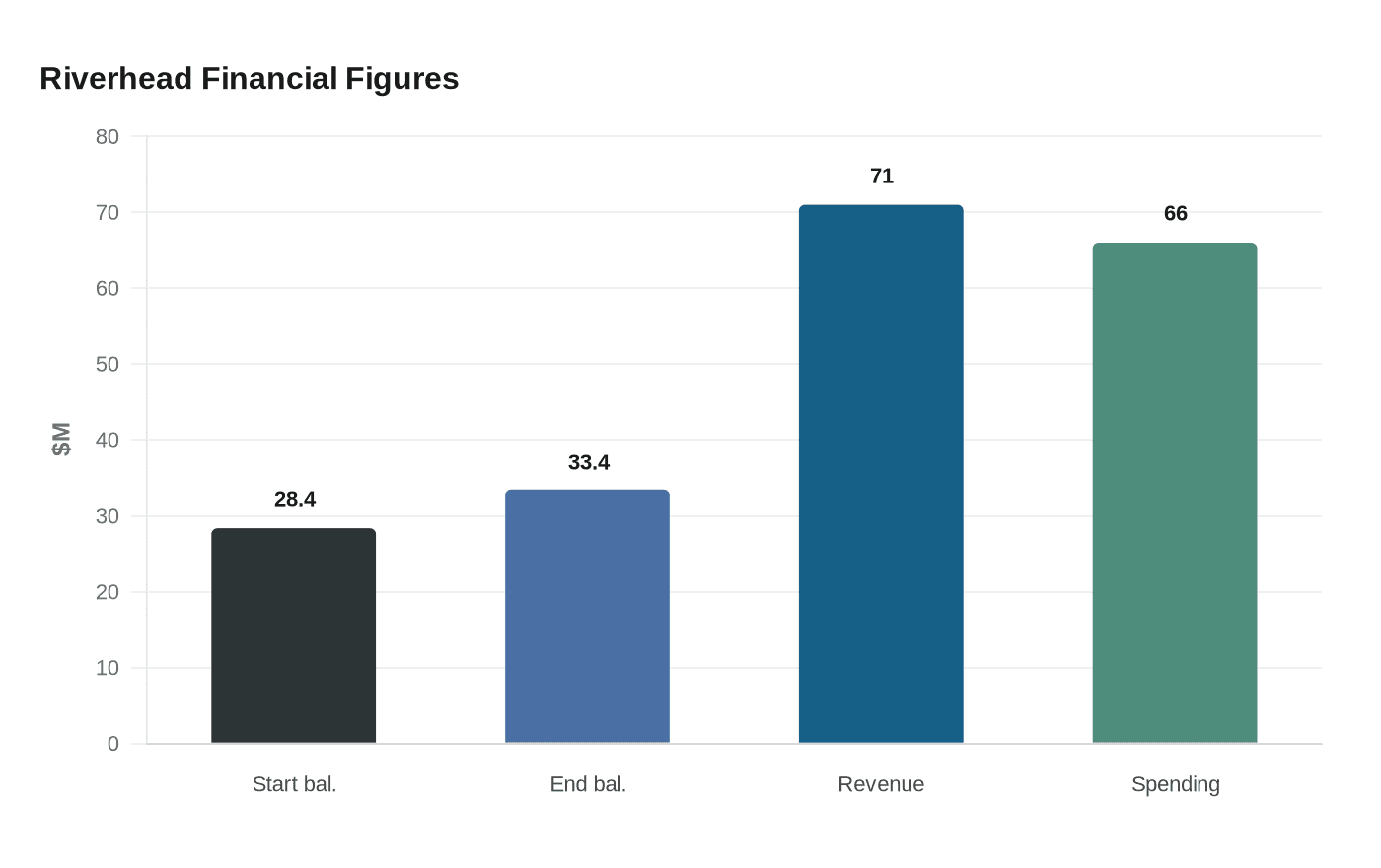
Town financial administrator Jeannette DiPaola told the board the town’s 2025 Annual Financial Report showed stronger-than-expected revenues and investment earnings. Riverhead’s general fund balance rose from $28.4 million to $33.4 million in 2025, with about $1.4 million of that growth coming from interest. The general fund took in about $71 million in revenue and other sources, while spending and transfers totaled about $66 million. DiPaola said Riverhead has historically budgeted conservatively for interest because rates can change quickly.
Halpin said the idea came from a CSEA employee in February, after he had been meeting weekly with employees for money-saving ideas. He framed the plan as a way to lower taxes beginning in 2027, create advancement opportunities and improve pay for workers who remain. Town officials said roughly 32 employees in the CSEA, Police Benevolent Association and Superior Officers Association unions were eligible. Preliminary estimates suggested the town could save up to $1.7 million a year if every eligible employee accepted the incentive, an amount officials said could offset roughly 3 percentage points of the general fund tax levy.
The stakes are not just budgetary. One example discussed at the May 28 work session showed a top-salaried police officer earning $152,901 in salary plus $10,703 in longevity pay and carrying $67,568 in Tier 2 retirement pension costs. That kind of math explains why the town says replacing long-tenured employees with lower-paid hires could produce savings, but it also raises the risk of staffing gaps, slower service and the loss of experienced workers if too many employees leave at once.
The debate landed in a tense fiscal climate. Riverhead pierced the state tax cap with a 7.89% tax hike in its 2025 budget, the town’s largest increase since the cap took effect in 2012. The town has used early retirement incentives before, including in 2010, 2012 and 2019, but the earlier 2010 and 2012 plans were adopted after public hearings by board resolution. With Halpin facing reelection this November against Republican Councilman Kenneth Rothwell, the board’s demand for clearer numbers was as much about trust as it was about taxes.
This article was produced by Prism’s automated news system from verified source data, official records, and press releases, then run through automated quality and moderation checks before publishing. The system is built and supervised by the people who set the standards it runs under. Read our full AI policy.
Did this article answer your question?