Riverhead supervisor pitches early-retirement plan to save taxpayers money
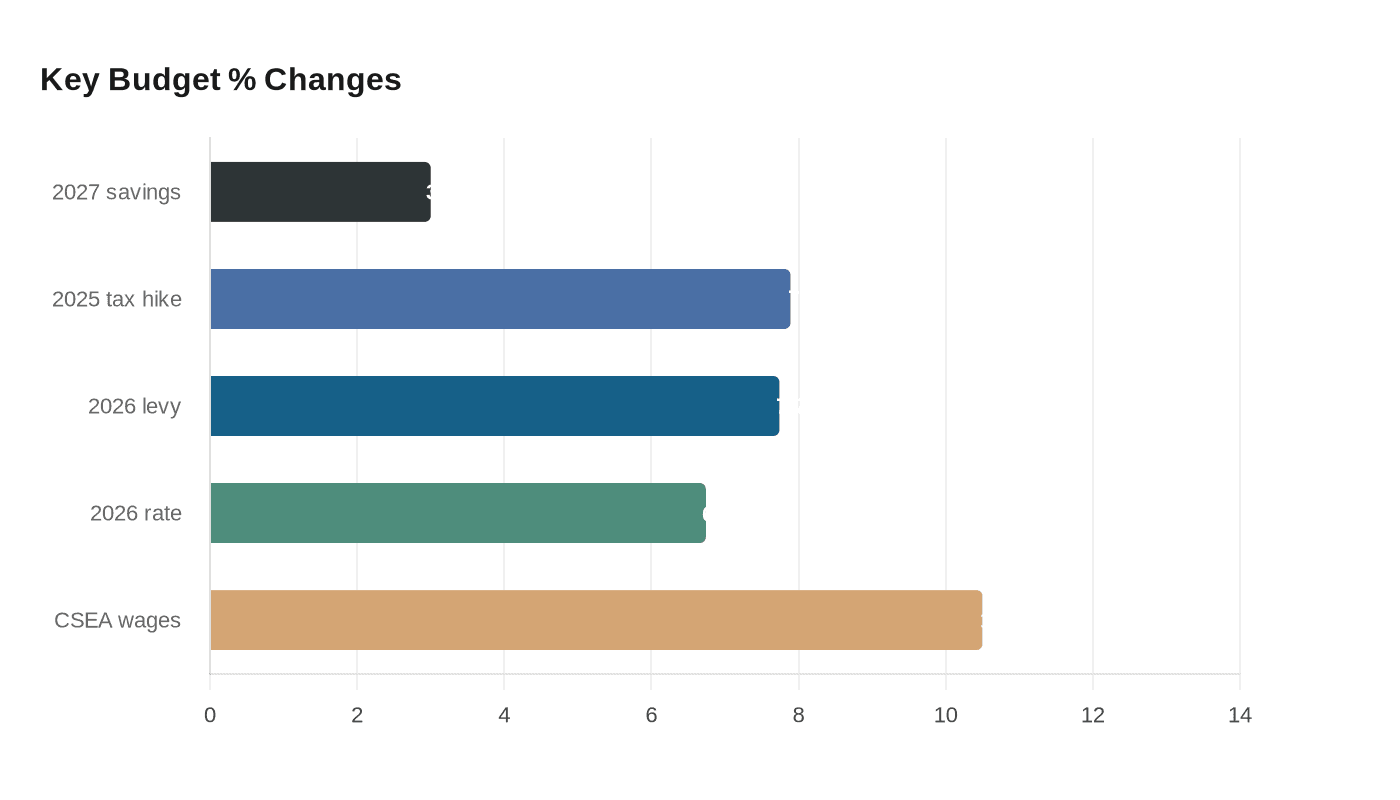
Riverhead’s early-retirement pitch could trim payroll by up to 3%, but officials still have not shown which workers would leave or what replacement costs would be.

Riverhead residents are likely to feel an early-retirement plan first as a staffing test, not a budget line. If veteran workers leave and the town cannot replace them quickly, the result could be slower permits, thinner road crews or faster promotions inside town hall before any savings reach taxpayers.
Supervisor Jerry Halpin laid out the proposal in a two-minute pre-recorded video and a press release, saying preliminary estimates show it could save taxpayers up to 3% beginning in 2027 and keep reducing costs over the next five years. He said the idea came from a CSEA employee in February and that he had been meeting weekly with town workers about money-saving ideas. The plan would be discussed with the CSEA, the Police Benevolent Association and the Superior Officers Association, which cover most of the town workforce and police ranks.

The pitch rests on a narrow financial opening. Riverhead’s 2025 Annual Financial Report showed the general fund balance climbed from $28.4 million to $33.4 million, helped by about $5 million in revenue and investment gains, including $1.4 million in interest earned. Halpin is arguing that those stronger-than-expected revenues give the town room to offer an incentive now, rather than wait for payroll pressure to grow.
But the town has not said how much the incentive would cost, which employees would qualify or which departments could lose experienced workers. That missing detail matters because early-retirement plans can save money only if higher-paid employees leave, replacement hiring is limited and overtime does not erase the gains. If departures hit road maintenance, code enforcement, parks, permits or administrative offices, residents could feel the strain quickly.
The proposal lands after a bruising budget season. Riverhead pierced the state tax cap in its 2025 budget with a 7.89% tax hike, its largest increase since the cap took effect in 2012. The adopted 2026 budget totaled $121.1 million, carried a 7.74% tax levy increase and a 6.74% townwide property tax rate hike, and passed the Town Board 5-0 on Nov. 18, 2025. Officials said rising health insurance premiums, state retirement rates and contractual police raises would otherwise have forced the elimination of nearly 15 positions.
Halpin’s new proposal is also not uncharted territory. Riverhead has offered early-retirement incentives at least three times over the last two decades, including programs for CSEA members in 2010 and PBA members in 2012. In 2019, the town approved another CSEA incentive during contract talks, using enhanced retiree health insurance benefits for 48 months, with an estimated 15 to 20 CSEA members eligible at the time.
The debate now turns on accountability. Kenneth Rothwell criticized the rollout as lacking board inclusion and transparency, while Halpin said the plan was to be taken up at a public Town Board work session scheduled for Thursday morning at 10 a.m. at Riverhead Town Hall. In a town that has already raised taxes sharply and just approved a new CSEA contract with 10.5% in wage increases over four years, the question is whether this incentive truly lowers long-term costs or simply shifts them out of view.
This article was produced by Prism’s automated news system from verified source data, official records, and press releases, then run through automated quality and moderation checks before publishing. The system is built and supervised by the people who set the standards it runs under. Read our full AI policy.
Did this article answer your question?