Riverhead Tax Bills Rise as Golf Course Refund Reaches $7.2M
Riverhead's $7.2M tax refund bill, mostly owed to a private Baiting Hollow golf course, more than doubled last year's chargeback and pushed one Jamesport resident's bill from $130 to $341.

Riverhead property owners absorbed a $7.2 million tax refund chargeback this year, with roughly $6 million of that sum flowing directly to Friar's Head golf course in Baiting Hollow, according to the Suffolk County Comptroller's Office. The figure is more than two and a half times the nearly $2.8 million chargeback from a year ago, which included no payments to the golf course at all.
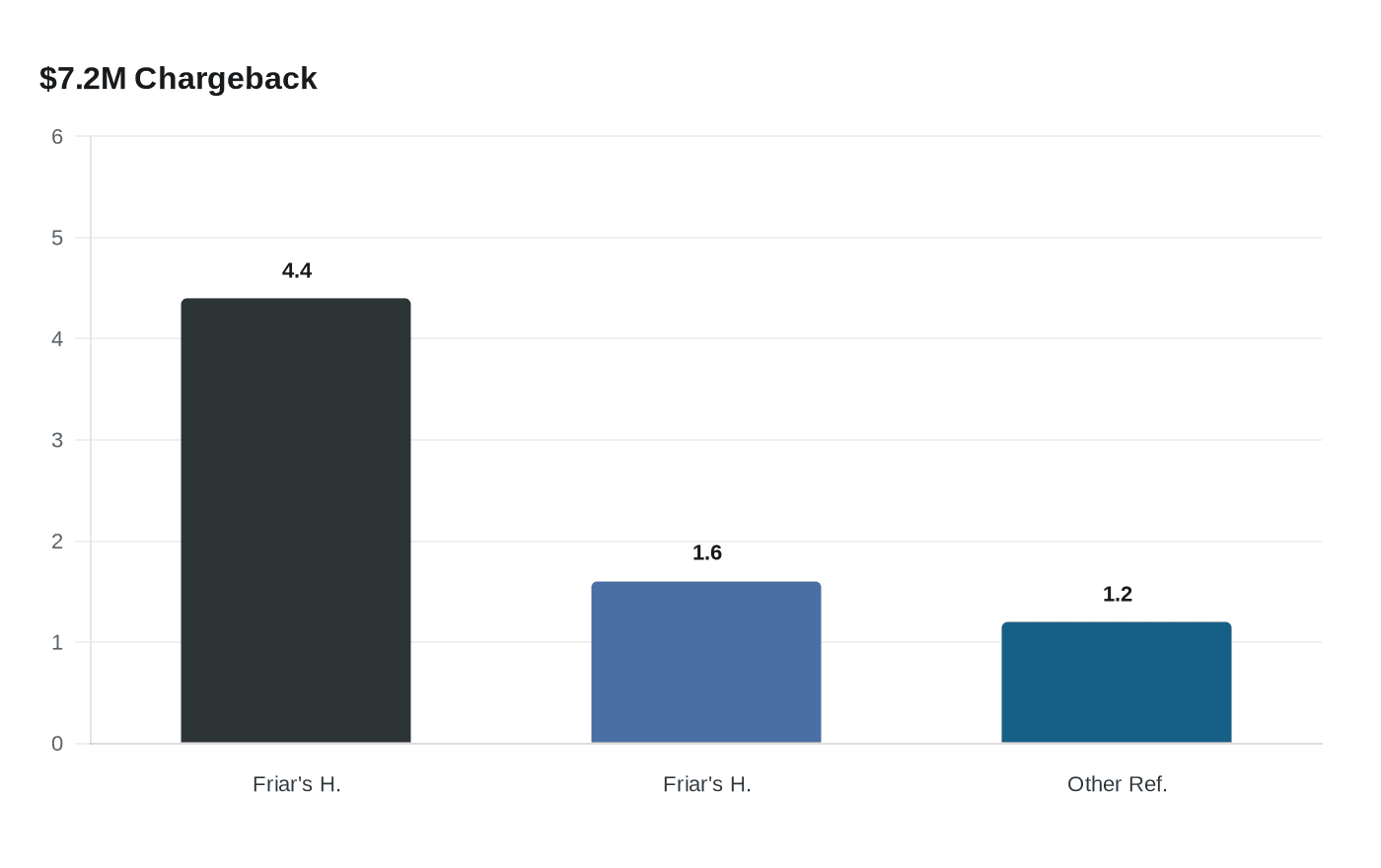
County finance officials broke down the Friar's Head payment as nearly $4.4 million in refunded taxes and more than $1.6 million in interest, the product of a legal dispute that stretched nearly two decades through Suffolk County courts. The refunds are passed directly to town property owners through their tax bills, compounding a 6.74% tax rate increase that marked the fourth consecutive year the Riverhead Town Board opted to pierce the state's tax cap on a $121.1 million budget.
For Joan Cear of Jamesport, the math was stark: the refund line on her property tax bill jumped from $130 in 2025 to $341 this year. "People deserve to understand what all of this means," she said.

The litigation traces back to assessments the town placed on the 349-acre property in Baiting Hollow between 2008 and 2015. The golf course's owner sued, alleging the town assessor's office had set "erroneous" and "excessive" valuations, ranging from $28 million to $34 million across those years. In 2019, State Supreme Court Justice John J. Leo cut those figures to a range of $10 million to $11.6 million, finding that the town had improperly factored in the potential for residential development on roughly 85 acres of vacant land within the overall property.
"It would be unfair to tax a property for a value that it does not have," Leo wrote in his ruling.
The property at the center of the dispute is a private membership club not open to the public. It opened in 2002 and encompasses an 18-hole, par-71 championship course measuring approximately 7,000 yards from the back tees, along with a clubhouse, a helipad, and three insulated cabins each containing roughly 3,000 square feet of space, according to court documents and appraisal records.
Central to the legal battle was a disagreement over approximately 85 acres of vacant land within the overall ownership. The golf course's appraiser argued that the acreage enhanced the course's visual character and open-space presentation, while the town's expert, Mr. Di Geronimo, treated it as excess land with potential for residential subdivision. The course's appraiser explicitly rejected Di Geronimo's definition of excess land, according to appraisal records filed in the case.
The remaining roughly $1.2 million of the $7.2 million total chargeback covers other refunds unrelated to Friar's Head, though county officials did not itemize those payments in publicly available materials. With the golf course liability now resolved for the years covered by the 2019 ruling, whether additional tax certiorari cases remain pending for other assessment years has not been publicly disclosed by town or county officials.
This article was produced by Prism’s automated news system from verified source data, official records, and press releases, then run through automated quality and moderation checks before publishing. The system is built and supervised by the people who set the standards it runs under. Read our full AI policy.
Did this article answer your question?