Saint James Man Indicted for Selling Illegal Ghost Guns to Undercover Officer
A Saint James man allegedly sold a dozen untraceable ghost guns to an undercover officer and kept a 3-D printer at home to make more, prosecutors say.
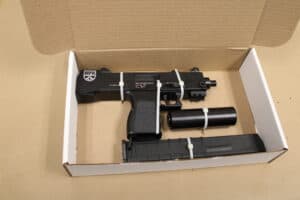
Bryan Bennett of Saint James allegedly built, stockpiled, and sold untraceable ghost guns out of his Long Island home for nearly two years before an undercover Suffolk County Police officer became one of his buyers. District Attorney Raymond A. Tierney announced the indictment on March 31, and a judge ordered the 36-year-old held on $1 million cash, $5 million bond, or $10 million partially secured bond.
The alleged sales ran from March 2024 through January 2026. Prosecutors say Bennett completed three transactions with the undercover officer, handing over roughly a dozen firearms, including assault-style weapons and guns built with 3-D printed components, for approximately $12,500. When detectives arrested him on Feb. 25, he was allegedly carrying five illegal firearms. Search warrants at two residences produced approximately 10 additional assault weapons, high-capacity magazines, a 3-D printer, polymer materials, and assembly tools. That combination of hardware led prosecutors to characterize the case not as isolated sales but as evidence of an active production and distribution pipeline.
The tracing problem at the center of the case is what gives ghost guns their street value and what makes prosecutions like this a priority for Tierney's Major Crime Bureau. Firearms assembled from 3-D printed or unfinished parts carry no manufacturer's serial number. When one turns up at a crime scene in Brentwood or Bay Shore, investigators hit a wall: no federal database entry, no purchase record, no chain of custody. New York's Jose Webster Untraceable Firearms Act addressed this by criminalizing not only the possession of unserialized weapons but also the possession of major components such as frames, barrels, and receivers by anyone who is not a licensed gunsmith or dealer. Manufacture is a crime. Assembly is a crime. Sale is a separate felony at every tier.
Bennett's indictment covers the full span of that framework. He faces two counts of Criminal Sale of a Firearm in the First Degree, Class B felonies carrying up to 25 years in prison, along with one count of Criminal Sale in the Second Degree (Class C), 15 counts of Criminal Possession of a Weapon in the Second Degree (Class C), several third-degree weapon counts, and one count of Criminal Possession of a Firearm (Class E). The DA's Major Crime Bureau is prosecuting the case. Bennett is represented by attorney Anthony LaPinta, and his next court date is scheduled for May 11.
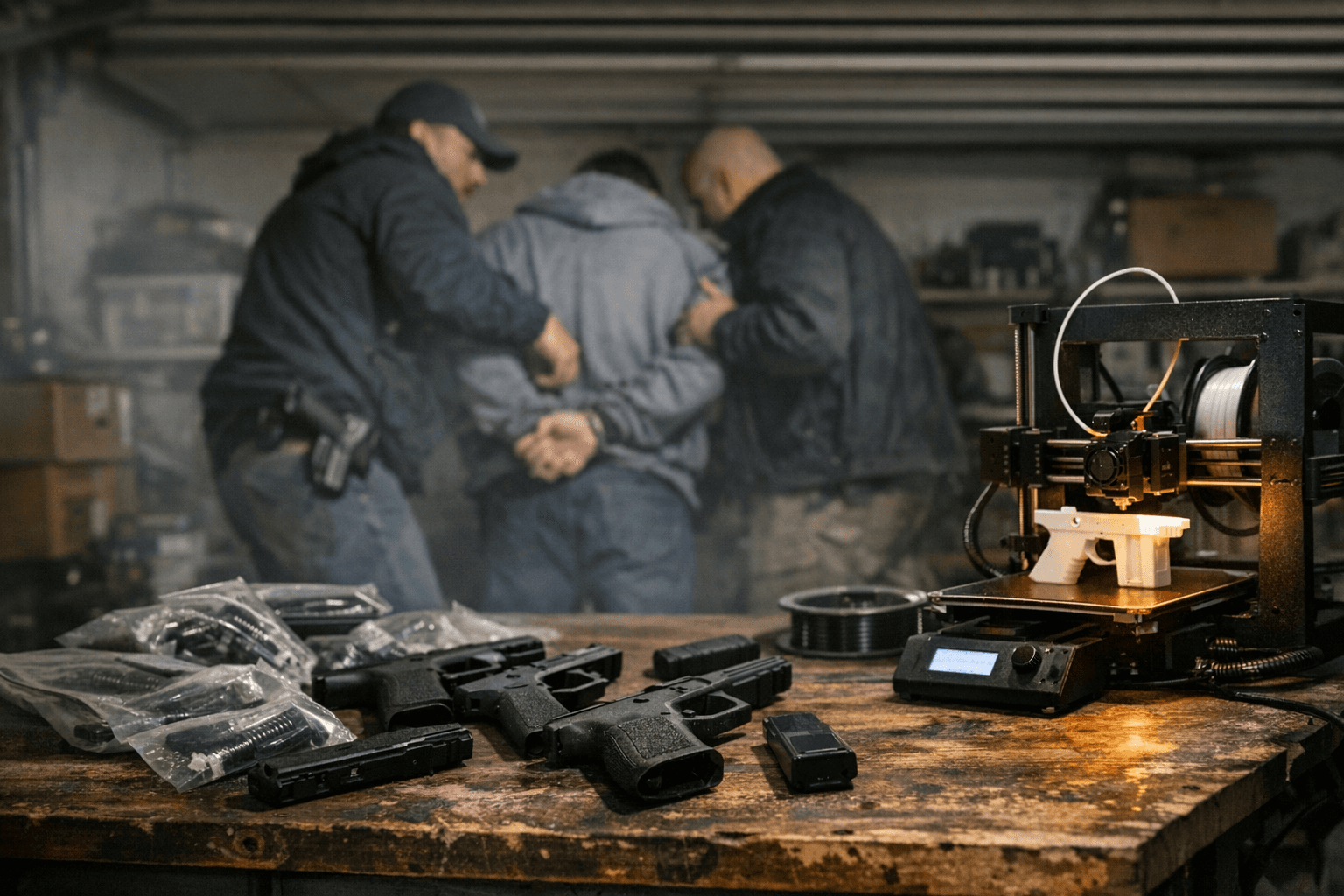
Tierney's office has framed its strategy around supply-side enforcement: prosecuting the people who manufacture and distribute ghost guns, not only those caught carrying them. The evidence allegedly recovered from Bennett's two residences, a working 3-D printer, raw polymer, and close to two dozen firearms spread across multiple locations, reflects exactly the kind of upstream choke point prosecutors say is necessary to reduce shootings and armed violence across Suffolk County.
Under New York law, purchasing or receiving an unserialized firearm also carries criminal exposure. Anyone who observes what appears to be an illegal gun transaction, whether through an online listing or an in-person meetup sale, can report it anonymously to Crime Stoppers of Suffolk County or call 911 if the threat is immediate. Both sides of a ghost gun sale face felony charges in New York.
This article was produced by Prism’s automated news system from verified source data, official records, and press releases, then run through automated quality and moderation checks before publishing. The system is built and supervised by the people who set the standards it runs under. Read our full AI policy.
Did this article answer your question?