SCWA sues battery facility over fire-linked groundwater contamination in East Hampton
A 2023 East Hampton battery fire is now tied to Bridgehampton drinking wells, with SCWA saying PFAS contamination forced two wells offline.
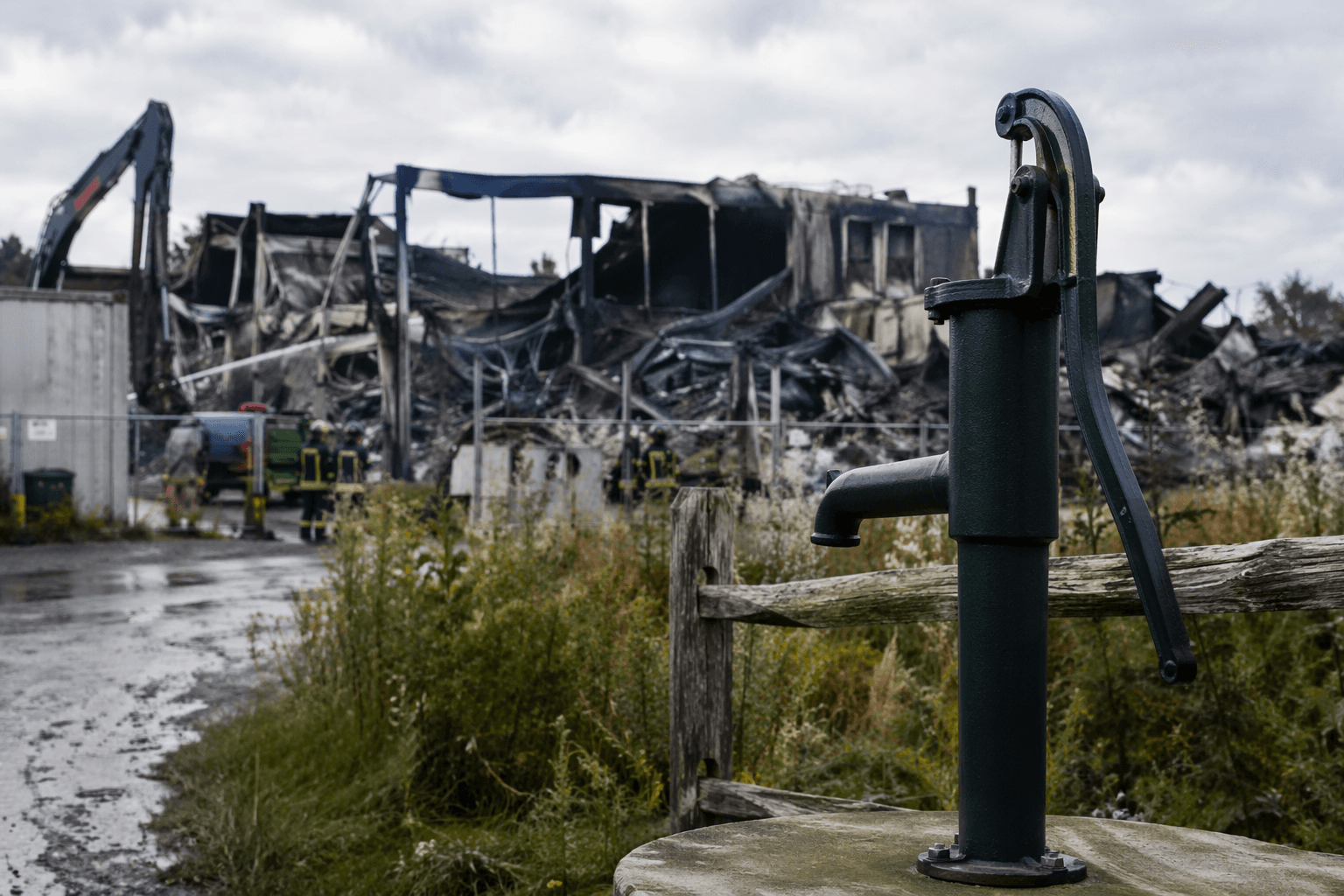
A 2023 fire at an East Hampton battery-storage site is now at the center of a federal lawsuit alleging that forever chemicals reached public drinking-water wells and forced the Suffolk County Water Authority to take two wells out of service. The case turns a local industrial fire into a broader public-health fight over Suffolk County’s aquifer, cleanup costs and who pays if contamination spreads.
The lawsuit, filed May 29 in U.S. District Court for the Eastern District of New York, names East Hampton Energy Storage Center LLC, LG Chem Ltd. and LG Energy Solution Ltd. Reporting on the complaint says National Grid owns the property on Cove Hollow Road in East Hampton. SCWA says the fire at the site released PFAS into the groundwater, where the contamination migrated into the Bridgehampton wellfield.
PFAS, often called forever chemicals, are a group of man-made substances that break down very slowly and can persist in groundwater. When they reach a drinking-water source, they can move through an aquifer and linger in wells, creating long-term treatment and monitoring problems for water utilities and the communities they serve.
The complaint says the impact was not theoretical. SCWA says it had to shut down two wells after the incident. The wells identified in reporting are Bridgehampton Road Wells 2B, 3, 4 and 5A, which sit about 2,500 feet south of the energy storage facility and together provide about 7% of SCWA’s water supply. That makes the affected area especially important for Bridgehampton and surrounding East End residents who depend on the same groundwater system.
SCWA supplies water to about 1.2 million residents across Suffolk County and has long warned that Long Island depends on a sole-source aquifer, meaning there is no alternate regional water supply to fall back on if contamination reaches a wellfield. For residents, that raises immediate concerns not only about the East Hampton site, but about any battery project built near drinking-water sources.
The lawsuit seeks compensation for cleanup, treatment and replacement costs, along with punitive and other damages. It lands amid wider Suffolk County debate over battery-storage safety, with the East Hampton fire still shaping public concern over whether local communities will be left to absorb the health and environmental risk when energy projects are sited near groundwater.
This article was produced by Prism’s automated news system from verified source data, official records, and press releases, then run through automated quality and moderation checks before publishing. The system is built and supervised by the people who set the standards it runs under. Read our full AI policy.
Did this article answer your question?