Smith Point County Park offers beach access, camping and 4x4 driving
Smith Point is Suffolk County’s all-in-one beach for campers, surfers and 4x4 drivers. Access depends on permits, reservations and shoreline rules.
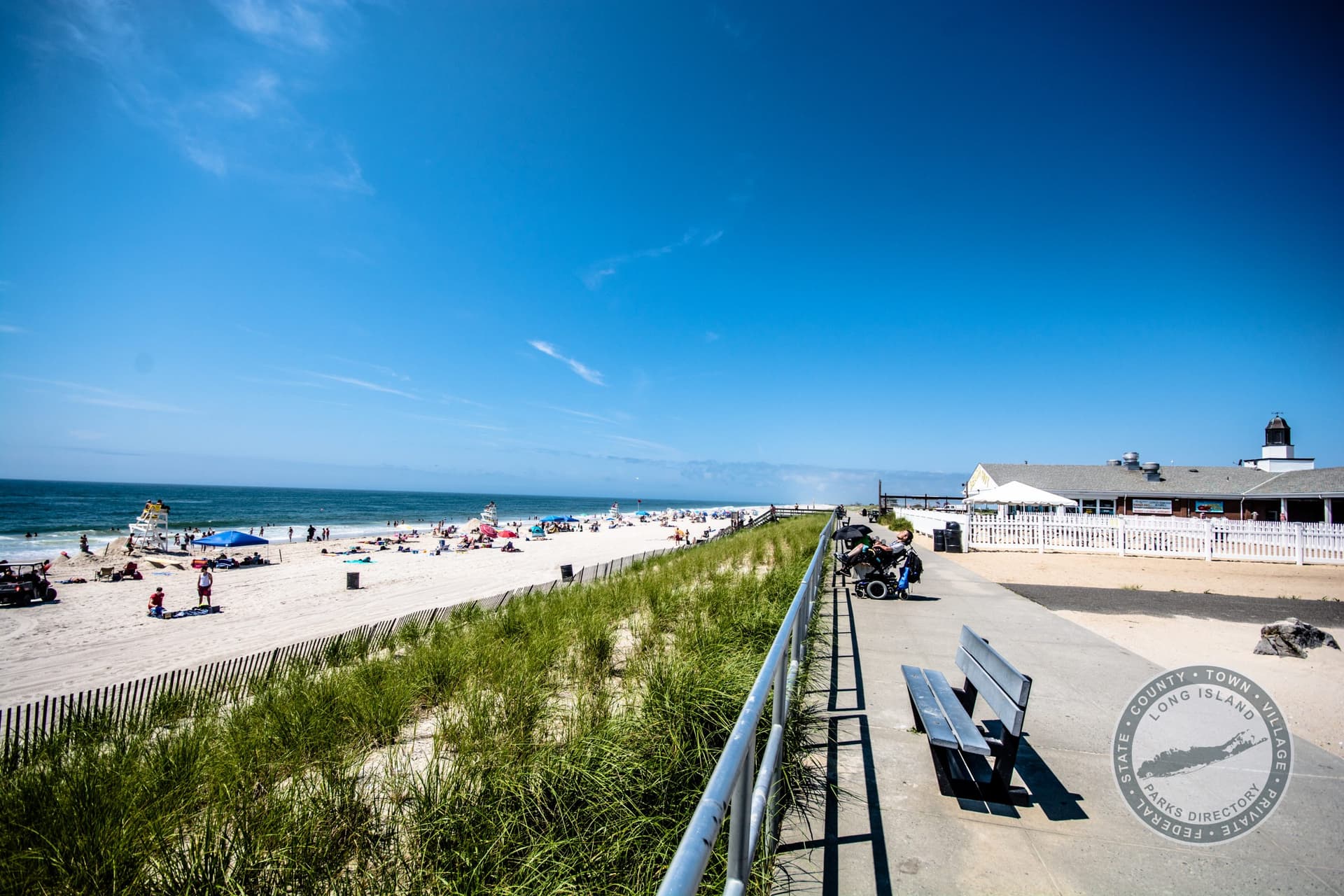
Smith Point County Park is the rare Suffolk beach that works as a day-use shoreline, an overnight campground and a four-wheel-drive destination at once. Set at the southern end of 1 William Floyd Parkway in Shirley, the park sits on the Fire Island barrier beach, where white sand and Atlantic surf meet a county-run system of rules that shapes who can use the shore and how.
A barrier beach built for more than one kind of visitor
Suffolk County describes Smith Point as an approximately six-mile barrier-island segment in Brookhaven covering about 825 acres. That scale matters because it is not just open sand. The park includes a broad dune zone, a large oceanfront stretch and enough room for a campground, surf access and outer-beach vehicle use to coexist in the same place.
The county also treats Smith Point as one of its signature coastal assets. It is Suffolk County’s largest oceanfront park, and the presence of a nationally recognized lifeguard team helps explain why the beach draws both day visitors and overnight campers in heavy summer use. For Suffolk residents, it is the beach that can serve as a quick swim stop, a camping base or a driving beach without leaving county control.
Camping is a major part of the park, not an add-on
Smith Point’s campground is part of what sets it apart from many other Long Island beaches. The park has about 270 tent-and-trailer sites, and reservations are required for all of them. That makes planning essential, especially when demand is high and the park is serving both beachgoers and overnight guests.
The campground is also unusually well equipped for a barrier-island site. All campground sites have water, and many include electric hookups and sewers. That combination gives the park a more developed feel than a simple seaside lot and helps explain why it functions as a full overnight destination rather than just a place to park near the ocean.
Overnight stays come with a clear county rule: you need both a camping reservation and a camping unit. Outer-beach camping can also be available on a first-come, first-served basis when beach conditions permit, which means weather, sand conditions and access all shape whether those spots can actually be used.
How 4x4 access works at Smith Point
Smith Point is one of seven Suffolk County parks with shoreline access for vehicles under the 4x4 Outer Beach permit program. The permit gives daily access to the beach, but the county limits off-road driving to the eastern portion of the outer beach. That restriction keeps the use focused and helps separate driving areas from other parts of the shoreline.
The permit can be purchased year-round at county locations including Smith Point and West Sayville, as well as online. Suffolk County also lists Blydenburgh, Cathedral Pines, Cedar Point, Indian Island, Sears Bellows and West Hills among the places where the permit can be bought. For people who move between beaches, that year-round structure is part of what makes the county shoreline system usable beyond one summer weekend.

A few rules shape the experience once a truck is on the sand:
- Vehicles use the beach at the operator’s own risk.
- Garbage must be removed from the beach.
- Overnight stays require both a camping reservation and a camping unit.
- Protective fencing around shorebird nesting areas on ocean and bay beaches should be respected.
Those rules are not cosmetic. They define the balance Suffolk County is trying to strike between access and protection, especially on a shoreline that changes with tides, storms and nesting season.
Why the beach is tied to conservation, not just recreation
Smith Point sits inside a coastal environment that is constantly under pressure. The park’s broad dune zone and barrier-island setting make it part of a living shoreline system, not a fixed recreational field. That is why the county puts such emphasis on protecting fencing around endangered shorebird nesting areas and on keeping vehicles in designated areas.
The access rules also point to a broader county policy choice. Suffolk keeps outer-beach driving open at selected parks, but it does so through permits, designated zones and overnight limits. At Smith Point, that approach is visible in every part of the visitor experience, from where vehicles may go to how camping is reserved and how nesting areas are protected.
The park’s identity reaches beyond beach season
Smith Point’s history gives the park a deeper public role. Its name traces to Smith Point and to Col. William ‘Tangier’ Smith, the 17th-century landowner linked to much of the Fire Island barrier beach. The park also became part of Fire Island National Seashore in 1964, tying it to the larger conservation history of the coast.
It is also a place with a memorial presence. Smith Point is associated with the TWA Flight 800 International Memorial, which adds a public-history dimension to a site many people still think of only as a beach. And for surfers, the park has its own place in local culture: it is the site of Fire Island’s only surfing competition.
That mix of uses is what makes Smith Point so singular in Suffolk County. It is not just a place to swim, and it is not just a place to park a truck on sand. It is a county-managed beach, campground and outer-shore access point where recreation, conservation and access policy all meet on the same stretch of barrier island.
This article was produced by Prism’s automated news system from verified source data, official records, and press releases, then run through automated quality and moderation checks before publishing. The system is built and supervised by the people who set the standards it runs under. Read our full AI policy.
Did this article answer your question?