Snakehead fish discovery in Lake Ronkonkoma triggers state survey
A northern snakehead turned up in Lily Pond in Lake Ronkonkoma, and state crews were moving in to look for more fish before the predator spreads into nearby waters.
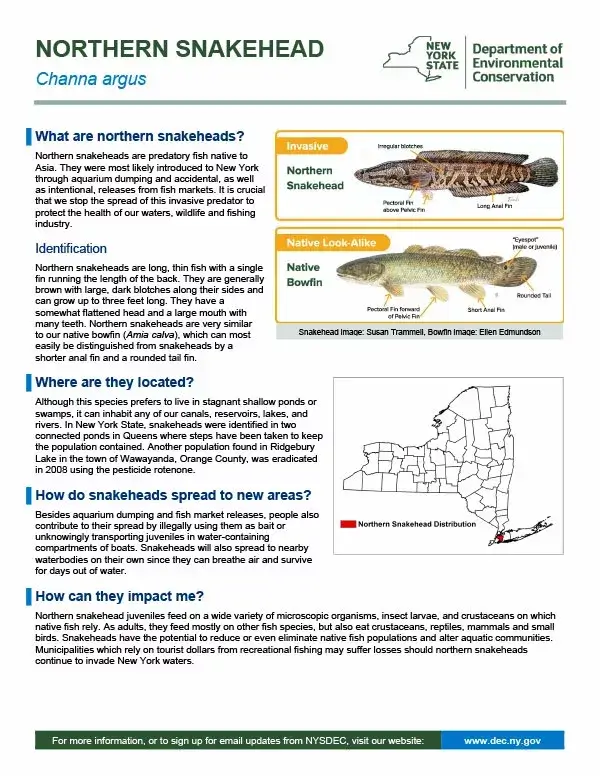
A northern snakehead found in Lily Pond in Lake Ronkonkoma pushed Suffolk County into a new round of invasive-species monitoring as the state widened its response to a fish that can move between ponds, breathe air and survive out of water for days.
The New York State Department of Environmental Conservation said the sighting was the first in that pond and sent crews out to survey the waterway for more fish. The agency planned to use electrofishing, a nonlethal method that sends an electrical current into the water to briefly stun fish so they can be collected and counted without injury.
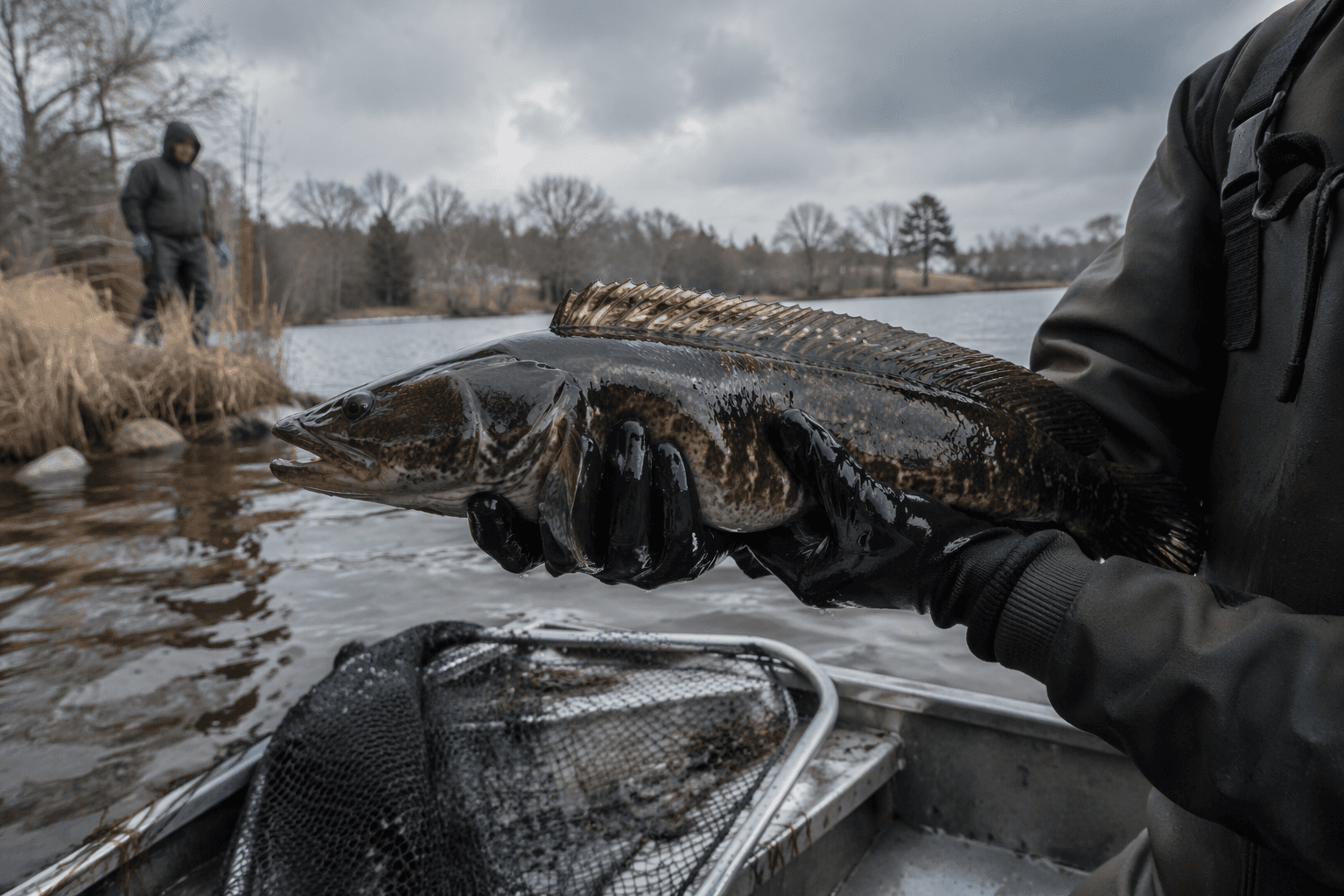
That matters because officials need to know whether the snakehead was a one-off catch or evidence of a population that could spread through connected waters around Lake Ronkonkoma and beyond. Wildlife managers have warned that northern snakeheads, native to Asia, can reduce or eliminate native fish populations and alter aquatic communities, a threat that carries direct consequences for local ecosystems and Long Island fishing interests.
DEC says snakeheads in New York were most likely introduced through aquarium dumping and accidental or intentional releases from fish markets. The agency also classifies the fish as a prohibited invasive species in New York, with live possession, sale, transport, importation and release all restricted under state rules. Anglers who catch one are told to kill it, bag it and report it.
The species is a problem not just because of how it travels, but because of what it eats. DEC says young snakeheads feed on microscopic organisms, insect larvae and crustaceans, while adults mostly eat other fish but also take crustaceans, reptiles, mammals and small birds. That broad diet lets the fish compete aggressively with native species once it gets established.
New York has dealt with snakeheads before. DEC says a population in Ridgebury Lake in Wawayanda, Orange County, was eradicated in 2008 using rotenone. Records show snakeheads were first found in Meadow Lake in Queens in 2005, and annual boat-electrofishing surveys there have kept finding them at low levels of abundance. In August 2021, DEC said it was investigating a report of snakeheads in Bashakill Marsh in Wurtsboro, Sullivan County.
The broader pattern reaches beyond New York. U.S. Fish & Wildlife Service says northern snakeheads were first found in a Maryland pond in 2002 and later in the Potomac River in 2004, before turning up in New York, Pennsylvania and Alaska. For Suffolk County, the Lake Ronkonkoma discovery was a clear warning: a single fish in Lily Pond could signal a larger containment problem for Long Island waterways.
This article was produced by Prism’s automated news system from verified source data, official records, and press releases, then run through automated quality and moderation checks before publishing. The system is built and supervised by the people who set the standards it runs under. Read our full AI policy.
Did this article answer your question?