Stony Brook Students With Disabilities Face Icy, Inaccessible Campus After Storms
Stony Brook's Frey Hall ramp went uncleared after the Jan. 25 storm, leaving students with disabilities navigating black ice and near-falls for weeks.
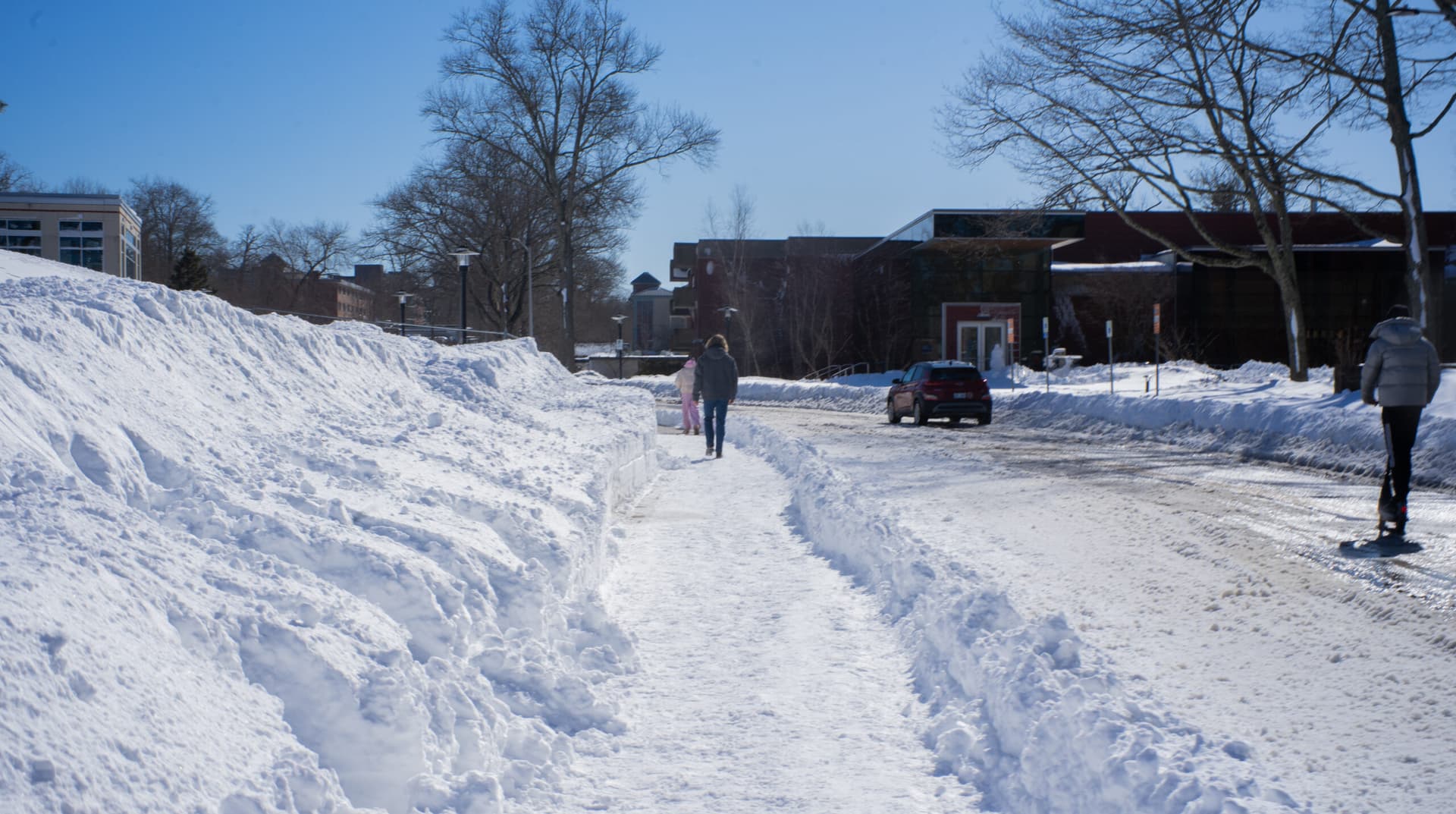
The accessibility ramp to Frey Hall sat buried in snow when Stony Brook University students returned to campus after a January 25 storm canceled the first day of the spring semester. Weeks of freeze-thaw cycles kept multiple ramps, walkways, and accessible routes across campus dangerous long after the initial snowfall, forcing students with disabilities to navigate around barriers that, for some, meant choosing between attending class and risking a fall.
Kaufman, a student who lives in Kelly Community, said the conditions turned routine travel into a daily ordeal. Her usual 15-minute walk stretched longer each day, adding stress about making it to class on time and compounding the fatigue she already manages getting around a campus she describes as inherently difficult to navigate.
"We already have to go through lengths just to get around an inaccessible campus," Kaufman said. "When snow blocks the only accessible routes, what are we supposed to do?"
The situation outside Kelly Community was particularly dangerous. Kaufman described the walkways immediately outside her dormitory as "just black ice," with shaded areas masking where ice had formed.
"In the shaded areas, which is most of Kelly, you can't see where the ice is," she said. "Myself and several other people have almost slipped and fell immediately outside my dorm."
Essential walkways and stairways near the building went untouched until residential staff cleared them, work Kaufman said she believes should be handled by campus facilities, not residence life staff acting on their own initiative.
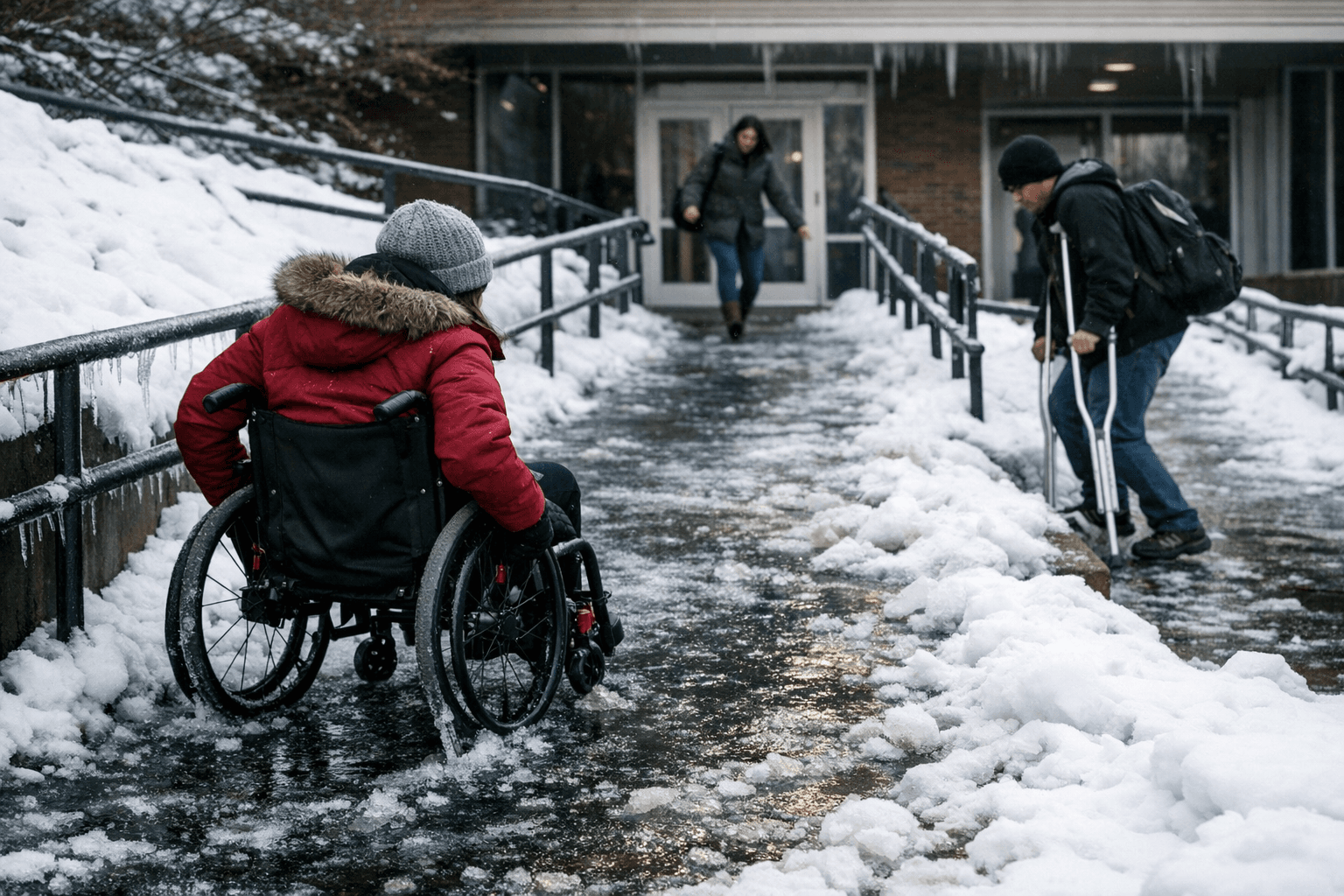
Students with mobility conditions, including those managing hypermobile Ehlers-Danlos syndrome and Lyme disease, faced compounding obstacles: uncleared ramps, icy walkways, and commuting delays that disrupted their ability to participate in classes. When wheelchair users encountered unexpected ice or snow blocking their usual routes, they were often forced to find entirely new paths or reconsider whether reaching their destination was safely possible at all.
The snow removal response drew direct criticism from students, who raised concerns that the university prioritized clearing commuter routes over maintaining accessible paths for students with disabilities. The contractor situation added another layer of concern: students reported multiple incidents involving campus snowplow contractors, including a contractor's vehicle rear-ending a student's car.
Stony Brook University has not issued a public statement responding to the accessibility complaints or the contractor incidents. The university's Facilities Management, Disability Services, and Environmental Health and Safety offices have not provided on-record comment on snow removal priorities, staffing levels, or whether any formal ADA compliance review followed the January 25 storm.
The Statesman, Stony Brook's student news publication, first reported the accessibility concerns on March 5. Whether the university will revise its snow removal protocols before the next significant storm remains an open question for the roughly 26,000 students who rely on those routes.
This article was produced by Prism’s automated news system from verified source data, official records, and press releases, then run through automated quality and moderation checks before publishing. The system is built and supervised by the people who set the standards it runs under. Read our full AI policy.
Did this article answer your question?