Stony Brook to host 120 students in third annual hackathon
One hundred twenty teens from 15 Long Island districts coded at Stony Brook, the largest hackathon yet, as the university pushed a real workforce pipeline.
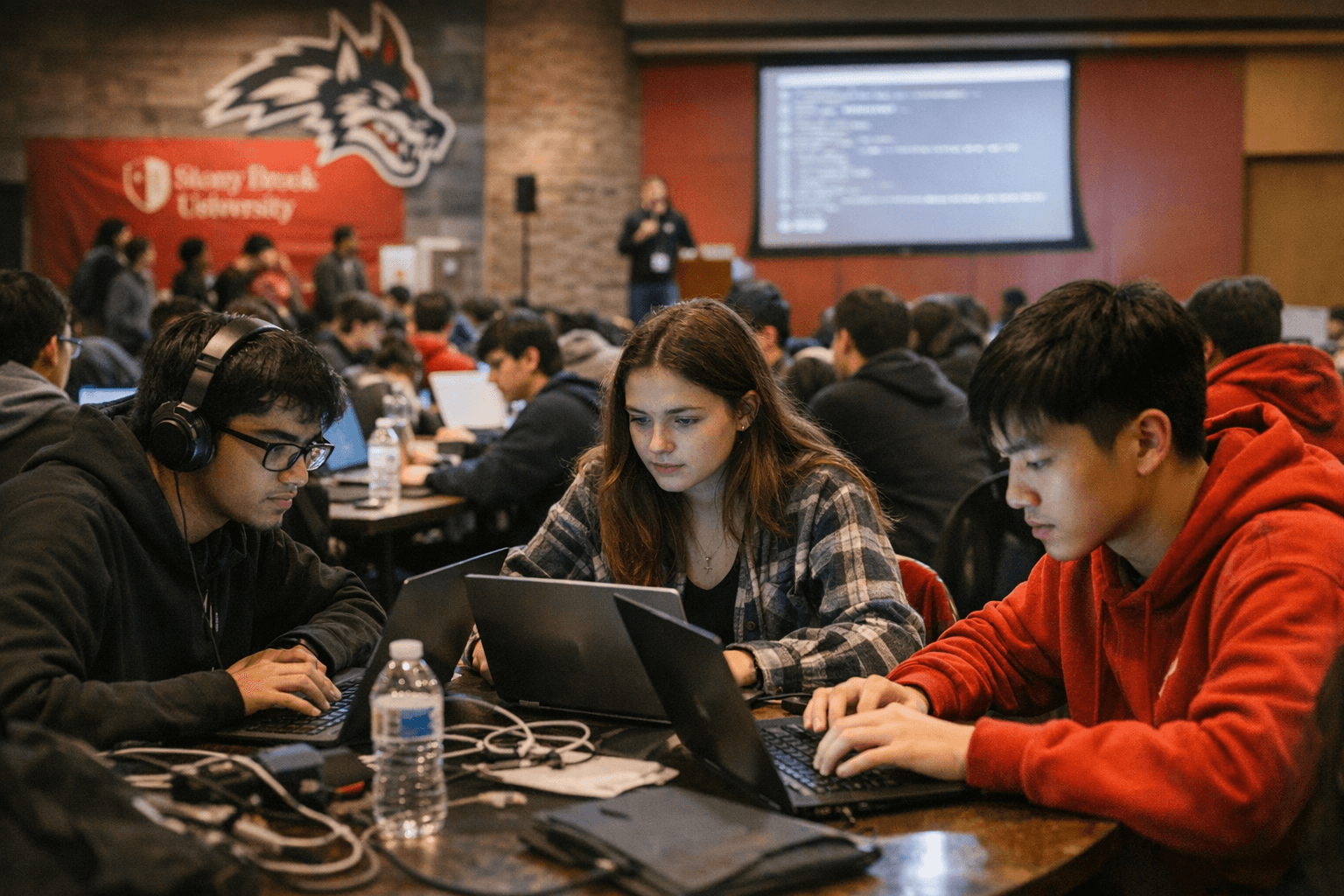
Stony Brook University brought 120 high school students from 15 school districts to its campus for a day-long coding competition that pushed beyond classroom exercises and into the kind of pressure, teamwork and deadlines seen in tech jobs. The third annual High School Hackathon centered on building real-world applications on an edge computing device, with students solving problems in timed rounds under the theme Coding Innovation for Digital Resilience.
The event was hosted by Stony Brook’s Office for Research and Innovation and the Center of Excellence in Wireless and Information Technology, known as CEWIT, with Verizon serving as sponsor. That mix of university, research and industry backing gave the competition a clear workforce purpose: expose teenagers from Nassau and Suffolk counties to the tools and pace of modern computing before they leave Long Island for college or work.
The scale of the program has grown quickly. Stony Brook’s first high school hackathon, held in February 2024, drew 65 students from five Long Island school districts and used Python, Java and other coding tools. The second annual CEWIT High School Hackathon, held April 10, 2025, brought more than 90 students from 13 districts and was described by the university as a day of coding, problem-solving and mentorship. The 2026 event expanded again, making it the largest of the three.
That steady growth is what makes the hackathon more than a campus event. Stony Brook’s own K-12 workforce engagement page says the university uses in-person challenges such as hackathons and wind-building competitions to engage high school students, a sign that the institution sees these programs as part of a broader pipeline into science and technology fields. The 2025 competition also had students working in teams of four, reinforcing the collaborative structure employers say matters in engineering and software development.
Patrick Farrell, a Stony Brook computer science student, said hackathons help students learn, meet new people and build things fast. That is the same skill set many Suffolk employers want, especially as Long Island tries to keep more of its young talent connected to the region’s research corridor, including Stony Brook and the surrounding Research and Development Park.
For local families, teachers and employers, the message was straightforward. If Suffolk County wants more students ready for the region’s tech and research jobs, programs like this are becoming one of the clearest places where that pipeline starts.
This article was produced by Prism’s automated news system from verified source data, official records, and press releases, then run through automated quality and moderation checks before publishing. The system is built and supervised by the people who set the standards it runs under. Read our full AI policy.
Did this article answer your question?