Stony Brook University Earns 13th Straight Tree Campus USA Designation
SBU has logged more than 15,000 plantings since 2009; its tree canopy now manages stormwater and cuts heat across a campus used daily by patients, students, and Suffolk visitors.
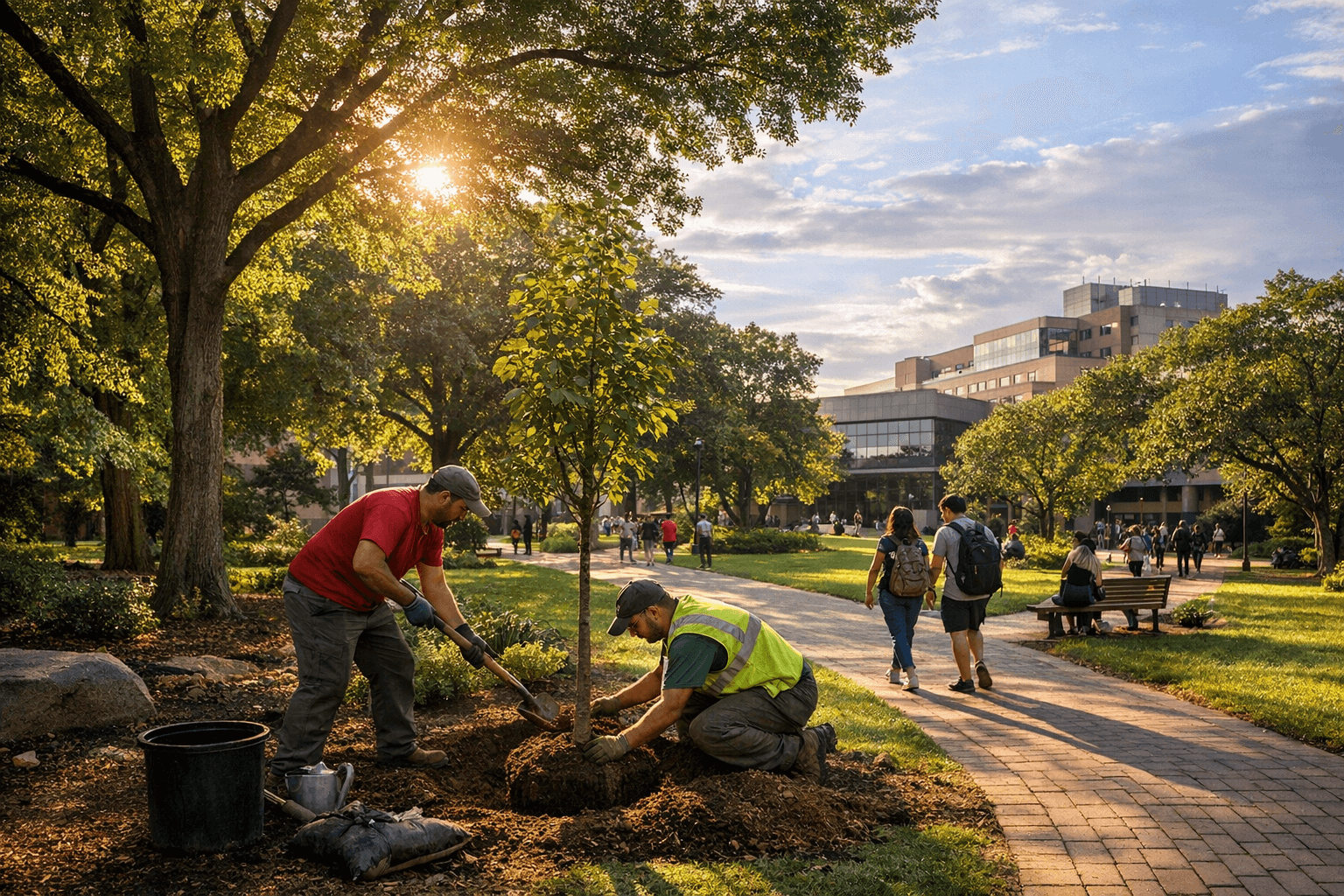
Alaina Claeson, the horticulturist and landscape coordinator who has spent years coaxing seedlings in a 60-by-25-foot greenhouse tucked into Stony Brook University's Research and Development Park, helped push the campus to a milestone that carries real consequences for every Suffolk County resident who walks its grounds: a 13th consecutive Tree Campus USA designation from the Arbor Day Foundation, awarded March 31.
Since SBU first earned the designation in 2013, the university has logged more than 15,000 plantings on the main campus in the Town of Brookhaven. The number is significant not as a trophy count but as working infrastructure. For the patients arriving daily at Stony Brook Medicine, the students commuting from Smithtown, Coram, and Patchogue, and the tens of thousands who attend campus events each year, those trees intercept stormwater before it becomes runoff on paved walkways, shade pedestrian corridors that would otherwise reach dangerous surface temperatures in July, and filter air quality across one of Long Island's most densely trafficked public spaces. As extreme weather events intensify across Suffolk, that canopy functions as a first line of climate defense the county does not have to fund.
"Being recognized as a Tree Campus USA institution for the 13th year reflects Stony Brook University's long-standing commitment to protecting and enhancing our campus environment," Claeson said. "Trees contribute to biodiversity, improve environmental health and help make campus a more welcoming and sustainable place for our community."
Earning the designation each year requires meeting five standards set by the Arbor Day Foundation: sustaining an active campus tree advisory committee, maintaining a documented tree care plan, committing dedicated annual expenditures to the tree program, holding an Arbor Day observance, and sponsoring student service-learning projects tied to tree stewardship. SBU has cleared all five every year for 13 years running.
The greenhouse Claeson's team operates at the Research and Development Park produces an average of 10,000 to 15,000 annual plants per season and runs a rainwater harvesting system that captures precipitation for on-site irrigation, folding water conservation into what might otherwise be routine grounds maintenance. STEM students participate in service-learning projects connecting coursework to arboriculture and urban-forestry policy, a pipeline that mirrors the kind of green-infrastructure capacity Suffolk municipalities increasingly need as they confront stormwater management demands and heat island mapping requirements under state climate-resilience guidelines.
The designation also carries financial weight: it strengthens SBU's eligibility for environmental grants and anchors the sustainability metrics that county and state policymakers consult when allocating climate funding. Claeson and the facilities team are continuing to expand canopy through strategic plantings integrated into the university's long-term campus planning, with ongoing efforts focused on tree maintenance and replacement plantings in areas historically vulnerable to storm damage.
This article was produced by Prism’s automated news system from verified source data, official records, and press releases, then run through automated quality and moderation checks before publishing. The system is built and supervised by the people who set the standards it runs under. Read our full AI policy.
Did this article answer your question?