Suffolk County closes two wells after Hamptons battery fire contamination claim
Two Hamptons wells were shut after Suffolk County Water Authority blamed runoff from the 2023 East Hampton battery fire for a groundwater plume.

Suffolk County Water Authority has shut down two Hamptons wells after blaming the 2023 East Hampton battery-storage fire for a contamination plume that it says reached groundwater used for drinking water. For Suffolk families, the immediate issue is not the courtroom fight but the tap: the utility serves about 1.2 million residents and is one of the largest public groundwater providers in the country.
The case was filed May 29, 2026, in U.S. District Court in the Eastern District of New York against East Hampton Energy Storage Center, LLC, LG Chem, Ltd. and LG Energy Solution, Ltd. It centers on the fire at the East Hampton Energy Storage Center on Cove Hollow Road, where a 5.0-megawatt, 40-megawatt-hour lithium-ion battery system burned on May 31, 2023. Officials said the site’s internal sprinkler and fire suppression system contained the blaze, no injuries were reported and East Hampton residents did not lose power.
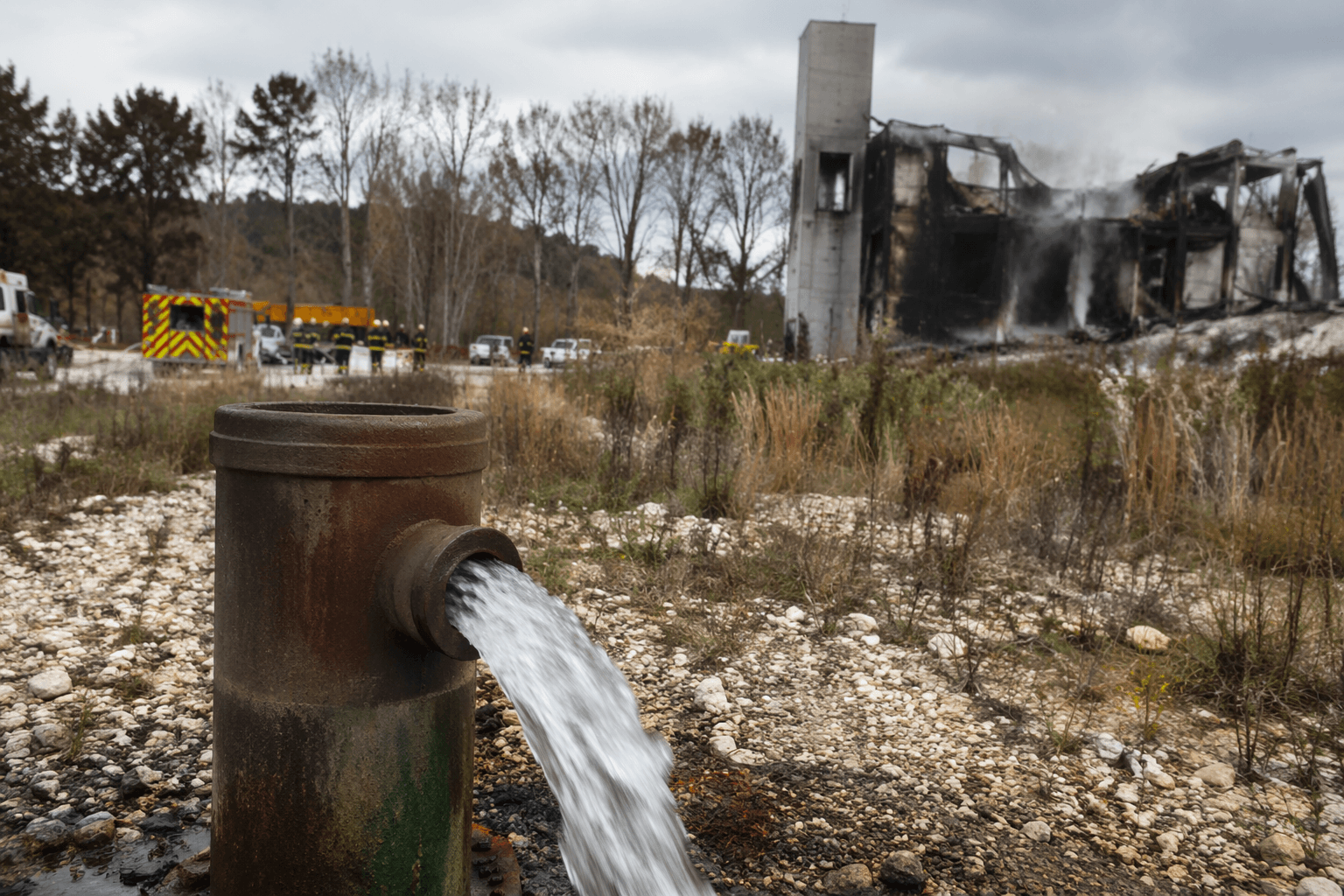
The water authority says the fire’s aftermath is different. News reports and court filings cited roughly 2.2 million gallons of fire-suppression water used during the response, and the utility alleges runoff leaked beyond the site and contaminated groundwater. Closing two wells is a serious step on Long Island, where drinking water comes from the aquifer beneath local neighborhoods, schools and shopping corridors rather than from distant reservoirs.
The dispute also runs into a broader state review of battery-storage safety. After three battery energy storage fires in New York during the summer of 2023, including East Hampton, Warwick in Orange County and Lyme in Jefferson County, Gov. Kathy Hochul convened an interagency Fire Safety Working Group. Its initial review on Dec. 21, 2023, said air, soil and water analyses showed no harmful levels of toxic substances and no significant off-site migration of contaminants at the fire sites.
New safety recommendations followed on Feb. 6, 2024. NYSERDA later said the working group put forward 11 code recommendations expected to be adopted in July 2025. That backdrop matters on Long Island, where battery-storage projects have already drawn pushback from residents and local officials citing fire risk, evacuation concerns and possible contamination.
The authority’s move comes while it is already dealing with widespread PFAS contamination on Long Island and pursuing other lawsuits to recover cleanup costs tied to damaged drinking-water supply wells. For Suffolk, the fight over the East Hampton fire has moved beyond a single industrial site and into a direct question of how much risk households should bear when their water comes from the ground below them.
This article was produced by Prism’s automated news system from verified source data, official records, and press releases, then run through automated quality and moderation checks before publishing. The system is built and supervised by the people who set the standards it runs under. Read our full AI policy.
Did this article answer your question?