Suffolk County DA Warns Residents About Fake Parking Violation Text Scams
Fake parking violation texts with New York state seals and judge signatures are targeting Suffolk residents, DA Raymond Tierney warned, harvesting credit card numbers through malicious QR codes.
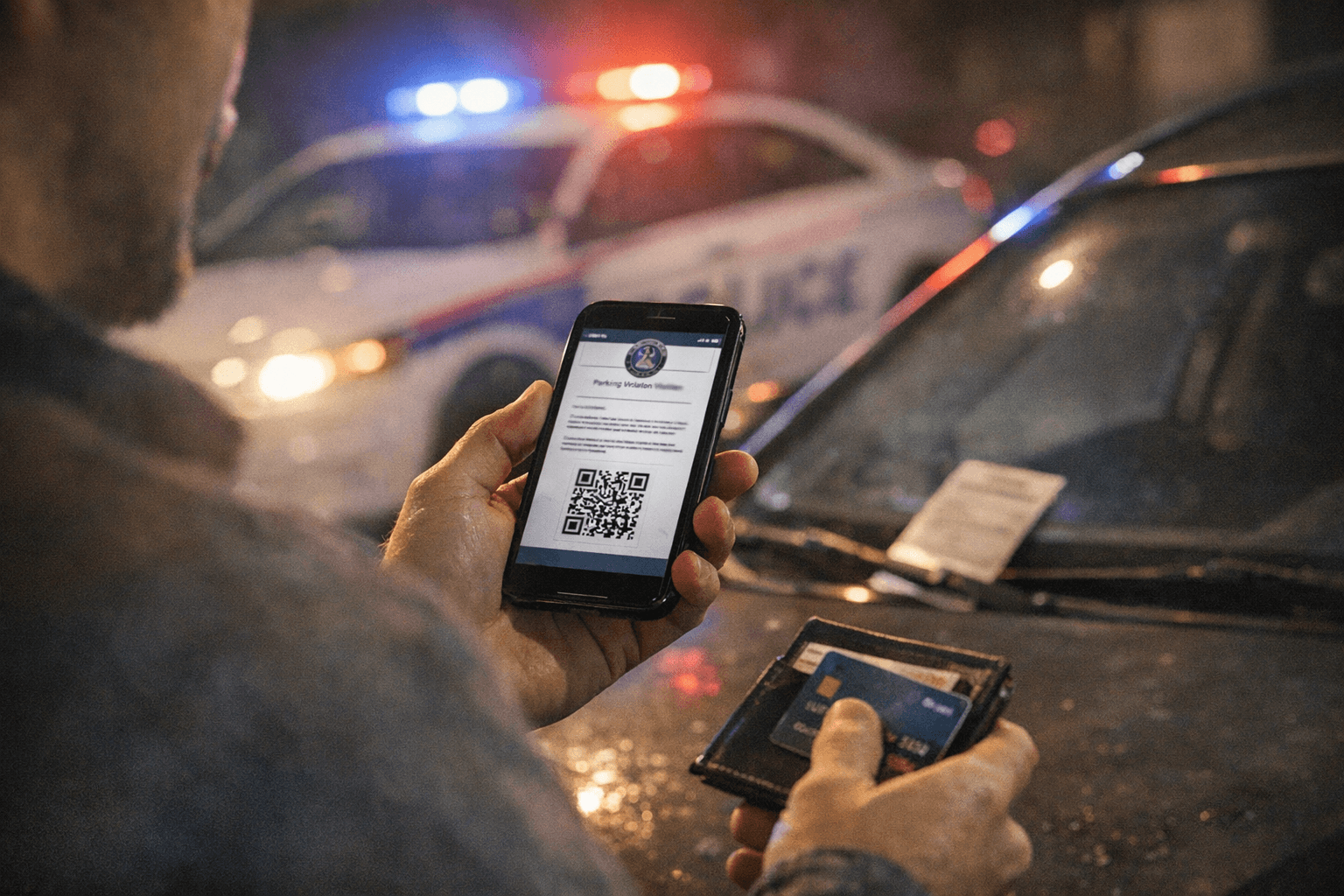
The text message arrives looking almost unimpeachable: a case number, a judge's name and signature, a hearing date, and a New York state seal. Then comes the demand to scan a QR code or click a link to pay an outstanding parking fine immediately, or face further legal action. Suffolk County District Attorney Raymond A. Tierney warned residents last week that these fraudulent "notice of default" messages are circulating via text and email across the county, engineered to steal payment information and personal data before the recipient recognizes the notice is fake.
"Do not click links or scan codes from unsolicited messages. Only use verified, official websites," Tierney said in the alert, which drew media coverage on March 24 and 25.
The scam works because it replicates the procedural language of real government enforcement. Scammers spoof phone numbers, copy official logos, and weaponize the anxiety of an apparent legal deadline. The QR codes and links in the messages route victims to malicious sites built to capture credit card numbers or sensitive personal data before they realize what happened.
Several red flags distinguish these messages from legitimate notices. Real government agencies do not demand payment via cryptocurrency, prepaid debit cards, or one-off web-based payment services. Any message insisting on those methods should be treated as fraudulent regardless of how official it appears. Urgency language, particularly warnings that payment must be made within hours to avoid additional legal consequences, is itself a hallmark of the fraud. Tierney specifically said not to pay anyone who is demanding immediate action or using threats to receive a payment.
The one reliable way to confirm whether a Suffolk parking notice is real: ignore every phone number, URL, and QR code in the message. Instead, go directly to the Suffolk County Traffic and Parking Violations Agency through the official Suffolk County government website, find the publicly listed contact number, and call to verify. Tierney advises anyone uneasy about a message to stop and check with a trusted contact before entering any banking information or making a payment.
If a link was already clicked or a payment already made, act quickly. Call your bank or credit card issuer immediately to dispute the charge and flag the account. Change any passwords tied to the compromised payment method and contact an identity-theft prevention service. Report the incident to local police, the Suffolk County District Attorney's consumer-protection division, and the Federal Trade Commission.
This type of fraud has been documented across multiple states, with scammers deploying nearly identical tactics involving fake toll and parking notices to trigger panic payments. Tierney's office noted that every scam report filed helps investigators map fraud networks and potentially identify the actors behind them.
This article was produced by Prism’s automated news system from verified source data, official records, and press releases, then run through automated quality and moderation checks before publishing. The system is built and supervised by the people who set the standards it runs under. Read our full AI policy.
Did this article answer your question?