Suffolk County man indicted in 3D-printed ghost gun case
Six ghost guns, two high-capacity magazines and several 3D printers were seized from a Mastic Beach home, deepening Suffolk County’s home-built weapons pattern.

A Mastic Beach resident was indicted on 11 felony counts after Suffolk County police seized six ghost guns, two high-capacity magazines and several 3D printers from his home, officials said. District Attorney Raymond A. Tierney said the case centers on allegations that the man manufactured unserialized 3D-printed guns between April and July of 2026.
The indictment, as described in local reporting, includes seven counts of second-degree criminal possession of a weapon and other related charges. The defendant’s attorney said he maintains his innocence and looks forward to “scrutinizing the prosecutor’s evidence.”
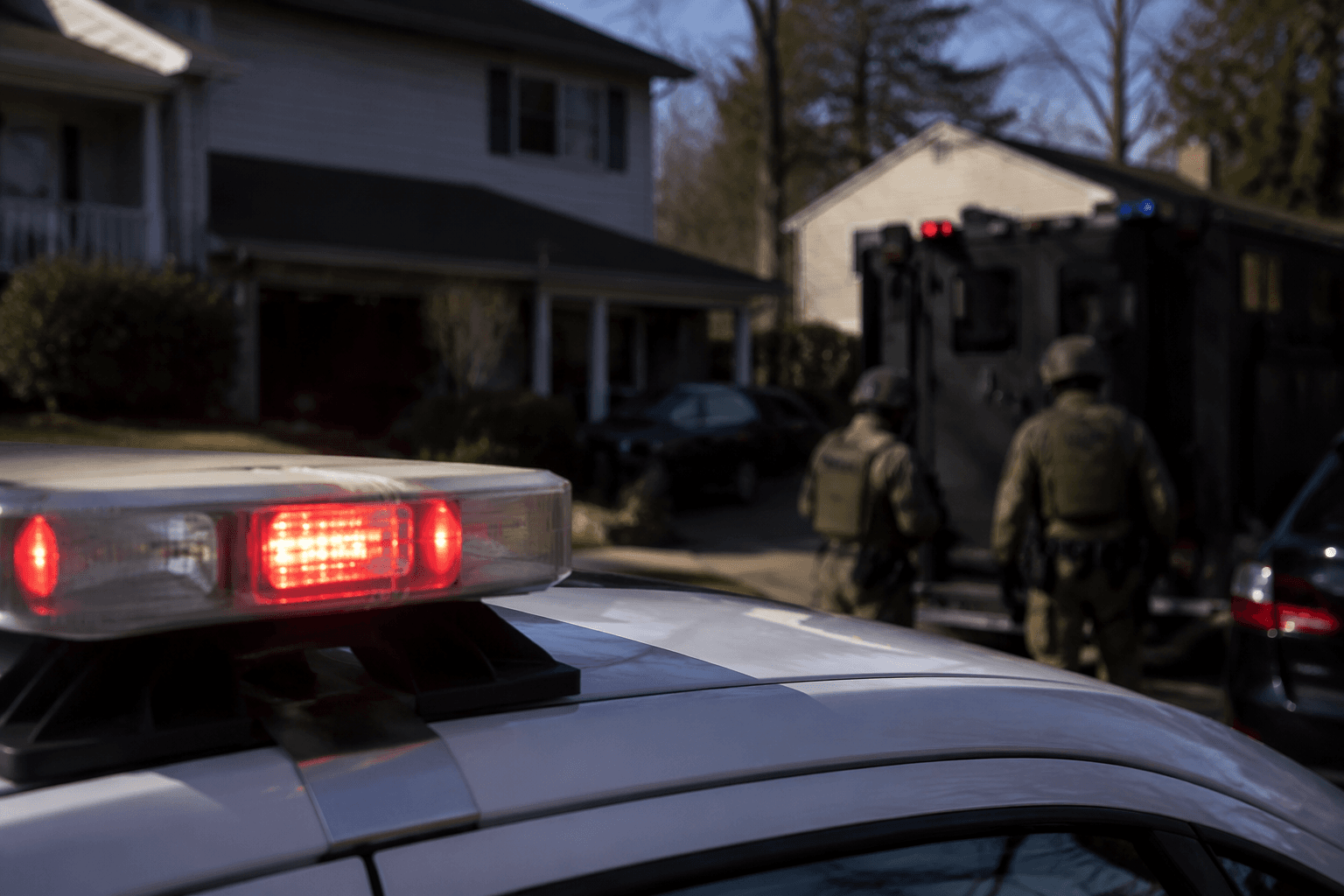
Police searched the home on July 2 and said they found more than finished weapons. Investigators also recovered a homemade silencer, printer filament, 3D-printed lower receivers and manuals on how to construct ghost guns, the kinds of items that can help detectives connect a home workshop to completed firearms. Ghost guns are untraceable because they are not serialized, which makes the physical trail left behind in a house, printers, parts, filament and instructions especially important to investigators.
The Suffolk case fits a pattern that has been building across the county. On Jan. 31, 2025, Suffolk detectives said they found two assault rifles with magazines, a 3D printer with a computer, six ghost gun-type receivers, ammunition and 3D-printing material inside a house on Clift Street in Central Islip. That earlier case involved Brandon Marquez, underscoring that the issue is not confined to one neighborhood.
Taken together, the searches show how quickly ordinary Suffolk homes can be turned into sites for making untraceable firearms with equipment that can fit on a desk or workbench. For law enforcement, the warning signs are often the same: multiple printers, printer filament, unfinished lower receivers, printed parts, ammunition and manuals that explain how to assemble the weapons.
Those details matter in a county where ghost guns have become a recurring weapons issue, not a one-off arrest. The Mastic Beach indictment adds another data point to a problem that is now showing up in both suburban and hamlet settings across Long Island, with police forced to build cases from printers, plastic components and the instructions left behind.
This article was produced by Prism’s automated news system from verified source data, official records, and press releases, then run through automated quality and moderation checks before publishing. The system is built and supervised by the people who set the standards it runs under. Read our full AI policy.
Did this article answer your question?