Suffolk County Rapidly Adds Solar-Powered Flock ALPR Cameras, Sparking Privacy Concerns
Suffolk County rapidly deployed solar-powered Flock ALPR cameras across East End roadways, prompting privacy concerns as officials cite public-safety uses and short data retention.
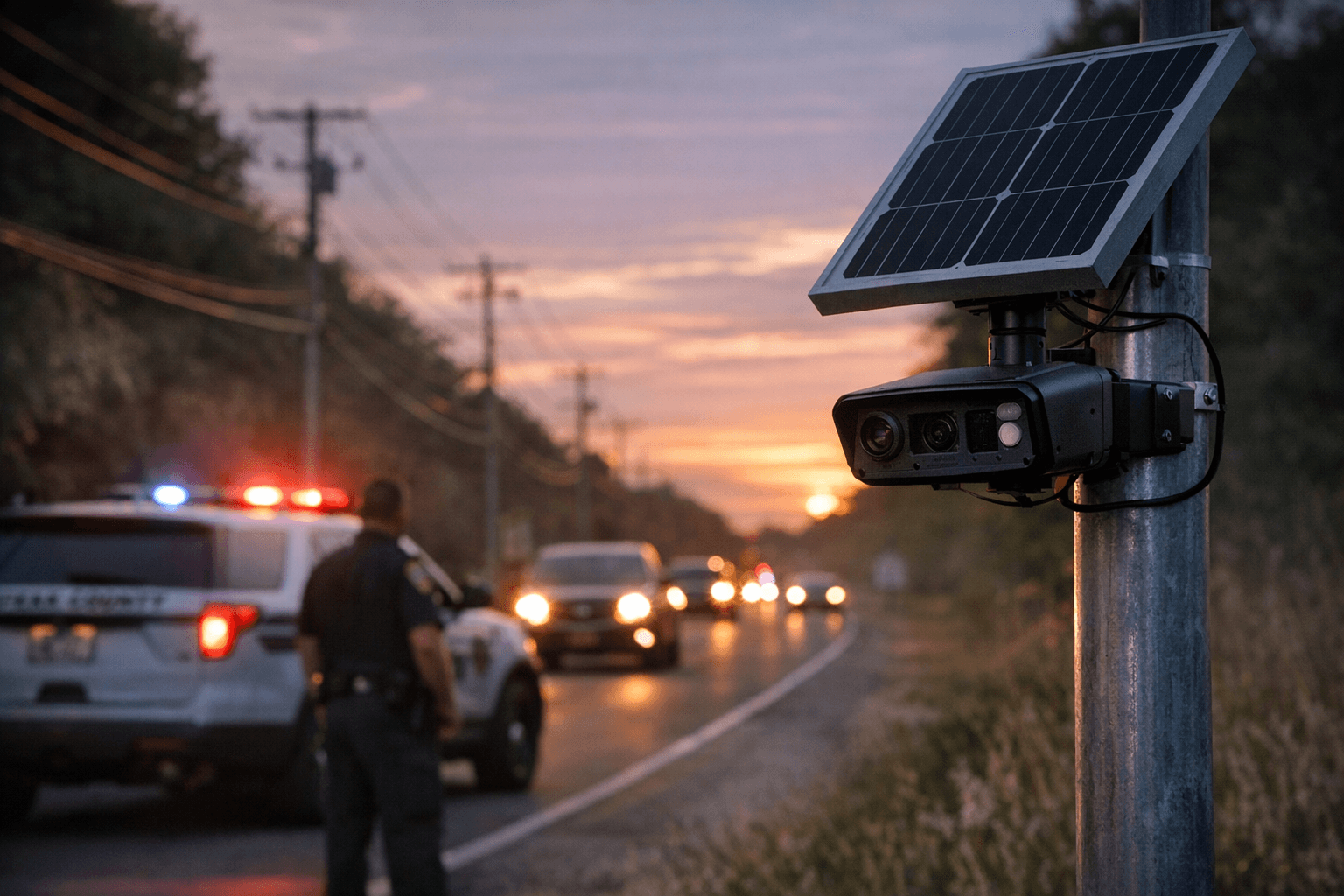
Suffolk County has moved quickly to install solar-powered automatic license-plate-reading (ALPR) cameras from Flock Safety along roadways on the East End, a buildout officials say is intended to help locate stolen vehicles, respond to AMBER alerts and support other criminal investigations. The rapid expansion, announced Jan. 22, 2026, has prompted pushback from privacy advocates and residents who worry about routine tracking of local travel.
Southold Police and other local officials described how the cameras operate: the devices capture license plates automatically and record limited vehicle descriptors. Officials said data from the Flock network is retained for 30 days and that the system is used for specific law enforcement purposes, including stolen cars and amber alerts. Local authorities also say a set of policy safeguards has been added, including filters and limits on searches, to restrict broad or speculative queries of the database.
The county increased the number of Flock cameras with support from a LETECH grant, and towns including Riverhead approved agreements that allow county camera installations on town rights-of-way. Those moves enabled wider coverage on secondary roads and in areas that previously lacked fixed surveillance infrastructure, officials said, accelerating the timeline for countywide deployment.
Civil-liberties concerns have surfaced in response. The American Civil Liberties Union and other privacy advocates have criticized ALPR networks nationally for creating the potential to build long-term movement profiles of ordinary residents and for the risk that data could be misused or widely shared beyond intended investigations. Locally, residents have raised questions about who can query the system, what oversight exists, and whether the 30-day retention policy and search limits are sufficient to protect privacy.
Suffolk County and local police agencies stress that the cameras are tools for targeted public-safety work and point to the newly implemented filters as a check against fishing expeditions. Nevertheless, the deployment has prompted calls for clearer public reporting and stronger governance: transparency about which agencies can access the data, audit logs that show how searches are conducted, and elected oversight to review policy changes and grant agreements such as the LETECH funding arrangement.
For East End commuters and small-business owners, the change means more places where a passing vehicle's plate can be recorded and linked to a searchable database for a limited period. That shift alters the balance between neighborhood safety efforts and everyday privacy on roads from Main Street to rural back routes.
What comes next will be driven by local oversight and public pressure. Residents can expect town boards and county officials to face questions about access rules, audit mechanisms and whether the region will adopt additional limits or transparency measures. The expansion highlights a broader governance choice for Suffolk County: how to use incoming surveillance technology while keeping accountability, clear rules and civil liberties at the center of policy.
This article was produced by Prism’s automated news system from verified source data, official records, and press releases, then run through automated quality and moderation checks before publishing. The system is built and supervised by the people who set the standards it runs under. Read our full AI policy.
Did this article answer your question?